
Why OpenAI Is Betting a Billion Dollars on Artificial Intelligence
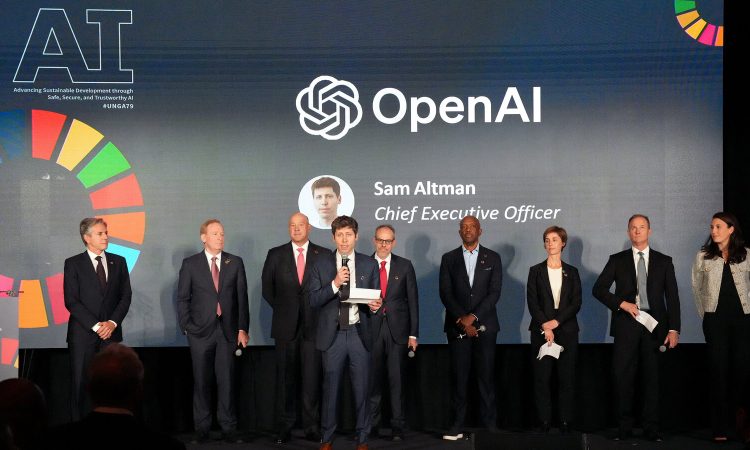
AI researchers need big data and big computation to be effective. While these resources are widely available thanks to companies like Google, these platforms, which support a wide array of users, can also introduce bias.
OpenAI has announced six enormous new data centers and one of the largest investments in artificial intelligence. According to projections, up to $400 billion is set aside for this expansion, highlighting both the rapid growth of AI demand and the complex, circular investments fueling the sector.
The Scale of the Expansion
The choice to construct six brand-new data centers isn’t just about storage — it forms the backbone for next-generation AI models.
- These facilities will house thousands of high-performance GPUs, necessary to train and run large AI systems such as ChatGPT and its successors.
- The flagship site in Abilene, Texas, will serve as the central hub, with expected capacity in the hundreds of megawatts (MWs).
- Additional sites will be located across Texas, New Mexico, Ohio, and the Midwest.
The size of these data centers reflects the enormous computing power required to train cutting-edge AI models. Training large AI systems involves processing huge datasets and performing billions of calculations per second. Without infrastructure of this scale, it would be nearly impossible to support the fast, complex AI experiences expected by companies and consumers.
Strategic Partnerships Behind the Investment
OpenAI is not acting alone. The venture involves major players in technology and investment, combining expertise, capital, and infrastructure skills:
- One partner provides advanced cloud infrastructure and enterprise-grade support.
- Another offers significant financial backing and strategic guidance.
- OpenAI drives the creation of the AI models to ensure state-of-the-art technology runs in these centers.
Hardware partnerships are also central to the plan. Next-generation GPUs will power the computing capacity necessary for training fast and complex AI systems. This synergy of strategic partnerships and cutting-edge technology makes this ambitious AI scale-up possible.
Meeting the Surge in AI Demand
The need for six giant data centers highlights the growing appetite for AI.
- Businesses are using chatbots, language models, and generative AI tools at unprecedented levels to automate processes, generate content, support decision-making, and enhance customer experiences.
- Consumers are increasingly relying on AI-enabled applications in daily life, from personalized recommendations to virtual assistants.
This demand drives the need for infrastructure capable of online AI model training and deployment. Each model iteration requires more data, greater computing power, and faster processing speeds. By building six data centers, OpenAI is preparing for exponential AI usage growth over the next decade.
Economic Implications
The construction and operation of these data centers will have a significant economic impact:
- Thousands of jobs will be created in construction, operations, maintenance, and technical support.
- The workforce will stimulate local economies and help develop regional technology hubs.
- The investment will also boost secondary markets, including hardware providers, power suppliers, and logistics services.
Beyond direct employment, this project signals that AI infrastructure is a priority on both national and global levels. OpenAI is not only securing its leadership in AI but also contributing to the technological strength of the countries hosting these centers.
Sustainability Challenges
Operating large data centers requires significant energy, raising environmental concerns. OpenAI and its affiliates emphasize:
- Prioritizing renewable energy sources.
- Using energy-efficient hardware and state-of-the-art cooling systems.
- Implementing responsible power sourcing techniques.
Balancing the energy demands of AI with environmental sustainability is one of the tech industry’s greatest challenges. OpenAI’s approach reflects the recognition that long-term AI development must align with sustainable development goals.
The Future of AI Infrastructure
Internally codenamed the Stargate project, this initiative is more than physical infrastructure; it represents a vision for the future of AI:
- By investing in data centers, OpenAI can continue creating more powerful AI models capable of tackling increasingly complex problems in healthcare, education, finance, and research.
- Strong infrastructure is crucial as models increase in size and capability, requiring high-speed computing, low-latency networks, and scalable storage.
- These data centers are building blocks for future AI advances, not just solutions for current demand.
Circular Investments and Increasing AI Adoption
The $400 billion investment demonstrates the concept of circular investments in AI:
- Capital flows into infrastructure, enabling more advanced AI systems.
- These systems increase demand for additional infrastructure, creating a virtuous cycle that fuels industry growth.
By building a large network of data centers, OpenAI is positioning itself for the next era of AI, where computing power requirements will grow exponentially. The company is betting on leading in a future dominated by AI.
Conclusion
OpenAI’s commitment to building six enormous data centers and investing $400 billion in AI infrastructure marks a major milestone in the evolution of artificial intelligence.
- These centers will provide the computing power necessary to train and operate advanced AI models.
- They will support the global surge in AI demand.
- They will create economic opportunities and address sustainability challenges.
This investment reflects a broader trend in AI development — from boutique experimentation to industrialized innovation. OpenAI’s strategic bet on infrastructure underscores the critical role of technology in defining AI’s future and highlights the company’s ongoing commitment to leadership in this dynamic space.








