
Zillow’s New AI Home Staging Feature: Will It Blow Away Realtors?
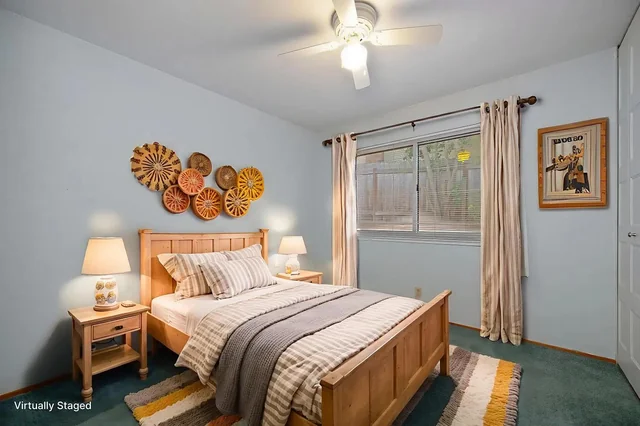
In the ever-changing landscape of real estate tech, when it comes to buying and selling homes, Zillow is a household name — helping connect homebuyers, sellers, and the tools that allow them to do so online. The site recently teased the launch of a new AI-staging feature that it claims “will change the way homes are shown online.”
However, early impressions suggest that while it’s a clever feature in theory, it’s a bit underwhelming in practice — so much so that “impressively unimpressive” may actually be the most fitting way to describe it.
The Concept Behind AI Staging
At its most basic, AI staging is an evolution of traditional virtual staging — a practice that real estate professionals have relied on for years to help potential buyers visualize how an empty space might look when furnished and arranged.
- In the past, virtual staging depended on graphic designers who meticulously positioned furniture, décor, and color schemes into pictures of unadorned rooms.
- The procedure was effective, but potentially costly and time-consuming.
Zillow’s new tool purports to use artificial intelligence to automatically change a home’s interior style. The company says it can “increase the appeal of listings” by offering ideas for:
- Subtle furniture rearrangements
- Repositioning décor
- Adjusting style components to provide a more coherent visual narrative
For a market increasingly dependent on virtual impressions — when prospective buyers may decide long before they enter a property what they think of it — the prospect of AI-assisted staging is tantalizing.
But the Reality Falls Short
Despite its ambitious goals, the changes the AI makes are incremental and almost impossible to see.
- Users report the AI sometimes moves a chair a few inches, swaps a pillow cover, or tweaks the lighting.
- These adjustments are far from the dramatic overhauls one might hope for in a digital staging tool.
In an age where AI can produce photorealistic art, write convincing essays, and even create music, the subtlety of these changes can feel disappointing.
Challenges include:
- Zillow must balance authenticity with enhancement, as listings are effectively legal documents. Misrepresentation could lead to disputes.
- The AI may err on the side of caution, producing changes so subtle that viewers ask, “Did anything even happen here?”
The Psychological Factor
The purpose of staging, real or virtual, is to help buyers envision themselves living in a space.
- Minor adjustments can be effective, but there is a fine line between enhancing a home’s appeal and making changes that have little impact.
- A minor tweak to a lamp or a color change might not inspire the imagination or create the emotional connection necessary to motivate a sale.
Key question:
Can AI be too subtle, risking invisibility and losing the emotional effect that staging aims to create?
Industry watchers argue that staging is a storytelling exercise. Buyers aren’t just assessing square footage or fixtures — they are imagining their lives inside the home. When AI makes almost imperceptible changes, it might fail to tell a compelling story.
Where AI Staging Could Shine
AI staging is not without value. Even small adjustments can improve a listing’s visual appeal:
- Ensure furniture is arranged symmetrically
- Apply color palettes that enhance the lighting
- Subtly remove clutter to make spaces look more professional
Additional advantages:
- AI can process large volumes of listings quickly, something human designers cannot do at scale.
- For agencies managing hundreds of properties, consistent minor adjustments help create a more polished online presence.
Efficiency and consistency may be where AI staging truly excels.
The Boundaries of Technology in Design
Zillow’s experience highlights a key challenge in AI-powered tools:
- Theoretical potential vs. actual output: AI can optimize small details but struggles with subjective aesthetics and human intuition.
- Interior design relies on cultural context, emotional resonance, and creativity, areas where AI is still limited.
AI adjustments may feel unsatisfying because:
- AI can suggest fine-tuning based on design principles
- It cannot replicate the intuition of an experienced interior designer
For example:
- The perfect placement of a couch
- A throw pillow chosen for emotional impact
- Layered lighting creating a certain ambiance
These remain decisions that AI cannot convincingly mimic.
Consumer Expectations vs. Reality
The expectation gap is another reason AI staging seems unimpressive:
- The label “AI” carries a sense of magic, especially in consumer tech.
- Users expect bold, transformative changes, influenced by AI in art, writing, and video.
- A nearly imperceptible change in furniture or décor may disappoint early adopters.
Future potential:
- Zillow is likely still testing and tweaking the feature.
- User feedback could help AI make more visually impactful adjustments without misrepresenting properties.
- For now, the tool acts more like a subtle assistant than a breakthrough designer.
The Future of AI in Real Estate
Zillow’s AI staging represents an early step in a longer journey:
- AI can automate routine tasks and refine small details
- It cannot yet replace human creativity and intuition in design
Potential opportunities:
- Advanced AI could eventually produce fully-staged interiors
- Future AI could be both visually stunning and accurate representations of spaces
For now, buyers and sellers should consider AI staging a helpful but minor upgrade, not a game-changer.
Conclusion
Zillow’s new AI staging feature embodies both the promise and limitations of artificial intelligence in real estate:
- Offers a glimpse of a future where technology can assist property presentation
- Current execution is subtle and underwhelming
- Small adjustments may be technically impressive, but they fail to captivate or dazzle like traditional staging
Takeaways:
- Homebuyers may need to squint at listing photos to see changes
- Sellers and agents benefit from time-saving efficiency
- Those expecting radical visual transformations may be disappointed
Zillow’s AI staging is a step forward, but it reminds us that the human touch in design remains irreplaceable — just as in real estate itself.








