
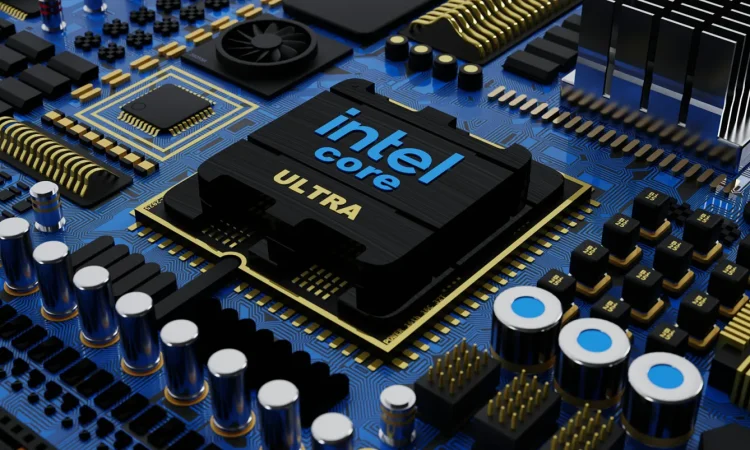
The U.S. government is poised to become a significant new shareholder in Intel, as part of an effort to bolster the domestic semiconductor industry at a time when an unprecedented global chip shortage has been chipping away at the American economy and national security.
A Critical Industry
Semiconductors are at the heart of just about every type of technology in use today, from smartphones and electric vehicles to medical devices and military hardware.
- Today, only around 12 percent of the world’s chips are made in the United States, a steep decline from about 40 percent in the 1990s.
- The vast majority of high-end manufacturing now takes place in Asia, particularly Taiwan and South Korea.
That concentration creates risk. The world’s most advanced chips are made in Taiwan, but its location at the center of tensions between China and the United States raises concerns about the stability of the supply chain. Even a small interruption in Taiwanese production could echo through industries worldwide.
Washington’s investment in Intel is intended to strengthen domestic chip production capabilities and reduce reliance on overseas suppliers.
Background: The CHIPS and Science Act
The government’s participation is a follow-up to the CHIPS and Science Act of 2022, which appropriated more than $50 billion in funds for domestic semiconductor manufacturing and research.
- Most of the act’s incentives are in the form of subsidies and tax breaks.
- The Intel stake represents a more direct role in the industry’s future.
This move reflects a larger policy change: semiconductors are now seen not just as an economic driver but as a strategic necessity—comparable to oil or defense.
Why Intel
Intel is positioned to lead this effort for several reasons:
- Manufacturing Capability – Unlike many American chip companies that outsource production, Intel still has vast manufacturing operations.
- Industry Standing – While seen as struggling to keep up with Taiwan Semiconductor Manufacturing Company (TSMC), Intel is the only U.S. company with the infrastructure to produce advanced chipsets at scale.
- Employment Impact – Intel’s existing and upcoming projects in Arizona, Oregon, and Ohio represent tens of thousands of jobs.
Together, these factors put Intel at the center of Washington’s semiconductor strategy.
Expansion Plans
Intel is already expanding aggressively:
- New fabrication plants (“fabs”) are under construction in Ohio, with expansions in Arizona and Oregon.
- Each fab can cost more than $10 billion, with construction timelines stretching over several years.
- Federal support allows Intel to accelerate projects and fund cutting-edge technology.
These fabs are expected to produce chips on advanced nodes as small as two nanometers, placing Intel in a select global group capable of such production.
The Debate
The government’s decision has sparked mixed reactions:
- Supporters argue that semiconductors are too critical to be left to market forces, given their role in both civilian industries and defense systems.
- Critics warn that direct ownership risks distorting competition and setting a precedent for state intervention in other industries.
However, the U.S. has a history of intervening in strategic sectors such as aerospace and energy. The Intel investment fits this pattern, though at a larger scale and with greater visibility.
Broader Implications
Industry analysts highlight several expected outcomes:
- Supply Chain Resilience – Increased U.S. production reduces dependence on Asia and mitigates geopolitical risks.
- Global Competition – Other countries, including China, Japan, and the European Union, are also investing heavily in chips. Keeping Intel competitive is in America’s interest.
- National Security – Advanced defense systems rely on secure, domestically produced chips.
- Economic Growth – Large projects like Intel’s Ohio fabs create thousands of construction and technical jobs, supporting long-term economic development.
Challenges
Despite government backing, Intel faces obstacles:
- Competition – Rivals such as TSMC and Samsung maintain an edge in advanced manufacturing. Intel will need sustained investment and technical breakthroughs to close the gap.
- Workforce Shortages – Fabs require highly trained engineers and technicians, and U.S. education and training programs may need to scale up.
- Geopolitical Pressures – Rising tensions with China could complicate trade and place added pressure on companies like Intel, which operate globally.
Conclusion
The U.S. government’s decision to take a stake in Intel reflects a growing recognition that semiconductors are central to both economic strength and national security.
By supporting Intel’s growth:
- Washington is betting on a stronger domestic industry,
- safeguarding supply chains,
- bolstering advanced technologies, and
- maintaining America’s competitive edge in a crucial field.
The effort carries risks and will take years to fully unfold, but the message is clear: semiconductors are no longer simply a business—they are strategic assets. Intel now stands at the center of America’s plan to secure them.








