
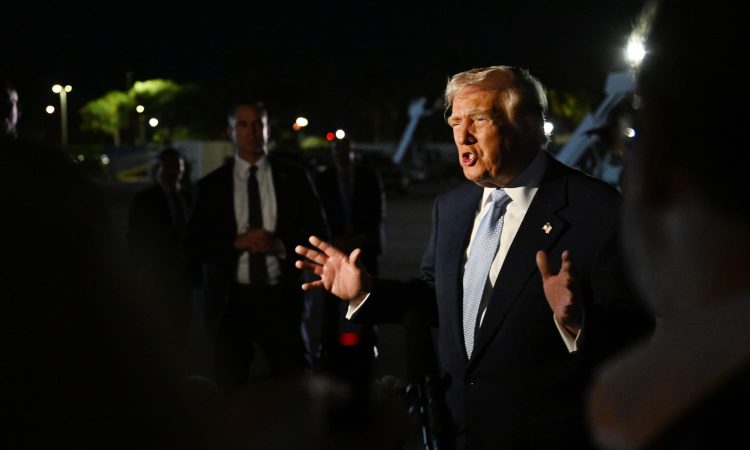
President Donald Trump is reportedly considering an executive order that would significantly curb states’ power to regulate artificial intelligence. According to drafts circulating inside the White House, the move would centralize AI oversight at the federal level by challenging state legislation deemed too restrictive.
AI Litigation Task Force
Under the proposal, the Justice Department would establish a special “AI Litigation Task Force” whose mission would be to sue states that enact AI laws.
The draft order reportedly argues that many of these state regulations:
- Violate constitutional principles, such as regulating interstate commerce
- Conflict with existing federal law
Beyond litigation, the order would also give the Commerce Department new authority. It would:
- Review state AI laws within 90 days
- Potentially withhold federal broadband funding from states that don’t fall in line
Role of Other Federal Agencies
Other federal agencies would play key roles:
- Federal Trade Commission (FTC): Examine whether state laws requiring alterations to AI outputs infringe on free speech
- Federal Communications Commission (FCC): Create a national disclosure standard for AI models, potentially overriding conflicting state rules
Push for One Federal Standard
If adopted, the order would mark an escalation of Trump’s push for a single federal standard on AI, rather than allowing individual states to craft their own rules.
He has argued that a fragmented regulatory landscape:
- Harms innovation
- Weakens U.S. competitiveness
- Creates 50 conflicting state-level frameworks
Some in his administration also portray certain state AI laws as ideologically driven, accusing them of embedding “woke” requirements into regulations.
Criticism and Legal Concerns
Legal experts warn that the president may be overstepping. Critics say executive orders cannot easily strip states of regulatory authority, especially since a similar Congressional effort to block states from passing AI laws failed earlier this year.
There is also resistance from within the Republican Party.
Some governors — including Ron DeSantis — describe the move as a federal power grab.
Potential Impact on States
If signed, the order could trigger a major showdown with states — especially those that have already passed strong AI laws focused on:
- Transparency
- Fairness
- Reporting requirements
These states could be forced either to roll back their regulations or face:
- Federal lawsuits
- Funding cuts
Implications for Trump’s Agenda
For Trump, the potential gains include:
- A unified national AI policy
- Easier compliance for companies
- Support for his broader goals of innovation and global leadership
However, constitutional and political risks remain. It is unclear whether the final order will resemble the draft — or whether it would survive legal challenge once unveiled.








