
Top AI News Stories You Can’t Miss — From Startup Launches to Government Policies
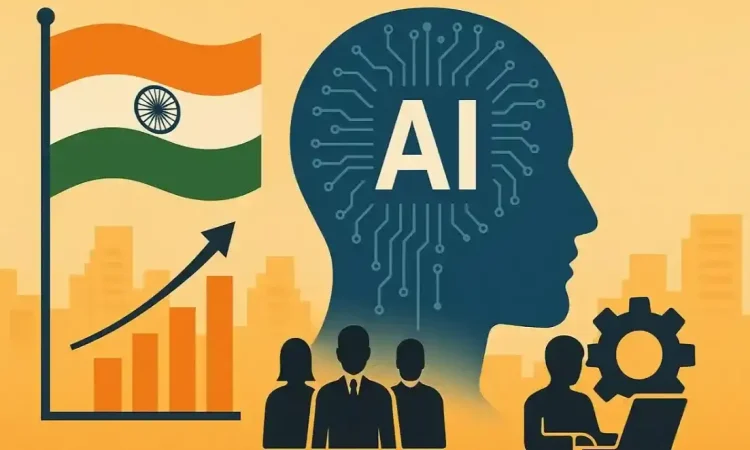
Artificial Intelligence is no longer just a buzzword — it has become one of the most influential forces of the 21st century. AI is reshaping industries, driving policy decisions, and changing the way we live, work, and interact. From startups introducing bold new technologies to governments racing to regulate and guide AI’s development, the landscape is evolving at lightning speed. This week, we highlight the most noteworthy stories shaping the AI world, covering everything from breakthrough research to corporate innovation and government policies.
1. Startups Redefine the AI Frontier
Startups are the heart of AI innovation. Around the globe, young companies are exploring exciting frontiers in machine learning, robotics, and generative AI.
- Silicon Valley: A new wave of AI startups is focusing on “agentic AI” — intelligent systems capable of performing tasks independently in digital environments. For example, SynthMind has gained attention for creating AI that can autonomously build and deploy applications, acting almost like a digital employee.
- Europe: Berlin-based GreenPulse AI is leading the charge in sustainable technology. Their platform optimizes renewable energy grids using machine learning, helping reduce waste and boost efficiency. The company’s rapid growth highlights a rising global focus on climate-friendly AI solutions.
- Asia: Singapore’s VisionX Robotics is blending human oversight with automation in precision manufacturing. Their “human-in-the-loop” systems aim to enhance productivity while addressing workforce concerns, showcasing a balanced approach to AI deployment.
These startups demonstrate a clear trend: AI innovation is no longer limited to a few tech hubs. The global AI ecosystem is becoming more decentralized, with diverse players driving meaningful change.
2. Big Tech Doubles Down on AI Integration
While startups push creative boundaries, major tech giants are embedding AI deeper into their operations.
- Microsoft: Expanding its AI Copilots, Microsoft is introducing tools tailored for sectors like healthcare, finance, and education. These AI assistants help automate routine tasks while providing actionable insights, enabling professionals to focus on strategic work.
- Google: The company’s updated Gemini platform merges text, visual, and speech capabilities into a single model. Google emphasizes AI accessibility, making advanced tools available to small businesses and educational institutions globally.
- Amazon: With AWS Inferentia 3, Amazon offers faster, energy-efficient model training for enterprises. They are also experimenting with AI-powered autonomous delivery, further integrating AI into physical operations.
- Meta: By releasing parts of its large language models to the developer community, Meta promotes collaboration in AI development. Their focus includes generative media and virtual collaboration, pushing AI into new creative spaces.
These initiatives show that AI is no longer an add-on — it’s becoming central to the strategies of the world’s biggest tech players.
3. Governments Step In: Policy and Regulation Take Center Stage
As AI permeates every facet of life, governments worldwide are establishing rules to ensure safe, fair, and ethical AI use.
- European Union: The AI Act is now in its implementation phase, categorizing AI systems by risk and imposing compliance obligations. It’s expected to set global standards for transparency, accountability, and data handling.
- United States: The AI Safety and Standards Initiative from the White House Office of Science and Technology Policy aims to guide responsible AI deployment across federal agencies, emphasizing bias testing, data privacy, and model interpretability.
- Asia:
- China encourages “secure and controllable” AI development, promoting homegrown innovation while enforcing strict content controls.
- India has launched the National AI Mission, focused on fostering local research, workforce upskilling, and ethical standards in healthcare, agriculture, and education.
These moves illustrate a global understanding: AI’s future cannot be shaped by corporations alone. Governments are playing an active role in guiding its responsible use.
4. Research Breakthroughs: Toward Smarter and More Responsible AI
Academic research continues to push AI capabilities while making systems more transparent and sustainable.
- Stanford University: Researchers developed an energy-efficient AI framework that reuses previously learned components, reducing training time and energy consumption by over 50%.
- MIT: Scientists introduced transparent neural reasoning, allowing AI to explain its outputs step-by-step — a major step toward interpretable, trustworthy AI.
- Japan: A joint project between RIKEN and the University of Tokyo created a multimodal AI system combining visual, auditory, and tactile inputs. This brings machines closer to human-like perception, with promising applications in robotics and assistive technology.
These advancements are not just technical feats; they represent a commitment to creating AI that is capable, accountable, and safe.
5. The Global AI Economy: A $2 Trillion Opportunity
AI is poised to have a monumental impact on the global economy. Analysts predict it could contribute over $2 trillion to global GDP by 2030 through automation, innovation, and new business models.
- Emerging markets stand to benefit significantly. Countries in Africa and Southeast Asia are leveraging AI for agriculture, public health, and financial inclusion. Examples include AI-driven crop predictions and voice-based banking systems.
- Challenges remain: The full benefits of AI will depend on workforce reskilling, ethical governance, and robust data protection policies.
AI is shaping a future where technological growth can be inclusive — but careful planning is essential.
Looking Ahead: The Next Phase of AI
AI is more than a technological shift; it’s redefining how humanity interacts with knowledge, creativity, and decision-making. Startups experiment boldly, tech giants scale innovations, and governments implement rules to safeguard ethical use.
The challenge now is clear: harness AI’s potential responsibly while ensuring its benefits are shared globally. The AI revolution is underway, and the choices made today will define the next decades of innovation, governance, and economic growth.








