
Top Latest AI Developments to Watch — From Generative Models to Autonomous Systems
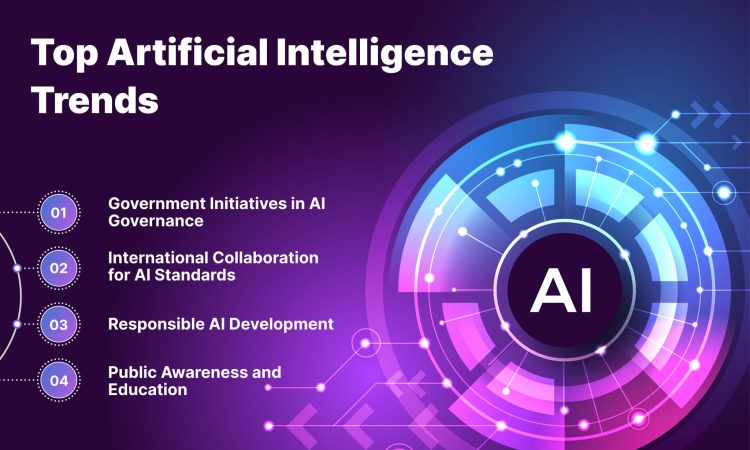
Artificial Intelligence (AI) is transforming the way we live, work, and interact with technology. In 2025, AI innovations are happening faster than ever, from generative models that create content nearly indistinguishable from human work to autonomous systems capable of making complex decisions in the real world. These breakthroughs are not just changing industries—they’re reshaping daily life. Let’s dive into the most exciting AI developments to watch this year.
1. Generative AI Models: Creativity Meets Technology
Generative AI is one of the most visible and rapidly evolving areas of artificial intelligence. These models, trained on vast amounts of data, can produce highly realistic content across text, images, audio, and video. In 2025, large multimodal models can understand context across different media, allowing users to craft intricate stories, realistic artwork, and immersive virtual environments with minimal effort.
Applications include:
- Advertising, entertainment, and design projects
- Marketing content creation at scale for brands
- Accelerated concept art generation for filmmakers and game developers
- Personalized learning resources tailored to individual student needs
Generative AI is proving to be a powerful tool not just commercially, but also in education, enabling highly customized and interactive learning experiences.
2. Autonomous Systems: Machines That Think and Act
Autonomous AI systems are now operating beyond the lab, in industries like transportation, logistics, and robotics. Advances in machine perception, decision-making algorithms, and reinforcement learning have improved reliability and safety.
Key examples include:
- Self-driving vehicles navigating urban environments with less human supervision
- Industrial robots performing precision assembly, warehouse management, and adaptable tasks
- Collaborative AI systems that learn new tasks without extensive reprogramming
These systems improve efficiency, reduce operational costs, and enhance safety, particularly in high-risk environments.
3. AI in Healthcare: Precision and Predictive Power
AI’s impact on healthcare is profound, supporting predictive diagnostics, personalized treatments, and faster drug discovery. In 2025, advanced models can analyze complex medical data—including genomic sequences, imaging scans, and electronic health records—to detect patterns human doctors might miss.
Applications in healthcare include:
- Early disease detection and accurate prognoses
- Generative AI simulating molecular interactions for faster drug discovery
- Conversational AI providing symptom guidance, medication management, and preventive care
These innovations are improving patient outcomes while reducing costs and speeding up research.
4. AI-Enhanced Natural Language Understanding
Natural Language Processing (NLP) is becoming increasingly sophisticated. Modern AI models can understand context, detect sentiment, and even interpret subtle idioms, fueling smarter virtual assistants, customer service bots, and content generation tools.
Trends in NLP:
- Multi-turn conversations with contextual awareness
- Personalized customer interactions
- Real-time language translation and accessibility support
These developments are transforming how businesses communicate and expanding access to AI-powered tools.
5. AI for Climate and Environmental Solutions
AI is being harnessed to address environmental challenges like climate change and energy management. Advanced models analyze satellite imagery and sensor data to track deforestation, monitor wildlife, and predict extreme weather events.
Environmental applications include:
- Optimizing renewable energy production (wind, solar, hydro)
- Improving power grid stability
- Providing actionable insights for researchers and policymakers
AI is helping make sustainable energy more reliable and efficient while enabling better decision-making in environmental management.
6. Ethical AI and Responsible Innovation
As AI grows more powerful, ethics are increasingly central to development. AI systems now focus on fairness, transparency, and explainability. Developers are implementing mechanisms to audit decisions and reduce bias, while governments and organizations establish regulations around data privacy, autonomous decision-making, and accountability.
Key areas of focus:
- Bias mitigation and fairness
- Transparent AI decision-making
- Regulatory frameworks ensuring responsible innovation
Ethical AI ensures technology benefits society while minimizing unintended harm.
7. AI and Human Augmentation: Enhancing Capabilities
AI is not just replacing tasks—it’s enhancing human abilities. From brain-computer interfaces to advanced prosthetics, AI enables humans to interact with machines in ways that once seemed like science fiction.
Applications include:
- Cognitive enhancement and accessibility solutions
- Workplace productivity tools across architecture, journalism, engineering, and research
- Automation of repetitive tasks and data-driven insights for better decision-making
AI is increasingly a collaborative partner, amplifying human potential instead of replacing it.
Conclusion: A Transformative Era for AI
In 2025, AI is shaping a transformative era. From creative generative models to highly capable autonomous systems, AI is driving innovation across industries, enhancing human abilities, and addressing global challenges. Ethical considerations and responsible deployment remain critical to ensuring these technologies benefit society.
Staying informed about these developments is essential. Whether in healthcare, transportation, environmental solutions, or creative fields, the latest AI innovations are changing the way we live, work, and connect with the world around us. Understanding and embracing these trends is key to navigating the AI-driven future.








