
When Tesla announced it had finally posted its long-anticipated “Master Plan Part 4,” the expectation was for a visionary document that would reiterate Elon Musk’s plan to transform transportation, energy, and more.
What they received instead was a jumbled presentation filled with jargon, buzzwords, and sweeping generalizations that raised more questions than it answered. Critics say the plan seemed less like a meticulously sketched strategic vision and more like AI-generated filler – one that was grandiose in its tone, but lacked the kind of focus and depth Tesla’s investors and customers had been waiting for.
A Legacy of Master Plans
To understand the disappointment around Tesla’s new master plan, it helps to take a step back in time, before “strategic master plans” became the norm.
- 2006: The “Secret Master Plan”
Tesla was still a scrappy startup when Musk unveiled the original roadmap. Its message was simple:- Make a sports car.
- Use the money to build an affordable car.
- Use that money to build an even more affordable car.
- Provide zero-emission electric-power generation along the way.
- 2016: “Master Plan Part Deux”
Musk broadened Tesla’s scope to include:- Self-driving technology
- Solar energy products
- Ride-sharing services
This history explains why anticipation was sky-high for the newest version. Supporters wanted updates on:
- The affordable $25,000 battery electric vehicle (BEV)
- Progress in Full Self-Driving (FSD)
- Expansion of battery manufacturing
- Any movement on robotaxis
Instead, Tesla delivered what many called a confusing, overly broad array of slides and buzzwords.
The Sloppy AI-Like Presentation
During the announcement, Musk and Tesla executives discussed sustainability, autonomy, and global energy solutions.
But instead of concrete roadmaps, they offered vague proclamations such as:
- “Tesla will accelerate the world’s transition to sustainable energy.”
- “Autonomous mobility will redefine the future.”
Observers said the language resembled AI-written futurism:
- Sentences rambled without clear conclusions.
- Charts appeared nebulous.
- Technical details were absent or brushed aside.
Industry analysts coined a blunt description: “AI slop.”
Like machine-generated filler, the talk leaned heavily on repeated big themes with little substantive detail.
The Missing $25,000 EV
One of the most glaring omissions was Tesla’s long-promised affordable electric car.
- Musk has teased a $25,000 EV for years.
- The milestone would make EV ownership achievable for millions more.
- Many expected Master Plan Part 4 to finally detail its path forward.
Instead, the subject was barely raised. With no specifics on cost reduction, production strategy, or battery breakthroughs, people questioned whether Tesla is still serious about this project—or if it has been quietly shelved.
For a company built on accelerating sustainable transport, ignoring affordability raised major concerns.
Full Self-Driving Promises, Again
Another recurring theme was autonomy. Musk once again:
- Reiterated Tesla’s goal to achieve full self-driving (FSD).
- Claimed Tesla’s cars will “soon” drive safer than humans.
But once again, there was no roadmap, no target dates, and no mention of:
- Ongoing regulatory battles
- Safety controversies
After nearly a decade of promises, FSD remains stuck in beta testing and lacks global approval. Critics said the vague language only spotlighted Tesla’s lack of transparency.
Energy and Robotics: Tons of Vision, Not Much Detail
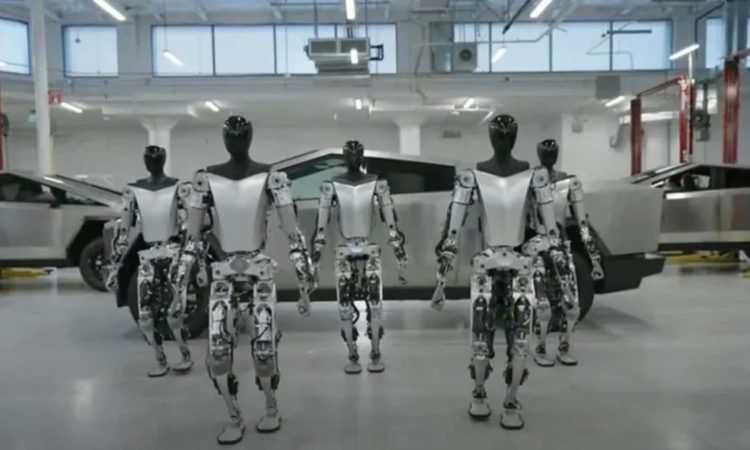
Tesla also touched on its energy division and robotics projects, including the Optimus humanoid robot.
- Musk framed these as future growth engines.
- But the master plan only offered sweeping statements.
Example: “Tesla will power the world, except sustainably this time.”
Inspiring? Yes. Concrete? No.
- No details on scaling solar installations.
- No clarity on battery technology improvements.
- No timelines for deployment.
The Optimus robot was positioned as a potential labor game-changer. Yet the demonstration offered no meaningful advances, leaving experts doubtful about Tesla’s competitiveness in an already crowded robotics field.
Why the Plan Fell Flat
Criticism of Master Plan Part 4 reflects a broader worry: Tesla may be drifting from the simplicity and focus that fueled its rise.
- Musk has always embraced grand visions.
- Earlier plans, however, were grounded in measurable targets.
- The new plan, by contrast, feels hazy and amorphous.
Some analysts suspect the AI-like vagueness reflects a deeper problem:
- Tesla may be running out of tangible, near-term breakthroughs.
- With competitors like BYD, Hyundai, and legacy automakers closing the gap in EVs, hype alone may no longer sustain Tesla.
Others think the vagueness was deliberate—to avoid overpromising. But the trade-off is reduced investor confidence.
Investor and Public Reaction
The immediate response was muted.
- Markets: Tesla’s stock wavered post-presentation.
- Social Media: Memes compared the slides to ChatGPT output, mocking Musk’s reliance on vague futurism.
Critics stressed that while Tesla retains loyal fans, the broader public is losing patience.
People care more about:
- When they can actually buy an affordable EV.
- Whether FSD can pass regulatory muster.
They care less about lofty declarations about “reordering civilization.”
The Risk of Overhyping
Tesla’s history includes bold predictions that eventually became reality—even if delayed.
But today’s danger is that the hype has outpaced delivery.
- Governments are tightening emissions targets.
- Rivals are launching new EVs at record speed.
- Investors are less tolerant of vague sustainability claims.
By revealing a master plan that sounded more like AI-generated filler than strategy, Tesla risks squandering credibility when it matters most.
Conclusion: Vision Without a Map
Tesla’s new master plan was meant to be a battle cry for the future. Instead, it felt like a gauzy essay produced by a chatbot—big on aspiration, skimpy on specifics.
Elon Musk remains one of tech’s most influential figures, and Tesla’s role in pushing automakers toward electrification is undeniable. But going forward, visionary rhetoric must be matched with credible, actionable steps.
Without this, Tesla risks becoming a machine recycling buzzwords rather than a pioneer driving real progress.
The world does not need more “AI slop.” It needs:
- Cheaper EVs
- Safe, approved autonomy
- Scalable clean energy
- Tangible innovation
Tesla’s ability to refocus on substance over spectacle may determine whether it continues to lead the electric revolution—or gets overtaken by its rivals.








