
Tesla Updates Full Self-Driving Software with Smarter Navigation for Unmarked Roads
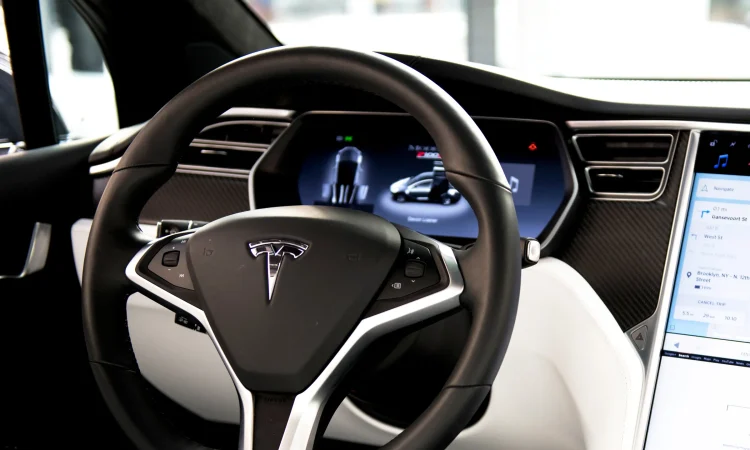
Tesla has taken a big step forward in autonomous driving. The company recently released an update to its Full Self-Driving (FSD) software, introducing a more advanced neural network. This upgrade is designed to help Tesla vehicles handle complex environments, including roads without lane markings — one of the toughest challenges for driver-assist systems.
Tackling the Challenge of Unmarked Roads
Unmarked roads have long been a headache for automated driving. Without clear lane lines or visual cues, cars must interpret road boundaries, geometry, and obstacles much like a human driver does. Tesla’s latest FSD update aims to solve this problem.
The new system improves:
- Steering and lane-keeping even on narrow, unmarked roads
- Obstacle detection, including pedestrians and other vulnerable road users
At the heart of this update is Tesla’s shift from rule-based programming — which relies on hard-coded instructions — to a large, end-to-end neural network. This network has been trained on millions of real-world driving scenarios, allowing the system to adapt to a variety of road conditions, including rare or tricky situations.
Key Benefits for Tesla Drivers
The update offers practical improvements for everyday driving:
- Better lane-keeping and smoother steering on roads without clear markings
- Enhanced recognition of traffic cones, signs, obstacles, and animals for safer responses
- Larger, more capable neural networks that allow the car to “see” and process the environment like a human
- Expanded functionality in complex scenarios, such as city streets, multi-lane roundabouts, and roads with faded or missing lane lines
Tesla’s approach relies mainly on cameras combined with neural networks rather than lidar sensors. This makes the system more flexible, cost-effective, and scalable.
Data and Technology Behind the Update
Tesla’s improvements are powered by its massive fleet of vehicles, which continuously collect driving data in “shadow mode.” This data trains the neural networks on a wide range of real-world conditions.
The vision-only approach, paired with advanced neural networks, allows Tesla to generalize across different environments, enabling safe navigation even when lane markings are missing or unclear.
Remaining Challenges
While the update is a major step forward, FSD remains a supervised system. Drivers must stay attentive, keep their hands on the wheel, and be ready to intervene.
Some edge cases — like unusual road layouts, temporary obstacles, or complex traffic situations — can still challenge the system. Regulators classify Tesla’s FSD as Level 2 automation, meaning it assists driving but cannot replace an alert human driver.
Why This Update Matters
This is more than a software patch. It showcases Tesla’s software-first approach to autonomous driving, focusing on neural networks and camera-based perception rather than traditional sensors.
The ability to navigate unmarked roads expands the areas where Tesla vehicles can operate safely, particularly in rural or underdeveloped regions.
From a business perspective, FSD remains a key differentiator in the competitive EV market. Over-the-air updates allow Tesla to continuously improve vehicle capabilities without requiring hardware upgrades.
Looking Ahead
The rollout of this update will expand gradually across different markets, with full functionality depending on newer hardware in some vehicles. Key areas to watch include:
- How well the system handles unpredictable scenarios like construction zones or mixed urban traffic
- Building driver trust through consistent and predictable behavior
- Monitoring by regulators and safety advocates to ensure safe deployment
Conclusion
Tesla’s latest FSD update, with smarter neural network capabilities for unmarked roads, marks a crucial step toward more advanced autonomous driving. While fully driverless operations are still in the future, the improvements in perception and reasoning show Tesla’s vision of autonomy as an evolving software platform.
For Tesla drivers, this update enhances the car’s ability to navigate a wider range of road conditions. For the mobility industry, it underscores the growing role of machine learning, data, and neural networks in making autonomous vehicles safer and more capable. How well vehicles handle complex, unmarked roads could determine which companies lead the autonomous driving race and how quickly fully autonomous cars become mainstream.








