
Why Rodney Brooks Won’t Go Near Today’s Walking Robots
Rodney Brooks, the inspired robotics entrepreneur and co-founder of iRobot, has been designing the future for decades. Best known for developing the Roomba vacuum and later leading research on humanoid robots, Brooks has remained at the forefront of technology throughout his career.
But despite his deep commitment to the field, he recently made a startling concession: he won’t go near today’s walking robots with a 10-foot pole. In taking this protective stance, he has prompted a new look at our own vulnerable human bodies and inspired a debate about the limits of humanoid robots, questioning whether we’re truly on the verge of a fully autonomous, safe robot era.
Real Safety Concerns, Not Science Fiction
Brooks’ caution isn’t based on science fiction speculation. Instead, it is born of his familiarity with the real and lesser-known safety hazards posed by bipedal robots—machines designed to walk on two legs like humans.
Humanoid robots are inherently unstable compared to wheeled robots, and their intricate balance systems and fast, sometimes jerky movements result in unpredictable behavior, which can pose serious hazards to people nearby.
“Walking robots are not only hard,” Brooks said in a recent interview. “They are fragile, they are fast, and they can move in ways humans don’t anticipate. It can be unsettling to watch them stumble or lurch, and getting too close is dangerous.”
This evaluation reflects the experience of many roboticists working with platforms like Boston Dynamics’ Atlas or Honda’s ASIMO. These robots are nimble—they jump, run, and even perform somersaults—but their graceful motions mask the delicate interplay of sensors, motors, and software that keeps them standing. A small hiccup or misstep can have serious consequences.
The Limits of Learning from Video
Brooks’ concerns also extend to current AI training methods. Today, many robotics projects rely on imitation learning, where robots “learn” dexterity by observing humans in video datasets.
Brooks is skeptical:
“They see a video of somebody tying their shoes, but they are not getting the haptic feedback from manipulating the laces. Dexterity is not something you can entirely learn by observing. Robots must go through trial and error to develop subtle skills. Until we figure that out, humanoid robots are stunted in their practical abilities and fraught with unintended consequences.”
Implications for Commercial Robotics
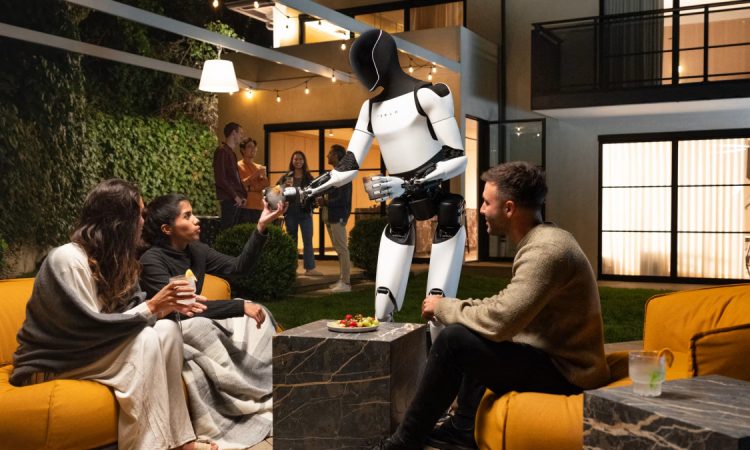
As humanoid robots gain popularity in warehouses, elderly care, and domestic assistance, Brooks warns against overestimating their capabilities, especially in environments shared with humans. The complex interaction between sensors, motor control, and environment makes humanoid robots far more unpredictable than the public often assumes.
This debate has intensified recently, fueled by videos of Atlas performing backflips and navigating obstacle courses. While these stunts make humanoid robots appear ready for everyday tasks, engineers spend countless hours fine-tuning balance algorithms, weight distribution, and edge-case scenarios. Brooks’ reluctance to step close to these machines underscores the gap between polished demonstrations and real-world usability.
Why Humanoid Appearances Can Be Misleading
Many roboticists caution that the human-like appearance of walking robots can create a false sense of safety. People naturally assume humanoid robots will move predictably, like humans. In reality, these robots can fail in ways humans never would:
- Falling over due to minor floor imperfections
- Misinterpreting sensor data
- Executing motion sequences incorrectly
The results of a collision can range from minor damage to serious injury.
Brooks’ Focus on Practical Robots
Interestingly, Brooks’ own work—both at iRobot and later at Rethink Robotics—has focused on utilitarian, task-driven robots, rather than humanoids.
- The Roomba is celebrated for its simplicity, reliability, and safety.
- Wheeled robots avoid many hazards associated with walking robots.
- Limited movement ranges reduce the potential for unexpected accidents.
Brooks often cites this as an example of why simpler robot designs may be more effective and safer for real-world applications.
The Road Ahead for Humanoid Robots
Brooks isn’t suggesting that humanoid robots will never be capable; rather, he stresses that years of testing and careful understanding of physical interactions are necessary before they can safely operate around humans.
“We are still learning how to teach robots about the real world. You have to be patient and engineer carefully. Forcing humanoid robots into human environments invites accidents.”
His stance also raises ethical and regulatory questions:
- Should stricter safety standards be in place before humanoid robots enter homes or workplaces?
- How much physical testing is enough to ensure humans remain safe?
- How can safety tests simulate real-world unpredictability effectively?
Brooks’ ten-foot rule highlights the balance between technological advancement and common-sense safety.
Appreciating the Limits
As robots grow more impressive, engineers and users must remember that truly safe and dexterous humanoid robots are not simply about speed, agility, or AI sophistication. They also require:
- Understanding the limits of current technology
- Respecting the unpredictable nature of machines that mimic human movement
In a field often driven by spectacular demonstrations, Brooks’ caution is remarkable for its realism. His warnings urge the robotics community to prioritize safety and incremental progress over flashy stunts.
Even as robots perform flips or run marathons, Brooks’ insistence on distance serves as a reminder: real-world risks remain.
Conclusion
Rodney Brooks’ reluctance to approach today’s walking robots is more than a personal preference—it is a call for prudence. His observations challenge engineers and the public to:
- Reconsider optimism surrounding humanoid robots
- Recognize hidden dangers in advanced robotics
- Appreciate the subtle skills required for real-world dexterity
Until humanoid robots can safely navigate chaotic human environments, Brooks’ advice—to respect their power, unpredictability, and limitations—remains as relevant today as ever.








