
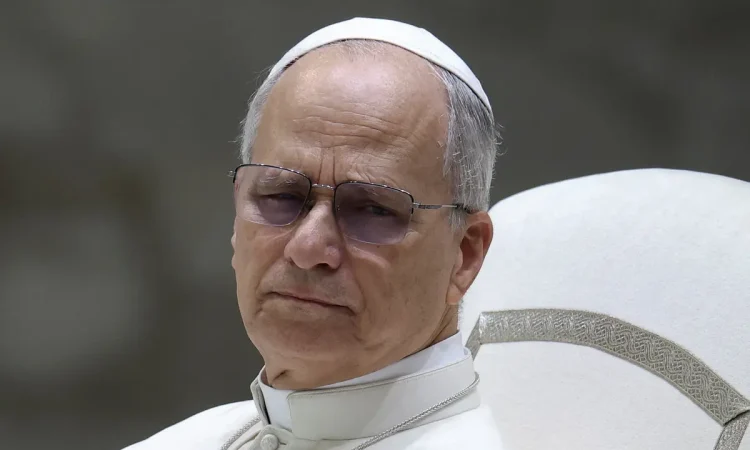
In a striking address on Wednesday, Pope Leo made a heartfelt appeal to global news organizations, urging them to resist compromising journalistic integrity for the sake of clicks and sensational headlines. Speaking at the Vatican before a gathering of journalists, media executives, and communications scholars, the Pope highlighted the critical role trustworthy reporting plays in shaping society and preserving human dignity.
“News is not a commodity to be bought and sold at the altar of attention,” Pope Leo said. “The truth should never be subordinated to the desire for clicks, likes, or viral content. Every headline has the potential to either uplift or erode the moral fabric of our communities.”
His comments come amid growing concerns over the rise of click-bait journalism, where headlines are designed to attract online traffic rather than inform the public. Experts warn that this trend can distort perceptions, fuel misinformation, and deepen societal divisions.
A Call for Responsible Journalism
Pope Leo’s message was more than a critique—it was a call for renewed journalistic responsibility. He stressed that the media holds immense influence and, with that, a profound moral duty.
“In every story you publish, in every photograph you share, consider the impact on the human soul,” he explained. “Journalists are not just conveyors of information—they are stewards of truth. And with stewardship comes responsibility.”
He encouraged journalists to resist chasing fleeting engagement metrics or sensational stories that might mislead readers. Instead, he urged investigative rigor, contextual reporting, and ethical storytelling.
“Truth is not measured by how many eyes glance at your work,” Pope Leo added. “It is measured by how faithfully it illuminates the reality of the world and fosters understanding among people.”
The Impact of Click-Bait Culture
The rise of social media and algorithm-driven news feeds has amplified click-bait culture. Headlines crafted for maximum engagement often prioritize shock value over accuracy, enticing clicks without delivering meaningful information.
Dr. Elena Rossi, media ethics scholar at the University of Rome, said:
“We live in a world where attention has become a currency. News outlets feel immense pressure to generate traffic and advertising revenue. Unfortunately, this pressure can sometimes erode factual reporting. Pope Leo’s words are a timely reminder that the public deserves more than eye-catching headlines—they deserve truth.”
The consequences of click-bait can go beyond individual stories. Studies suggest sensationalized content can:
- Spread misinformation
- Influence political opinions
- Exacerbate social tensions
- Trigger public panic or reinforce harmful stereotypes
Historical Perspective and Ethical Guidance
During his speech, Pope Leo referenced history, highlighting the media’s pivotal role in promoting justice and societal well-being. Ethical reporting has historically:
- Held leaders accountable
- Amplified marginalized voices
- Fostered social cohesion
“Throughout history, the press has been a pillar of democracy and morality when guided by conscience rather than profit,” he said. “It has the power to illuminate injustice, console the suffering, and inspire positive change. We must not allow this power to be diluted by the pursuit of mere attention.”
He encouraged media organizations to foster ethical accountability, including:
- Training journalists to resist sensationalism
- Implementing editorial practices prioritizing accuracy
- Engaging in dialogue with the communities they serve
The Role of Consumers
Pope Leo also addressed news consumers, urging them to approach information critically. He emphasized that readers share a responsibility for the quality of public discourse.
“Do not be passive recipients of information,” he said. “Question what you read. Seek out reputable sources. Reward integrity with your attention, not merely virality.”
By promoting media literacy and ethical consumption habits, readers can support meaningful and truthful journalism, countering the influence of click-bait culture.
Reactions from the Media Community
The Pope’s address has sparked widespread discussion among media professionals worldwide. Many welcomed it as a powerful reminder of the profession’s moral obligations.
Maria Santini, editor-in-chief of an Italian news magazine, said:
“Pope Leo’s words resonate deeply with anyone who entered this profession believing in the power of truth. In an era of constant pressure to maximize clicks, it is refreshing to hear a call for reflection and integrity.”
Others noted that while the message is important, structural pressures in the media—such as declining print revenues and social media dominance—pose ongoing challenges.
David Chen, media analyst in New York, added:
“Ethics and economics are often at odds in journalism today. The Pope is right to emphasize the moral dimension, but addressing click-bait culture will also require sustainable business models for quality journalism.”
Looking Ahead
Pope Leo concluded his address with a hopeful message, acknowledging the challenges of modern journalism but insisting that commitment to truth, ethics, and human dignity can guide the industry forward.
“Do not sell your conscience for fleeting attention,” he said. “Let the light of integrity guide your reporting, and the world will be brighter for it.”
As media navigates a complex digital landscape, Pope Leo’s words serve as a moral compass: prioritize substance over spectacle, honor truth over temptation, and measure journalism by the depth of its service to humanity—not by clicks.
In a world flooded with information, his message is clear: the pursuit of viral attention must never come at the expense of truth. Every journalist bears the responsibility to uphold the highest standards of integrity, reminding us all that journalism can be a force for understanding, justice, and the common good.








