
Nvidia Hits the Big T: A Trillion-With-a-T, That’s a Lot of Dollars
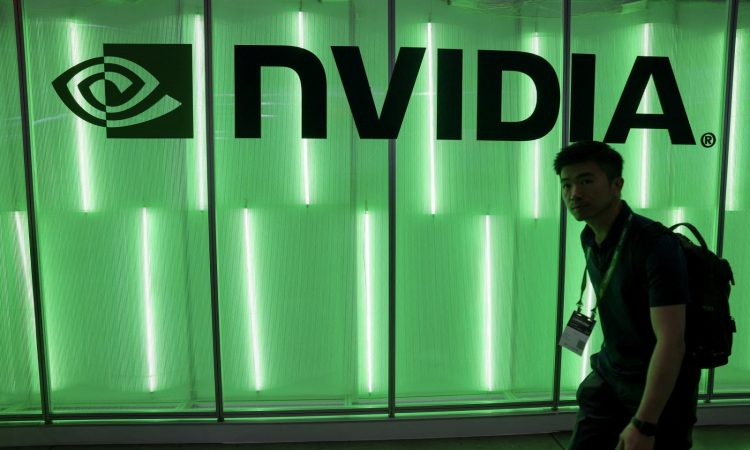
When someone says “a trillion” — yes, that’s a T not a B — it tends to give pause. It’s a figure so huge that it escapes our daily experience. But average is simply not the word you’d use to describe Nvidia, the company that is best known for making graphics processing units (GPUs), and that has managed to hit this remarkable target not just once, but multiple times. From smashing through the trillion-dollar valuation level in 2023 to doubling that figure in 2025, Nvidia has thrown the rulebook out the window in terms of what is possible in today’s markets.
The Journey to Trillions
Nvidia, which began life in 1993 as a small combatant in the computer graphics business, developed chips that made video games more realistic. What started in gaming soon began to apply more broadly. Nvidia’s GPUs, especially in recent years, have been well suited to complex computational workloads such as machine learning and artificial intelligence.
The real turning point was the eruption of AI demand. By the mid-2020s, Nvidia’s chips had become the fundamental ingredients of AI systems, ensuring the company’s indispensability to just about every large tech firm. Nvidia reached $1 trillion in market value in 2023. Two years later, in July 2025, it achieved the distinction of being the world’s first public company to hit a market cap of four trillion dollars.
This wasn’t just any milestone; it was a rewriting of financial history.
Why Nvidia Is Worth So Much
At the core of Nvidia’s ascent is its supremacy in GPUs for artificial intelligence. Unlike traditional computer processors, GPUs are particularly well-suited for working in parallel, which is why they are ideal for the massive calculations required to train and run AI models.
- Powerful Chips: Nvidia’s H100 Hopper and Blackwell B200 are among the most advanced chips ever built, crammed with hundreds of billions of transistors.
- Market Dominance: The company controls about 80 percent of the global market for AI-capable GPUs.
- Supercomputers: Its chips drive nearly all of the world’s fastest supercomputers.
- Financial Boom: Nvidia’s revenue soared from tens of billions to more than $40 billion per quarter by 2025. Net income spiked as AI demand grew.
CEO Jensen Huang repeatedly emphasized that the world is now building what he calls a “trillion-dollar AI infrastructure market.”
What Does $4 Trillion Look Like?
Such numbers are difficult to grasp. For context:
- Four trillion dollars is roughly equivalent to the annual economic output of countries like Japan or India.
- Nvidia alone is worth more than hundreds of the largest companies in the S&P 500 combined.
- Its valuation is nearly ten times the personal fortunes of the wealthiest people on the planet.
- If you took every top sports franchise in the world — football, basketball, Formula One, you name it — Nvidia could buy them multiple times over.
Put simply: a single company now compares to entire national economies.
The Ripple Effect on Markets
Nvidia’s size is not just symbolic — it ripples through global markets. At more than $4 trillion, Nvidia makes up over 7 percent of the entire S&P 500.
- Millions of investors with index funds are significantly exposed to the fate of one company.
- Such concentration is rare, making Nvidia both a behemoth and a potential source of instability.
- If Nvidia thrives, it can buoy entire markets. But if it falters, the ripple effects could weigh down global indexes.
Challenges on the Horizon
As spectacular as Nvidia’s ascent has been, headwinds loom:
- Geopolitical Risks – Dependence on international markets leaves Nvidia vulnerable to export restrictions and political disputes. Recent U.S. trade rules have already limited its ability to sell some high-end chips to China.
- Competition – AMD and tech giants like Google, Amazon, and Microsoft are racing to chip away at Nvidia’s dominance.
- Slowing Growth – Revenue growth is cooling after multiple quarters of explosive gains. Sustaining valuations in the $4 trillion range will require consistent, large-scale growth.
- Market Concentration – Nvidia’s heavy weight in stock indexes raises concerns reminiscent of the tech bubble, when a few companies wielded outsized influence.
Could Five Trillion Be Next?
With Nvidia’s momentum, the natural question is: what’s next?
- Some analysts believe five trillion dollars is within reach if demand for AI hardware continues.
- The company has projected strong revenue guidance for upcoming quarters.
- Global investment in AI infrastructure shows no signs of slowing down.
But Nvidia’s future depends on whether it can:
- Stay ahead technologically,
- Navigate regulatory challenges,
- And withstand growing competition.
Markets love winners, but they are just as quick to punish weakness.
What Nvidia’s Rise Portends
Nvidia’s story is about more than numbers; it reflects the transition to an AI-driven era.
- In the industrial age, oil companies defined global power.
- Today, Nvidia is the AI-age equivalent, reaping massive profits from supplying the “fuel” for modern innovation.
Its valuation speaks not only to investor enthusiasm but to the conviction that AI will transform economies, industries, and societies — from self-driving cars and drug discovery to scientific research and personal assistants.
But such dominance also attracts scrutiny. Regulators, rivals, and policymakers know that Nvidia is not merely selling chips. It is shaping the speed of technological advancement itself.
Conclusion: Trillions Today, Tomorrow Unknown
The first time Nvidia crossed $1 trillion, it seemed nearly unbelievable. Now, after reaching $4 trillion, the incredulity is giving way to a new reality: trillion-dollar valuations may become more common in the AI era.
Yet, markets are cyclical. The same forces that lift companies to stratospheric heights can drag them back down. Nvidia has already made history, but its future is far from guaranteed.
One thing is certain: whenever someone says “trillion with a T”, Nvidia will come to mind. Whether it continues to climb or faces turbulence, the company has already cemented itself as a defining force of this technological age.








