
New Copper Demand Drivers from the US and India as China’s Juggernaut Slows
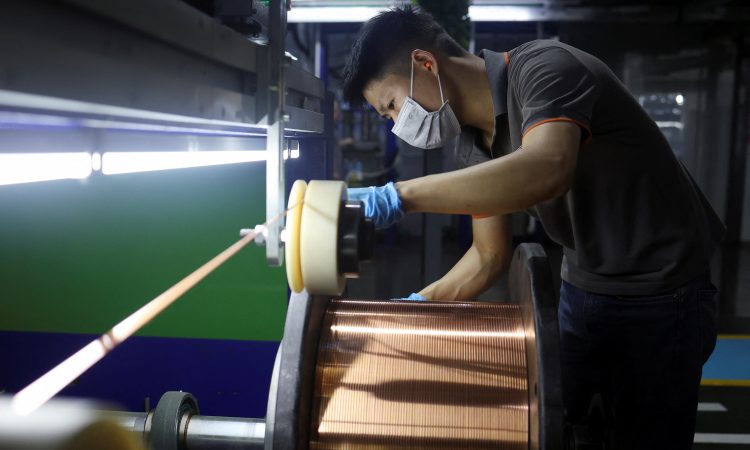
For nearly two decades, China has been the powerhouse behind the world’s copper consumption — fueling demand through its massive manufacturing boom, property development, and rapid urbanization. But a major shift is now underway in the global copper market, one that could redefine industrial power balances for years to come.
As China’s once-insatiable hunger for copper slows due to a struggling property sector and weaker economic growth, new engines of demand are emerging from the United States and India.
Copper — the “red metal” — is a vital ingredient in everything from electric vehicles (EVs) and power grids to renewable energy systems and electronics. Often seen as a barometer of global economic health, copper is now becoming even more strategic as the world transitions toward clean energy and digital infrastructure.
China’s Waning Copper Dominance
For years, China consumed over half of the world’s refined copper. Its rapid industrialization — from skyscraper construction to smartphone production — drove unprecedented global demand. But in recent years, this momentum has slowed.
Several factors have contributed to this cooling trend:
- A prolonged real estate slump
- Stricter environmental regulations
- Weaker exports as Western economies diversify supply chains
Moreover, Beijing’s pivot toward a “high-quality growth” model — focusing on sustainability and domestic consumption over construction-heavy expansion — has further softened copper demand.
While China remains a heavyweight in global copper consumption, its share is expected to gradually decline in the coming decade. This opens the door for other economies like the U.S. and India to step into the spotlight, powered by ambitious clean-energy and industrial agendas.
The United States: Electrification and Infrastructure at Full Throttle
In the U.S., copper demand is booming thanks to sweeping infrastructure investment and a full-scale shift toward clean energy.
Federal initiatives such as the Inflation Reduction Act (IRA) and the Infrastructure Investment and Jobs Act (IIJA) are pouring hundreds of billions into upgrading the nation’s aging power grids, expanding renewable capacity, and building out EV charging networks.
Copper is at the core of this transformation. Its excellent conductivity makes it indispensable for:
- Electric vehicles (EVs)
- Solar panels and wind turbines
- High-efficiency power cables
- Smart building systems
Each EV uses roughly four times more copper than a traditional gasoline car — mainly in its wiring, battery systems, and charging infrastructure. With automakers like Tesla, Ford, and General Motors ramping up domestic EV production, copper consumption is climbing fast.
The push to modernize America’s outdated power grid is another strong driver. Utilities are replacing decades-old transmission lines with new, copper-heavy systems capable of integrating renewable energy at scale. Each mile of high-voltage line requires tons of copper, and grid upgrades are happening nationwide.
Even in construction, copper is making a comeback — from smart wiring systems to energy-efficient retrofits funded by federal programs.
Analysts predict that as the U.S. continues to electrify its economy, copper demand could rise more than 40% by 2035, positioning the nation as one of the world’s top growth markets for the metal.
India’s Copper Awakening
While the U.S. is driven by decarbonization, India’s copper story is about modernization and industrial expansion.
The world’s most populous nation is in the midst of a massive infrastructure and manufacturing surge — reminiscent of China’s early 2000s boom, but tailored for a digital and sustainable century.
India’s government has launched a multi-trillion-rupee infrastructure pipeline spanning roads, railways, airports, and renewable energy projects. Under initiatives like “Make in India” and “Power for All,” the country is developing industrial corridors, strengthening its power grid, and investing heavily in clean energy.
Copper is central to these efforts. As India connects millions of new households to electricity and integrates solar and wind energy into its grid, demand for copper in cables, transformers, and power lines is soaring.
The target is bold: 500 gigawatts of renewable capacity by 2030 — a goal that will require vast amounts of copper.
India’s automotive sector is also expanding rapidly. The government’s FAME initiative (Faster Adoption and Manufacturing of Electric Vehicles) is driving EV production and adoption, leading to a surge in copper demand for batteries and charging systems.
Other industries such as electronics, telecom, and data centers are also expanding at record pace — each relying heavily on copper wiring and components.
Over the past decade, India’s copper consumption has grown nearly 7% annually, and experts forecast it could double by 2035, making India one of the world’s top three copper consumers.
A Tight Supply Picture
While demand surges in the U.S. and India, the supply side of the equation tells a more challenging story.
Global copper production, largely concentrated in Chile and Peru (which together account for about 40% of global output), faces growing headwinds. Declining ore grades, environmental challenges, and community opposition have constrained mining operations.
On top of that, new copper projects take 10–15 years to reach production due to complex permitting and environmental hurdles. As a result, analysts are warning of a long-term structural copper deficit that could keep prices elevated.
Mining giants such as BHP, Rio Tinto, and Freeport-McMoRan are expanding output where possible, while smelters across Asia and Africa are locking in long-term supply deals to secure access to the metal.
Given copper’s central role in global electrification, many believe the world is entering a new “supercycle” — driven not by China’s construction boom, but by the energy transition.
The Global Power Shift in Copper
The evolving copper landscape mirrors a broader transformation in global economic influence. For two decades, China’s growth dictated commodity trends and pricing power. But now, as its economy matures, the torch is being passed.
The United States is emerging as a technology and green-energy leader, while India represents the next great frontier for industrial expansion. Together, they are reshaping the demand profile of one of the world’s most essential industrial metals.
Copper’s future no longer hinges solely on China’s property sector or export demand. Instead, it will be shaped by the twin stories of electrification in the West and industrial acceleration in the Global South — signaling a new era for global growth.








