
🧠 Mira Murati’s Stealth AI Lab Launches Its First Product — Thinking Machines Bets on the Future of Fine-Tuning
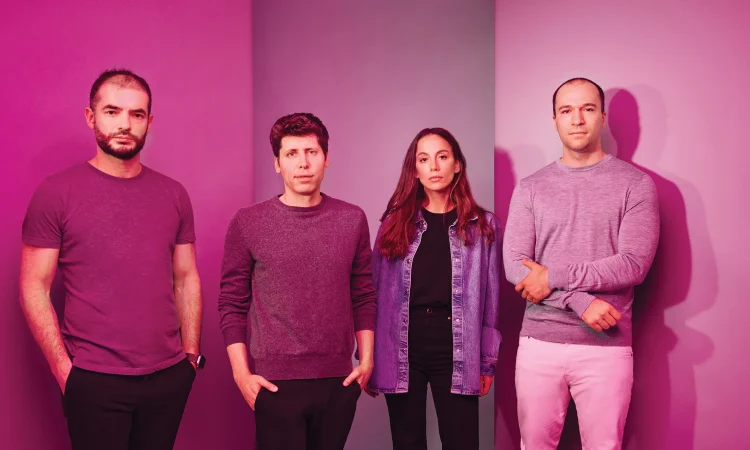
In a move that’s creating a stir across the artificial intelligence world, Mira Murati, the former Chief Technology Officer of OpenAI, has officially unveiled the first product from her new venture — Thinking Machines Lab.
After months of secrecy and speculation, Murati’s new company has stepped into the spotlight with a mission that could redefine how AI evolves: by focusing on fine-tuning and specialization, not just building bigger models.
The lab’s debut product, a fine-tuning and optimization platform for frontier AI models, represents what many experts believe is the next big step in AI development — teaching existing systems to adapt, align, and think contextually, rather than simply expanding their scale.
🚀 A Quiet Launch with a Bold Vision
Since her departure from OpenAI, Murati has kept a low profile, working quietly with a team of top-tier AI researchers. Now, with Thinking Machines Lab officially unveiled, her focus is clear: building adaptable intelligence that aligns deeply with human goals and values.
In her first statement since the launch, Murati explained:
“We’ve built incredible systems that can understand, create, and reason — but now the challenge is teaching them to specialize safely and align with human values and real-world contexts.”
The lab’s first product — internally called TML Core — allows organizations to fine-tune large language and multimodal models for specific use cases, industries, and ethical frameworks.
Unlike traditional model training, TML Core doesn’t require massive computing power. Instead, it empowers businesses to train AI systems on their proprietary data, customize tone and personality, and align them with company ethics or brand values.
💡 The Next Frontier: Fine-Tuning Over Scale
For years, AI advancement has been defined by scale — larger models, more parameters, and vast datasets. But that trend is shifting.
With rising costs and diminishing returns, many experts believe the future lies in fine-tuning — making models smarter through specialization, not just size.
“Fine-tuning is the new frontier,” said Dr. Ravi Nand, a founding engineer at Thinking Machines and a former member of OpenAI’s alignment team.
“We’ve reached a point where AI can do almost anything, but it still needs context. A medical AI should think like a doctor. A legal AI should reason like a lawyer. That’s what our tools make possible — safely and efficiently.”
TML Core uses a multi-layered fine-tuning approach, combining:
- Supervised learning
- Reinforcement learning from human feedback (RLHF)
- Intent alignment modeling — a new technique that lets users embed organizational values and communication styles directly into AI behavior.
👩💻 Backed by a Powerhouse Team
Thinking Machines Lab’s founding team includes top researchers and engineers from OpenAI, DeepMind, and Stanford’s AI Lab, united by a shared vision: to create AI that’s powerful and responsible.
Though funding details remain private, several industry insiders hint that Andreessen Horowitz and Sequoia Capital are among the early backers, alongside investors focused on AI safety and interpretability.
Murati’s leadership has been a key attraction. Known for her instrumental role in developing ChatGPT and DALL·E, she’s widely respected for blending deep technical expertise with product vision.
🌍 The Thinking Machines Philosophy
At its core, Thinking Machines operates under a simple guiding principle: “Teaching AI to think responsibly.”
Rather than chasing the biggest model, Murati’s team prioritizes:
- Adaptability: Models that learn effectively from smaller, context-specific datasets.
- Alignment: Integrating ethics and values during training — not afterward.
- Accessibility: Making fine-tuning affordable and available to smaller organizations, not just tech giants.
Murati believes the next phase of AI won’t revolve around one all-powerful model, but rather a network of specialized intelligences, each tailored for specific needs and supervised by humans.
🧭 Industry Reactions: Cautious Excitement
The launch has already triggered intense discussion among experts. Many view it as a welcome shift toward practical, human-centered AI, while others see it as a potential challenge to OpenAI and Anthropic’s dominance.
“Murati’s strategy is genius,” said Elena Cortez, an AI policy analyst at the Future Systems Institute.
“She’s positioning Thinking Machines right where the market is heading — toward customization, safety, and purpose-built AI.”
Early pilot programs are underway in finance, healthcare, and education. One European bank reportedly used TML Core to train an AI system that understands compliance laws across 12 jurisdictions — without exposing sensitive data or relying on external APIs.
If successful, Thinking Machines could become the go-to platform for organizations looking to tailor AI to their unique needs — a bridge between foundation models and real-world applications.
🔮 What’s Next for Thinking Machines
While the company remains tight-lipped about its roadmap, sources suggest upcoming releases could include:
- A developer toolkit for AI safety testing
- An interpretability dashboard for tracking model reasoning
- Possibly even an open-weight model fine-tuned under the lab’s safety protocols
Murati has also expressed interest in academic collaborations to explore the long-term effects of fine-tuning on reasoning, creativity, and ethics.
In an internal memo, she wrote:
“We are standing at the edge of a new phase of AI — one where intelligence is not just powerful but personal. Thinking Machines will help humanity teach AI not only to reason, but to care.”
🌟 A New Chapter for AI
With this launch, Mira Murati is signaling a new direction for the AI industry — one that values understanding over raw power and alignment over acceleration.
As the world debates the ethics and risks of artificial intelligence, Thinking Machines Lab offers a hopeful vision: AI that learns from us, adapts to us, and truly serves us.
Whether the lab can fulfill that vision remains to be seen, but one thing is certain — Murati’s quiet yet bold reentry marks a turning point. The age of smarter, safer, and more human-centered AI may have just begun.








