
Hyundai Unveils AI-Driven Software-Defined Vehicles at Bloomberg Forum
At the 2025 Bloomberg New Economy Forum in Singapore, Hyundai Motor Company showcased its ambitious vision for the future of mobility, highlighting the transformative role of artificial intelligence (AI) and software in reshaping the automotive industry. The presentation focused on not only the evolution of vehicles themselves but also how cars are manufactured, maintained, and upgraded in an increasingly digital world.
Pioneering Flexible Manufacturing
Hyundai’s CEO, José Muñoz, introduced the company’s concept of “software-defined manufacturing.” This approach makes production lines significantly more agile and capable of producing multiple vehicle models on a single line, thanks to AI-driven robotics and automation systems.
Key highlights of Hyundai’s flexible manufacturing approach:
- Self-Optimizing Factories: The production lines can monitor quality automatically, predict maintenance needs, and reconfigure assembly processes in real time.
- Efficiency and Adaptability: Factories can quickly adjust to changing market demands, reducing lead times and production inefficiencies.
- Sustainability and Innovation: Production hubs are designed to evolve alongside market trends while prioritizing smarter, more sustainable operations.
Software-Defined Vehicles: The Next Frontier
Hyundai emphasized its commitment to software-defined vehicles (SDVs), which separate software from hardware. This enables over-the-air (OTA) updates, allowing features, security enhancements, and performance improvements to be delivered directly to vehicles without a service visit.
Benefits of Hyundai’s SDV strategy:
- OTA Updates by 2025: Ensures vehicles stay current and can gain new capabilities after purchase.
- Connected Car Operating System (ccOS): Manages vast data streams from sensors, AI systems, and external networks for real-time vehicle coordination.
- Advanced Computing Power: High-performance AI processors support complex tasks, including autonomous navigation and driver-assistance features.
- Technology Partnerships: Hyundai collaborates with tech partners to keep its vehicles compatible with evolving software standards.
Intelligence Beyond the Vehicle
Hyundai’s vision extends beyond individual cars. Through its Global Software Center, the company is building a mobility ecosystem where hardware and software work seamlessly together, allowing vehicles to interact with each other, urban infrastructure, and mobility services.
Future plans and innovations:
- Software-Defined Everything (SDx): Vehicles, fleets, and city systems operate in harmony through AI-driven data systems.
- R&D Investments: By 2030, Hyundai plans substantial investment in software and research to ensure vehicles and mobility platforms are future-ready.
- AI-Driven Solutions: Focus on autonomous control, conversational AI, cybersecurity, and real-time analytics to enhance safety, convenience, and personalization.
AI-Enabled Factories in Action
Hyundai highlighted two key manufacturing hubs:
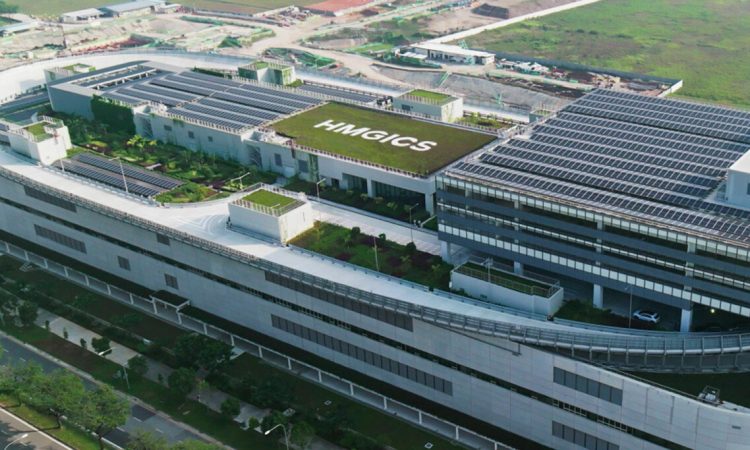
- Hyundai Motor Group Innovation Center, Singapore: Serves as a testing ground for AI, robotics, and smart manufacturing processes, allowing engineers to prototype and validate new techniques.
- Metaplant, Georgia, USA: Scales innovations for high-volume production to meet global demand efficiently.
A significant portion of the innovations from Singapore has already been successfully implemented in the Georgia facility, proving the practicality of Hyundai’s software-defined manufacturing strategy.
Strengthening Global Competitiveness
Hyundai’s software-first approach enhances not only technological innovation but also resilience and competitiveness. In a dynamic global landscape, flexible, intelligent production capabilities help Hyundai respond quickly to:
- Shifts in demand
- Supply-chain disruptions
- Regional regulatory changes
By producing multiple models efficiently on the same line, Hyundai reduces dependency on single markets or suppliers and ensures operational agility, positioning the company as a leader in software-driven, AI-powered mobility.
Consumer Benefits
Hyundai’s AI-driven strategy offers tangible advantages to drivers:
- Feature-on-Demand: Unlock or subscribe to new features even after purchasing the car.
- Vehicle Longevity: OTA updates keep vehicles up-to-date, improving resale value and usability.
- Smart, Safe Driving: AI-powered assistants, predictive safety systems, and analytics enhance safety and driving experience.
- Connected Mobility: Vehicles integrate seamlessly with urban infrastructure and mobility services.
Challenges on the Road Ahead
Despite its promising vision, Hyundai faces several challenges:
- Cybersecurity Risks: Protecting connected and software-dependent vehicles against cyber threats.
- Complex Software Management: Ensuring consistent updates and maintenance across global fleets.
- Regulatory Hurdles: Navigating differing regulations around software, data privacy, and autonomous features.
- Consumer Acceptance: Encouraging adoption of subscription-based and OTA services while addressing privacy and cost concerns.
Looking Ahead
Hyundai’s presentation at the Bloomberg Forum underscores a transformative vision: a future where vehicles, factories, and mobility ecosystems evolve continuously, powered by AI, software, and data.
If successfully executed, Hyundai could redefine the automotive industry by shifting the focus from hardware alone to software-driven, intelligent mobility, making urban transportation more adaptable, resilient, and sustainable.
The Bloomberg New Economy Forum highlighted that the next chapter of automotive innovation will not just be electric—it will be intelligent, connected, and software-first.








