
Groq Valued at More Than Double Its Old $2.7 Billion Despite Challenges in AI Chip Market
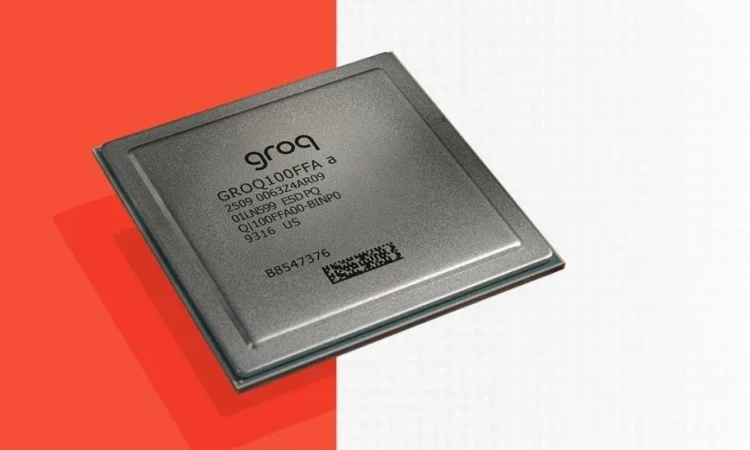
The new wave of investors believe that semiconductor startup Groq — which now has six different chips under development related to AI, network processing, and storage, according to a brief company statement — is a bet worth taking, even though it’s experiencing some growth challenges like other spin-out startups.
Illustrating surging interest in artificial intelligence (AI) hardware, Groq, a Silicon Valley-based startup that has developed high-performance chips for the AI market, has raised $750 million in its latest funding round. This gives the company a valuation of $6.9 billion, more than three times its $2.8 billion value in February 2020, signaling strong investor confidence in specialized AI hardware.
Strategically Focused on AI Hardware
Founded in 2016 by Jonathan Ross, a former Google engineer who helped design the Tensor Processing Unit (TPU), Groq has carved out a niche in the AI hardware market with its Language Processing Unit (LPU).
Key points about Groq’s LPUs:
- Purpose-built for AI inference: Efficiently run pre-trained models at scale.
- Not for AI training like traditional GPUs.
- Applications: Natural language processing, image understanding, and predictive analytics.
This strategic focus has positioned Groq as a serious competitor to household names such as NVIDIA and AMD, especially as the AI landscape shifts toward real-time, low-latency workloads.
Surging Investor Confidence
The recent funding round was led by Disruptive, a Dallas-based investment firm, and included:
- BlackRock
- Neuberger Berman
- Deutsche Telekom Capital Partners
- A major West Coast mutual fund
Existing investors such as Samsung and Cisco also participated, signaling confidence in Groq’s technology and strategic direction.
The new capital is expected to:
- Accelerate production scaling
- Increase investment in research and development
- Expand market presence
The participation of these well-known investors not only confirms the viability of Groq’s business plan but also demonstrates growing demand for AI-optimized hardware.
Global Partnerships and Expansion
Groq’s growth is further supported by strategic partnerships and international expansion:
- Earlier this year, Groq secured a $1.5 billion investment from Saudi Arabia to establish an AI hub.
- This initiative is expected to generate approximately $500 million in revenue for 2025, reflecting strong global demand for advanced AI infrastructure.
Additionally, Groq’s LPUs are being integrated into:
- Multiple cloud platforms
- On-premises systems
This facilitates deployment of open-source AI models from leading institutions and highlights the industry trend toward domain-specific hardware that accelerates AI workloads.
Challenges in a Competitive Market
Despite rapid growth, Groq faces challenges typical of a highly competitive AI hardware market:
- Need for continuous innovation to maintain an edge over rivals
- Potential supply chain disruptions that could affect production timelines
While the valuation surge is a positive signal, it also sets high performance and revenue expectations. Investors will closely monitor Groq’s ability to execute its ambitious growth plans and meet these expectations.
Looking Ahead
Groq is positioned at a pivotal moment in AI infrastructure development. Its focus on high-throughput, low-latency inference solutions aligns with industry trends requiring real-time AI applications.
Key considerations for the future:
- Companies increasingly rely on cloud AI hardware.
- Processors like Groq’s LPUs are essential for specialized AI workloads.
In summary, Groq’s dramatic rise in valuation reflects not only investor confidence but also the critical importance of specialized AI hardware in today’s industry. As Groq continues innovating and expanding globally, it remains a prime example of the potential of AI and its supporting infrastructure.








