
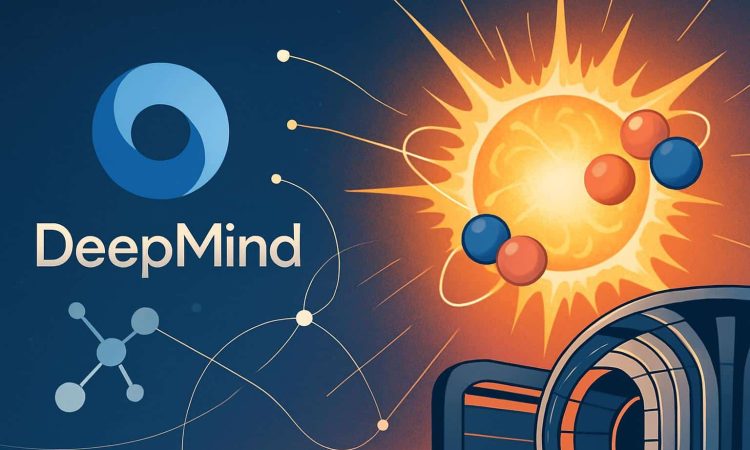
In an exciting and forward-thinking development, Google DeepMind has partnered with Commonwealth Fusion Systems (CFS), a Boston-based startup leading the charge in nuclear fusion research. The goal? To combine DeepMind’s cutting-edge artificial intelligence (AI) expertise with CFS’s fusion technology, potentially accelerating the creation of a clean, virtually limitless energy source. But there’s more to this partnership than meets the eye—it’s as much about strategic planning as it is about science.
The Promise of Fusion Energy
Fusion energy—the same process that powers the sun—works by fusing atomic nuclei to release energy. Unlike nuclear fission, fusion is cleaner, produces minimal radioactive waste, and uses abundant fuel sources.
For decades, controlled fusion on Earth has been a monumental challenge because it requires extreme conditions—temperatures exceeding 100 million degrees Celsius. Recent breakthroughs, however, suggest that achieving net-positive fusion—where the energy produced exceeds the energy consumed—might soon be possible.
CFS is developing SPARC, a compact tokamak reactor designed to prove this concept. SPARC aims to demonstrate that fusion energy is not only possible but commercially viable, setting the stage for a new era in sustainable energy.
DeepMind’s Role: AI Meets Plasma Physics
One of the biggest hurdles in fusion energy is plasma stability. Plasma—the hot, ionized gas where fusion happens—is unpredictable, making real-time control extremely challenging.
Here’s where DeepMind steps in:
- AI simulations: DeepMind’s AI models can predict plasma behavior and anticipate fluctuations before they happen.
- Reinforcement learning: Advanced algorithms identify the best operating conditions for the reactor.
- Real-time adjustments: AI helps fine-tune reactor parameters on the fly, keeping plasma stable for sustained energy production.
In short, DeepMind is transforming a decades-old scientific challenge into a data-driven, manageable process, bringing us closer to practical fusion energy.
Why Google is Investing
While this collaboration supports clean energy innovation, it also makes smart business sense for Google:
- Energy-hungry operations: Google’s global data centers consume massive amounts of electricity.
- Rising AI workloads: As AI usage grows, so does the need for reliable, affordable power.
- Future-proofing energy: Fusion energy could provide cleaner, more predictable electricity, reducing long-term operational costs.
By investing in fusion, Google isn’t just backing a technology—it’s securing a potential energy solution for the company’s future.
A Broader Trend in Tech and Energy
The DeepMind-CFS partnership reflects a growing movement: tech companies using AI to tackle energy challenges.
- Collaborating with startups allows tech giants to accelerate scientific breakthroughs.
- AI helps solve complex problems that once seemed insurmountable.
- Combining technical expertise with entrepreneurial energy initiatives sets a new model for innovation.
This partnership demonstrates how AI can play a transformative role beyond software, shaping critical technologies that impact society as a whole.
Implications for the Future
If successful, this collaboration could:
- Accelerate the commercialization of fusion energy.
- Provide Google with a sustainable energy source for its data centers.
- Encourage other tech companies to pursue similar collaborations.
AI is proving to be a key tool not just in tech, but in addressing some of the world’s toughest scientific challenges. With fusion energy, innovation and strategy are literally coming together.
Conclusion
Google DeepMind’s partnership with Commonwealth Fusion Systems is more than a scientific experiment—it’s a strategic, forward-looking move that blends innovation with business foresight. By leveraging AI to advance fusion energy, Google is helping pave the way for a cleaner energy future while securing power for its own operations.
This collaboration highlights a new era where technology, strategy, and sustainability intersect, showing the world that AI can be a powerful force in solving global challenges.








