
General Motors Bets Big on AI: Hands-Free Driving Meets Large Language Models
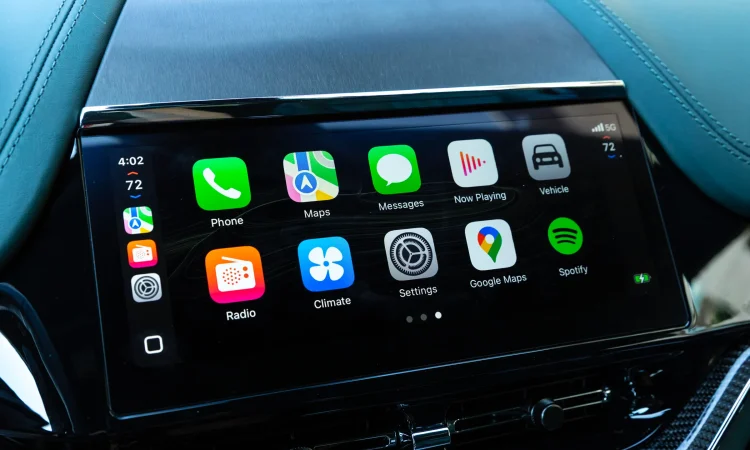
In today’s fast-moving world of automotive innovation, the line between car and computer is vanishing faster than ever. General Motors (GM), one of the most recognized names in the auto industry, is steering straight into that future. The company has announced a bold new move — integrating large language models (LLMs) directly into its vehicles.
This leap forward will be paired with an enhanced hands-free driver assistance system, reflecting GM’s vision of cars that aren’t just smart — they’re conversational, predictive, and deeply personalized.
And while the tech world cheers, one big question remains: Do we really want LLMs in our cars? GM’s answer is an unmistakable “yes.”
A Conversation on Wheels
Imagine getting into your car and skipping the buttons, menus, and screens altogether. Instead, you simply talk.
“Find the fastest route home with the least traffic.”
“Remind me to call my boss when I arrive.”
“What’s the best Thai restaurant near my meeting location?”
That’s the kind of seamless experience GM wants to deliver.
This new AI-driven system goes far beyond simple voice commands. It’s designed to understand context, tone, and intent — enabling natural, two-way conversations. Unlike traditional voice assistants that depend on pre-set responses, these advanced models can learn from your preferences, reason through complex questions, and adapt to your habits.
GM’s ultimate goal? To make driving feel less like interacting with a machine and more like chatting with a knowledgeable co-pilot.
From “Super Cruise” to “Ultra Assist”
GM isn’t just adding conversation — it’s upgrading control. The company’s well-known Super Cruise system already allows hands-free driving on thousands of miles of mapped highways in vehicles like the Cadillac Escalade, Chevrolet Silverado, and GMC Sierra.
Now, the next phase is coming: “Ultra Assist.”
This upgraded system blends AI-powered navigation, contextual awareness, and driver behavior learning into a single experience. It will learn how you like to drive, recognize your preferred routes, and automatically adjust to traffic or weather changes.
GM has hinted that Ultra Assist won’t rely only on sensors and cameras — it will also tap into generative AI’s predictive power, allowing vehicles to anticipate hazards and react proactively. This represents a major step toward cars that think ahead, not just follow commands.
The Power — and the Peril — of an AI Copilot
There’s no denying the excitement surrounding AI-powered vehicles. But with great innovation comes great responsibility — and a few concerns.
How safe is it to let AI handle private conversations, navigation data, and personal routines? Could a car’s “thinking assistant” ever make a dangerous error at a critical moment?
GM insists safety and privacy are its top priorities. The company says all in-car conversations will be processed securely, and personal data won’t be shared for advertising or sold to third parties. The mission, according to GM’s AI team, is to enhance convenience — not create a data-mining machine on wheels.
Still, challenges remain. LLMs are known to sometimes “hallucinate,” or give overly confident but incorrect responses. As Dr. Alicia Morgan, a cognitive systems researcher at Stanford, puts it:
“The challenge isn’t just technical — it’s psychological. If a car’s AI speaks with confidence, drivers might trust it too much, even when it’s wrong.”
That overtrust could have serious consequences on the road.
Reinventing the In-Car Experience
GM’s vision isn’t about replacing drivers — it’s about making driving more enjoyable and stress-free. The company describes its AI as a “mobility companion” that integrates seamlessly into your day.
Picture this: you start your car in the morning, and it already knows your schedule. It suggests the best route based on traffic and weather, reads your messages aloud, summarizes important emails, and even gives you a brief news update — all while you focus on the road.
Beyond convenience, the AI could handle predictive maintenance and diagnostics, alerting you to potential issues before they happen, scheduling service visits, or even communicating with dealerships directly. That’s more than tech — it’s peace of mind.
The Bigger Picture: AI as the New Dashboard
GM’s latest innovation isn’t happening in isolation. The automotive world is shifting fast — Tesla, Mercedes-Benz, BMW, and Hyundai are all experimenting with generative AI in their infotainment systems.
But GM’s extensive manufacturing network and connected-car expertise could make it the first automaker to bring truly conversational AI to the masses.
Cars, once mechanical marvels, are rapidly becoming AI-powered ecosystems. Just as smartphones became digital hubs in the last decade, cars may soon serve as personalized computing platforms that learn from their drivers.
A GM insider described the company’s vision succinctly:
“We’re building an intelligent vehicle ecosystem. The car won’t just respond — it will understand.”
Drivers Divided
Not every driver is ready for AI behind the wheel. Privacy advocates worry about data collection, while traditionalists prefer cars that focus on driving — not talking.
Yet, acceptance is growing. Studies show that younger drivers, in particular, are more open to AI-enhanced experiences. After all, many already rely on voice navigation, adaptive cruise control, and self-parking features daily.
One early tester of GM’s AI system summed it up perfectly:
“It’s weirdly natural. You forget you’re talking to software.”
The Road Ahead
GM’s bet on AI is more than a technological update — it’s a philosophical shift in how we think about driving. For over a century, cars have been machines of motion. Now, they’re evolving into machines of intelligence.
If GM succeeds, the car of the future won’t just drive you — it will know you. It will learn your preferences, predict your needs, and collaborate with you in real time.
But success depends on balance. Innovation must walk hand in hand with responsibility. As AI becomes our co-pilot, automakers will have to ensure drivers remain alert, aware, and ultimately — in control.
Because even in an AI-powered future, the most important connection in any vehicle is still the one between the driver and the road.








