
The Rise of Generative AI: What It Means for Creativity and Human Innovation
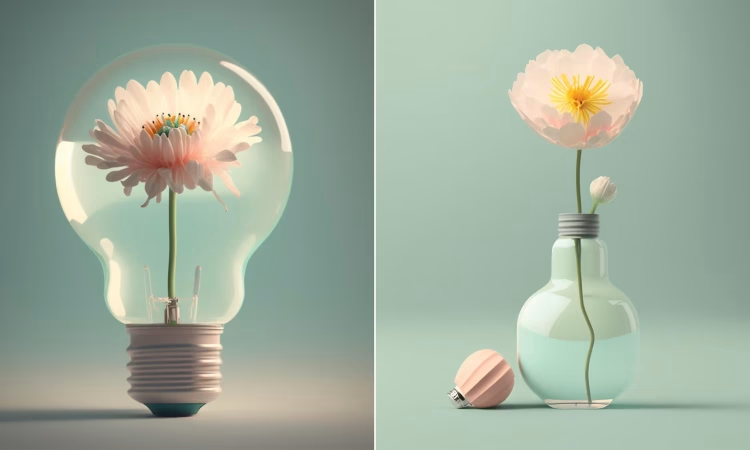
In recent years, a technological revolution has quietly transformed the way we create and innovate: the rise of generative artificial intelligence (AI). Unlike traditional AI, which mostly analyzes data or automates repetitive tasks, generative AI can actually create. From lifelike images and music to essays and software, this new technology is redefining what humans and machines can achieve together.
How Generative AI Works
Generative AI is built on advanced machine learning models, like large language models or generative adversarial networks (GANs), trained on massive amounts of data.
- These models generate outputs that mimic human-created content.
- What sets them apart is their ability to produce entirely new creations, not just copy existing information.
This means AI is evolving from being a tool for efficiency to becoming a true collaborator in the creative process.
The Impact on Creativity
The rise of generative AI has profound implications for creativity. Historically, artistic and intellectual pursuits were considered uniquely human. The idea of machines contributing meaningfully seemed like science fiction. Today, that assumption is being challenged.
- Visual arts: AI can generate intricate, original artworks rivaling those of human artists.
- Music: Musicians are experimenting with AI-generated compositions, blending human emotion with algorithmic precision.
- Writing and journalism: AI tools help draft stories, brainstorm ideas, and explore different narrative structures.
Enhancing Human Creativity
Generative AI isn’t about replacing human effort—it’s about enhancing it. Many creators are discovering AI as a partner that:
- Suggests new ideas
- Expands possibilities
- Helps overcome creative blocks
For example:
- A writer struggling with a novel’s opening can generate multiple draft options.
- A fashion designer can test hundreds of digital fabric patterns before production.
In short, AI extends the creative palette, helping humans explore ideas faster and more efficiently.
Originality, Ethics, and Ownership
With AI-generated content come new questions about originality and authorship:
- Who owns a painting or poem created by AI?
- Should credit go to the human guiding the AI, the machine itself, or both?
Legal systems are struggling to keep pace. Additionally, AI can reflect biases present in its training data. Ensuring AI contributes positively requires oversight, fairness, and inclusivity.
Generative AI in Business
The business world is taking notice of AI’s creative potential:
- Entertainment: AI drafts scripts, creates realistic effects, and generates promotional content.
- Healthcare: Researchers use AI to design new drugs and simulate complex biological processes.
- Education: AI powers personalized learning experiences, adapting to each student’s pace.
Across industries, AI amplifies human creativity, turning imaginative ideas into real-world results faster than ever.
Future of Work and Skills
Generative AI raises questions about work and skills. If machines can produce creative outputs at scale, how do human roles change?
Experts suggest that the key is collaboration. Human qualities like intuition, ethical judgment, and originality remain essential. Professionals who can harness AI tools effectively while maintaining oversight will lead the next wave of innovation.
Democratizing Creativity
AI is also lowering barriers to creative expression:
- Students in small towns can experiment with animations.
- Hobbyist musicians can explore complex compositions.
- Aspiring writers can get guidance on storytelling.
This democratization promises a more diverse and inclusive wave of innovation than ever before.
The Human-AI Creative Partnership
Despite its capabilities, AI cannot replace human creativity. It lacks consciousness, emotion, and lived experience—elements that give art and innovation depth.
The most compelling creations will likely come from humans and AI working together:
- Machines provide computational power and rapid iteration
- Humans add context, intention, and emotional resonance
This synergy could define the next era of innovation.
Looking Ahead
Generative AI is evolving rapidly. Future models will:
- Understand context more deeply
- Produce outputs almost indistinguishable from human work
This evolution challenges creators, audiences, and policymakers to rethink creativity, value, and collaboration. At the same time, it opens opportunities to push the boundaries of human imagination and tackle complex problems like never before.
Conclusion
The rise of generative AI is more than just a technological milestone—it’s a paradigm shift. By collaborating with humans, AI acts as an enabler and amplifier of human potential.
The journey ahead will require careful attention to ethics, legal frameworks, and social impact, but it also promises a future where human ingenuity and AI work together to explore, imagine, and innovate. Creativity is no longer solely human—it’s now a shared space between humans and machines.








