
Gemini Prepares to Replace Google Assistant on Android: The Dawn of AI Frameworks
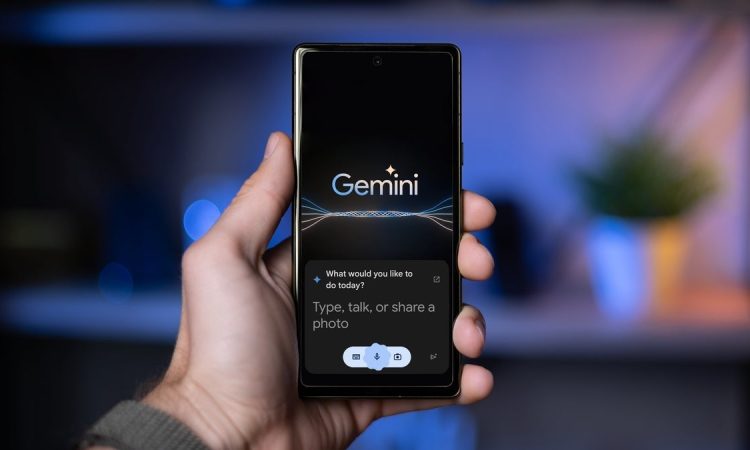
Google to Dismiss Google Assistant in Favor of Advanced AI Model Gemini
Google is planning a bold transition that would see it retire its old voice assistant, Google Assistant, and replace it with the far more sophisticated AI model, Gemini. It’s a sea change in how Android users will likely think about their phones and how they viscerally interact with them—a move that confirms Google’s strategic belief in artificial intelligence as the defining element of the next era of digital interaction.
What Is Gemini?
Gemini is Google’s new family of AI models, meant to be faster, smarter, and more versatile than those that came before it. Developed by Google DeepMind, Gemini is intended to go head-to-head with other immensely powerful AI models such as OpenAI’s GPT-4 and Anthropic’s Claude.
Gemini is built upon:
- Advanced natural language processing
- Sophisticated reasoning and logic frameworks
- Multimodal understanding, including images, audio, and video
- Coding capabilities
In short, Gemini is not just a virtual assistant – it’s a smart, digital buddy that understands context, handles complex tasks, and learns more about you in richer, more dynamic ways.
Why Replace Google Assistant?
Google Assistant debuted in 2016, quickly becoming the go-to assistant for Android users. It enabled voice-controlled actions such as:
- Setting reminders
- Sending texts
- Checking the weather
- Playing music
At the time, it was a major leap forward. However, generative AI has significantly raised user expectations since then.
Why Google Assistant Falls Short Now:
- Limited capabilities compared to current AI models
- Scripted and pre-defined flows that lack flexibility
- Cannot generate custom responses or handle complex prompts
“Google recognizes that users have moved beyond simple commands and are now looking for smart, contextually aware interactions that let them perform tasks in a creative, generative way,” says Courtney.
Gemini is designed from the ground up with these expectations in mind. It adapts on the fly, producing original, intelligent responses and handling complex, layered inputs with ease.
The Rollout Strategy
Google has already begun incorporating Gemini into Android via its dedicated app. For Pixel 8 Pro and Pixel 8 users, Gemini can already be selected as the default assistant.
What to Expect Moving Forward:
- Gradual rollout to more devices and regions
- Phasing out of Google Assistant as the native voice interaction
- Deeper OS-level integration for advanced tasks like:
- Writing emails
- Managing calendars
- Summarizing documents
- Editing photos
- Writing and debugging code
According to inside sources and developer documentation, Gemini will become the central AI interface for Android.
A Smooth Experience — Or a Learning Curve?
Replacing a tool as widely used as Google Assistant comes with challenges.
Many users value:
- The familiar tone of Assistant
- Seamless smart home integration
- Straightforward commands
Google is working to ensure that Gemini offers a painless transition.
Familiarity with Flexibility:
- Gemini supports legacy voice commands like “turn off the lights”
- It also understands richer requests like “set the living room lights to a cozy evening mood”
- Interactive tutorials and guided prompts are being added to help users adapt
Still, users may encounter a learning curve due to Gemini’s conversational style and deeper capabilities.
What Makes Gemini Special?
Gemini’s strength lies in its ability to:
- Reason intelligently
- Understand context
- Respond like a human
Unlike traditional assistants that respond to keywords, Gemini interprets entire contexts and intentions.
Key Features:
- Multimodal Understanding:
Can process images, text, and audio
E.g., Take a photo of a document and ask Gemini to summarize it - Cross-App Integration:
Works seamlessly across apps
E.g., Draft an email from a meeting transcript or populate a presentation with spreadsheet data - Code Generation:
Assists developers with writing and testing code
Supports multiple programming languages and detects bugs or logic flaws - Personalization:
Learns from user behavior over time
Offers smarter reminders, suggestions, and summaries
A Broader AI Push from Google
Gemini is just one piece of Google’s broader shift toward AI-first experiences. The company is embedding generative AI into core products such as:
- Gmail (with “Help me write”)
- Google Docs (with “Smart Compose”)
- Chrome (with “AI-driven search”)
This strategic move reinforces Google’s long-term vision: a deeply integrated AI layer across all platforms to drive productivity and deliver new, immersive experiences.
As the world’s most popular mobile OS, Android is the ideal environment to showcase Gemini’s capabilities.
Gemini doesn’t just replace Google Assistant — it redefines what an assistant can be.
Concerns and Criticism
While many are excited about Gemini, there are notable concerns from users and privacy advocates.
Privacy Issues:
- AI models like Gemini require large-scale data processing
- Uncertainty remains about how user data is stored, used, and retained
Google has pledged to uphold strong privacy standards, including:
- User control over activity history (review, manage, delete)
- Sensitive data processed locally (on-device) wherever possible
Compatibility Issues:
- Some older Android devices may not meet the hardware requirements for full Gemini functionality
- In such cases, Google may:
- Offer a lighter version
- Temporarily extend Google Assistant support
What’s Next?
Fully replacing Google Assistant with Gemini will take time. Google plans to:
- Continue with a slow, deliberate rollout
- Collect user feedback
- Fix bugs and optimize performance
By 2026:
- Most new Android devices are expected to ship with Gemini as the default AI interface
Conclusion
This change isn’t just another software update — it’s a paradigm shift.
Gemini blurs the line between assistant and co-pilot, offering a smarter, more intuitive, and highly personalized experience.
The era of passive voice commands is fading, and in its place is an intelligent system that collaborates, thinks, and adapts.
For Android users, the future is here — and Gemini is leading the way.








