
Faraday Future Drops Another Bold EV Concept—This One’s an Electric Van with a Digital Face
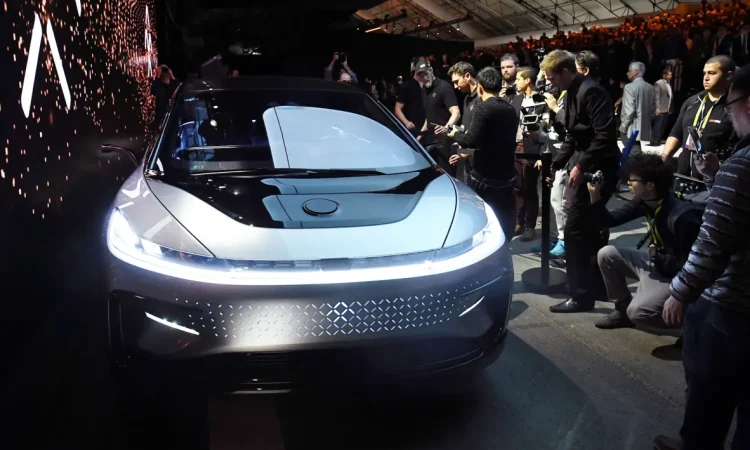
Faraday Future is back in the headlines — and no, it isn’t for actually getting cars on the road, but for developing another over-the-top concept car that is both futuristic and far-fetched. The embattled electric vehicle startup just unveiled a new electric van concept built for the U.S. market. And even though the design is eye-popping (it includes an LED display where you’d expect to see a front grille), industry observers are starting to wonder if this vehicle will ever get made.
An Old Story; a New Face (Literally)
The new concept is being pushed as a next-generation electric van that will appeal to lifestyle buyers as well as commercial users. But the real headliner is this car’s front fascia: Rather than a traditional grille or even just a typical EV front panel, the van’s face is a full-width LED screen.
- The display is capable of showing patterns, symbols, or animations — converting the front of the van into a screen.
- The “digital skin” will permit drivers to customize their car’s looks and even “talk to pedestrians or other vehicles.”
It’s a bracing design move, an explicit effort to make the van stand out in an increasingly crowded market for electric people movers. But the one thing Faraday Future has never lacked is ambitious design; the issue has always been the follow-through.
Faraday Future’s Rocky Road
Launched in 2014 with lofty hopes of challenging Tesla head-on, Faraday Future quickly made a splash with its slick concepts and tech-focused designs. Its most prominent prototype, the FF91, was revealed in 2017 as a luxury EV with:
- Autonomous-driving features
- Advanced in-car infotainment
Despite several promised launch dates and some eyebrow-raising claims, the FF91 still wasn’t available to buy.
The company’s history has been anything but smooth:
- Mismanagement
- Executive shake-ups
- Ever-changing business strategy
Faraday Future managed to go public in 2021 after a SPAC merger, but its poor stock performance and slow vehicle production have alienated both investors and potential buyers.
What the New Van Promises
This new electric van continues Faraday Future’s tradition of bold design and tech-centric vision. While official specs are still under wraps, the company claims the van will feature:
- Next-generation infotainment and user interface technology, potentially including voice interaction and gesture control
- Self-driving functions, though without an official Level 3/4 designation
- Modular seating and cabin configuration for ride-sharing or personal use
- Over-the-air updates to keep the software responsive and up-to-date
The LED front display remains the centerpiece of the concept—both as a visual gimmick and a symbol of the company’s futuristic ambitions. Faraday Future suggests it could:
- Integrate with smart city systems
- Serve marketing functions
- Display messages, images, or real-time status updates
But Will It Ever Drive?
Industry experts are, understandably, skeptical. While the electric van market is heating up—thanks to offerings like Ford’s E-Transit, Canoo, and Rivian—Faraday Future hasn’t even delivered the FF91.
“The van seems great on paper, but the FF91 seemed great on paper too, and we still haven’t seen that vehicle fully make it to the market yet,”
— Alex Chen, EV Market Watch
He adds,
“Faraday Future has done more teasing than producing. Until they produce an actual manufacturing plan — and then proceed to adhere to it — it’s difficult to regard this as more than vaporware.”
This sentiment is shared by former employees, investors, and even hardcore EV enthusiasts, many of whom have grown weary of the repeated missed deadlines.
The EV Market Is Moving On
As Faraday Future continues to debut conceptual vehicles, the broader EV industry is evolving rapidly:
- Tesla, Ford, GM, and Hyundai are already delivering electric vans and trucks at scale.
- These automakers benefit from:
- Established production facilities
- Dealership networks
- Global logistics chains
Moreover, regulatory pressure and consumer demand are prioritizing deliverable products over conceptual flair. Governments are enforcing internal combustion phase-out deadlines, and fleet managers want road-ready electric vans now—not later.
Faraday Future’s newest concept feels less like a breakthrough and more like an attempt to stay relevant in the conversation.
Is There a Strategy Here?
Some analysts believe the recent wave of concept announcements may be targeted toward attracting investors or strategic partners.
Faraday Future is touting the electric van’s:
- Modular platform
- Flexible utility across use cases
This might interest commercial fleet owners or urban mobility planners looking to experiment with next-gen transportation models.
Still, partnerships and funding deals require more than flashy ideas. What matters are:
- Real production timelines
- Working prototypes
- Regulatory certifications
And those, unfortunately, remain missing from Faraday Future’s playbook.
A Brand at a Crossroads
To longtime observers, this electric van reveal might feel like déjà vu: another shiny concept, another elaborate pitch, another cycle of “what if.”
While some find it frustrating, others see it as more proof that Faraday Future can’t cross the finish line. Still, few can deny the creativity and bold ambition the company brings to the table.
The big question: Will it ever materialize into a real product?
That answer remains as uncertain—and as distant—as ever.
Final Thoughts
Faraday Future’s new electric van with a digital face might turn heads, but whether it will ever become a purchasable vehicle seems doubtful.
Until the company proves it can build and scale production, every new concept feels more like a well-polished placeholder than genuine progress.
In today’s EV market—where execution is king—Faraday Future must shift gears quickly to stay in the race.
Otherwise, this electric van may remain nothing more than an ambitious sketch on the drawing board.








