
How Blok Uses AI Personas to Revolutionize Real-World App Testing
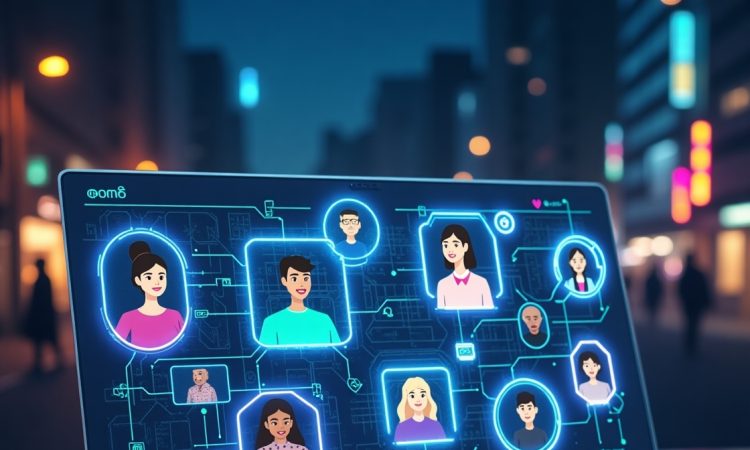
2024-founded AI-testing start-up Blok attracts attention with its radical approach to app testing. Blok was founded in 2024 by Tom Charman and Olivia Higgs and is a no-code, AI-powered app testing platform. The company has built a platform that leverages AI-created personas to help product teams understand how real people would engage with an app — well before a single line of code has been written.
Solving the Testing Bottleneck
Conventional user testing approaches typically involve live A/B testing, beta launches, or post-launch analytics. These approaches, which are valuable, are reactive — they show you what went wrong only after you had a less than optimal experience.
Blok seeks to change that by moving testing into the design process. Their system creates realistic user flows and behavior so developers and designers can catch usability problems or mismatches well before time is wasted or unintended consequences materialize.
The Founders and Their Mission
Tom Charman and Olivia Higgs decided to co-found Blok after spotting an increasing gap in the product development workflow space. Blok is a development platform making it easier for edtech and travel startups to build and scale new products and services. They saw that when design mockups were unable to account for real-time user interaction, there was a gap between intent and behavior — and that’s something that they built Blok to fill.
To date, Blok has raised $7.5 million, including a seed round of $5 million led by MaC Venture Capital with participation from Protagonist, Rackhouse, Weekend Fund and others.
What Blok Actually Does
Blok’s service functions by gathering real user behavior with mockups and product goals. Here’s how it functions:
- Consumes historical event data from tools like Mixpanel, Amplitude, or Segment
- Constructs AI personas using behavior clusters
- Takes Figma (or other design) mockups for new app features
- Depicts those AI personas using the app in various flows
- Provides analytics reports showing performance bottlenecks, unexpected drop-offs, and user behavior
The personalities aren’t just scripted bots — they’re designed to mirror the kind of real user weirdness, patterns of reasoning, and even errors.
Target Markets
Blok’s early focus is on finance and health care apps, where product decisions can be high stakes. These areas generally need higher levels of assurance prior to deployment, so predictive testing is particularly useful.
Early results from these industries indicate that Blok’s simulations are greatly expediting iteration cycles. What used to take weeks of real-world feedback now takes hours in simulation.
Business Model & Early Growth
Blok operates under the SaaS model and derives the cost of services based on team size and volume of usage. While it’s early days yet, the company expects to do mid-single-digit-millions of revenue this year and is hoping to spread into other business areas that have been relatively slow to adopt cloud services (other regulated industries) and further into cloud-based SaaS, B2B, and e-commerce services.
Cost to compute is still a consideration — especially in simulating thousand-user journeys — but Blok’s early customers point to strong demand for the product.
AI Personas: What Sets Them Apart?
Blok’s personas are no foregone conclusions. They’re made with a blend of:
- Historical app usage data
- Psychological models of user decision-making
- Realistic objectives (i.e. checkout purchase, appointment)
These personas can travel through apps as a curious or cautious or distracted user might. They wander, bumble, misclick, or run like the dickens — just like humans.
This realism is what makes Blok stand out from simple automation tools or click-through simulations.
From Hallucination to Prediction
Blok comes to life at a moment when AI wants to move from creating content to simulating behaviors. Where tools like ChatGPT can write text or Midjourney can produce images, Blok is about simulating behavior — how users navigate and experience digital products.
In that way, Blok is part of a larger trend in AI: the move toward predictive UX in which teams know about problems before they happen.
Developer Reactions
Early developers have been excited to share their impressions on places such as Hacker News and Product Hunt, especially about:
- Speed to insight: “We simulated and addressed three major UX issues in a single sprint.”
- Design validation: “Instead of having to start building a checkout flow, we used Blok to prototype what we would see in ten user journeys. Five failed — we changed our mockup.”
- Team alignment: “We would get product, design, and engineering aligned on priorities within days when we had Blok data in hand.”
That said, some skeptics caution against depending too much on AI behavior as a proxy for actual users, and point out that the success of simulations still hinges on good training data.
Tradeoffs and Challenges
Blok is no exception to the pitfalls of any AI-powered technology:
- Compute load: Generating large persona sets can be CPU-intensive
- Persona realism: Depends on high-quality content for realistic persona behavior
- What it won’t cover: The tendency is that it won’t work as well with user interface interactions; there is a risk of not detecting all problems related to the backend or network
And yet, the speed and prescience are winning over quite a few product teams.
The Bigger Picture
Blok’s ascendance is indicative of a much larger rethink in how tech companies construct software. The traditional model of “build now, learn later” is being challenged as systems today are simulating before anything is live.
For smaller start-ups, it means getting out without fear. For flotillas of teams, it helps prevent feature bloat or bad interactions.
In addition, Blok adds on to the tools you’re already using rather than competing against them. You can use it before Optimizely (A/B testing), with Figma (design), and after analytics platforms (insight into live user behavior).
Strategic Vision
Tom Charman, founder, says it’s only the tip of the iceberg. The vision for Blok in the long term is:
- Extending into the world of mobile and voice
- Emulating emotional user states such as frustration or curiosity
- Embedding persona feedback in your Jira, Asana, or GitHub
- Simulating the success or conversion of a product in the long term
Blok’s real ambition, Charman adds, is to “make user empathy part of the dev cycle, not just a UX talking point.”
The Future of Human-AI Product Collaboration
Picture this: You’re a designer, marketer, or engineer and you’ve been working for weeks on a new landing page, feature enhancement, or a complete site redesign.
Blok’s product is a sea change: AI is no longer just riding shotgun in the coding process — it is starting to stand in for the user. Which is to say: AI is no longer simply aiding you in building, it’s aiding you in understanding how what you build will feel.
We are going from AI that writes code to AI that informs decisions on design. It has the potential to reorient how every product manager, designer, and engineer does their job — if it succeeds.
Final Thoughts
The impact of Blok’s effort will lie in its real balance of realism and insight, scope and precision, foresight and validation. But one thing is certain: It has already illustrated that AI personas are not merely science fiction — they’re quickly becoming a new norm in how great products are built.
In a world where time-to-market is rapidly decreasing and user expectations are rapidly increasing, Blok provides a powerful promise: Make better by knowing users — before you even have users.








