
Why Apple Is (Not So) Slow to the AI Party: A Matter of Precision Over Time
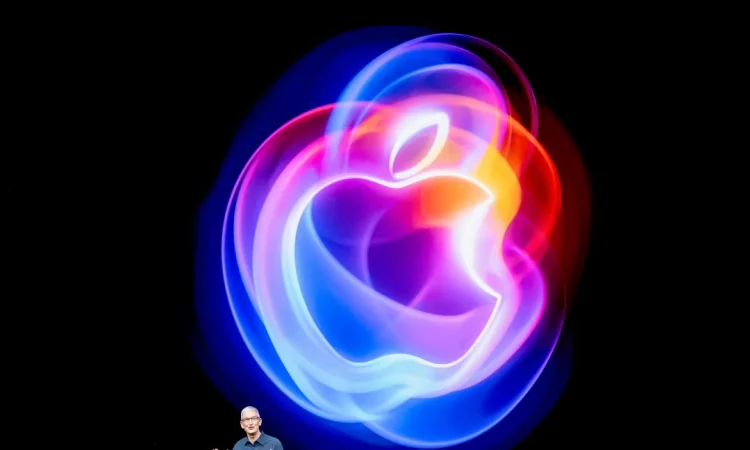
In the rapidly evolving landscape of artificial intelligence (AI), tech heavyweights are racing to develop the newest tools and technologies to make AI easier to implement. Google is pouring a flood of Gemini-powered enhancements into its services, Microsoft is folding Copilot into just about every part of its ecosystem, and startups are pumping out AI features at an astonishing clip. But one of the biggest players is following a less aggressive path: Apple.
And Apple is likely the most measured of its rivals on AI. Its new suite of features, bundled as “Apple Intelligence,” debuted in June 2025 — but did not become available in widespread use until some unspecified point in 2026. That’s an eternity in a market where trends change by the quarter and getting to market first always appears to take precedence over getting it right. So what’s Apple’s apparent problem?
For the answer, we need to look at Apple’s history, strategy, and values. Instead of a signal of tech lag, this AI patience by Apple may be the company’s most daring competitive play yet.
A Philosophy of Precision
Apple’s philosophy for developing products has always been about controlling the experience, the polish, the user experience. It could be a new piece of hardware or a feature in some software, but the company tends to hold off until it can offer a polished, smooth experience that feels “Apple-like.”
However, AI is a poor fit for this worldview, as it does not behave in predictable ways or have predictable outcomes. Letting half-baked AI tools loose, even in beta, would be un-Apple-like. Google and Microsoft can be just fine with releasing AI updates that occasionally misfire or hallucinate—not so much Apple.
Apple’s tardiness, insiders say, is by design. And rather than rapidly deploying unproven tools, what it’s working on is building integrally secure and private AI experiences. It all takes time — but at Apple, the long game has always mattered more than an initial sprint.
Privacy as a Cornerstone
One of the key differences in Apple’s AI strategy is that it is focused on privacy. The company has said over and over that it wants to build AI tools that live up to its long-standing promise to protect user data.
Apple Intelligence isn’t just branding spin — it’s a system architecture that privileges:
- On-device processing
- End-to-end encryption
- Minimal data sharing
While many AI models depend on cloud computing and data collection, Apple’s system is designed to perform as much processing as possible locally, using Apple’s own custom silicon chips.
By contrast, the data-devouring models employed by other firms typically need enormous troves of user data to work well. Apple is gambling that people will pick reliable, private AI machines — even if they have to wait for them.
Hardware Preparedness – and the Apple Ecology
A third reason for the 2026 time frame is hardware preparation. Apple has been designing its AI features to run on cutting-edge iterations of its chips — like the M4 in Macs and A18 in iPhones — rather than on the company’s servers, so that its devices can take on complex AI processing on their own.
But that’s not everybody, and Apple has to make sure their ecosystem is prepared for the rigors of AI.
By 2026:
- More of its user base will have upgraded to newer devices
- A larger, more powerful install base will exist
- Timing will align with Apple’s traditional hardware update cycles
This means that when AI does arrive, it will do so without handicapping performance or battery life.
Also, Apple is famous for its tight integration of software and hardware. Waiting gives the company time to perfect this integration—so that AI features aren’t simply there, they feel native and intuitive.
Learning from Competitors’ Mistakes
Apple has been relatively coy about AI—until recently—but the firm has been observing the rest of the industry very closely.
- Google’s AI Overviews have been criticized for driving traffic away from publishers and occasionally providing misleading or wrong summaries.
- Microsoft’s Copilot has received mixed reviews, with users noting inconsistencies and a lack of balance between automation and control.
These early missteps highlight the dangers of rushing AI to market. Apple, forever a student of others’ mistakes, appears to be working to avoid a similar uproar. Rather than being a cautionary tale, it hopes to set a thoughtful example for deploying AI.
Brand Trust and User Expectations
Apple has cultivated a brand based on:
- Trust
- High quality
- Premium experiences
Its customers expect features that “just work,” with minimal friction and maximum polish. Laying down an AI system that is experimental or unreliable would place that trust at risk.
Other companies, like Google and OpenAI, often release features as betas or experiments — setting expectations that imperfections are part of the package. Apple rarely operates that way. For Apple Intelligence to meet company standards, it must be more than a proof of concept — it must be production-ready.
That trust is also deeply rooted in the Apple ecosystem. Users often own multiple Apple devices. When AI features finally arrive, they likely won’t be device-specific — with iPhones, iPads, Macs, and Watches communicating seamlessly, deepening Apple’s already tight-knit ecosystem.
A Quest for AI That Can Make Its Own Choices, Not Just Recognize Them
Another subtle yet crucial difference in Apple’s AI strategy is that it’s meant to augment human productivity and creativity, not replace it.
Apple Intelligence is currently designed to:
- Summarize emails
- Create images
- Sort information
- Assist with tasks
These tools are built to supplement user capabilities, not detract from them. This aligns with Apple’s broader philosophy around technology — out of the way unless needed.
Where others promote AI as something that can do the work for you, Apple promotes it as something that works with you.
Conclusion: Slower, Smarter, Safer
In the AI race, speed often gets headlines — but it doesn’t always win users. Apple’s slow approach to the full deployment of Apple Intelligence in 2026 may seem sluggish, but it reflects a strategy built on:
- Sustainability
- Trust
- User-centric design
Rather than chasing the hype, Apple is working to create something lasting. With its emphasis on privacy, seamless integration, and thoughtful application, the company is preparing to introduce AI when:
- The time is right
- The hardware is ready
- The experience is complete
In a whirlwind of tech fads and rushed releases, that might just be the cleverest move of all.








