
Apple’s AI Siri Could Be Running on OpenAI: The Voice Assistant Industry’s Next Challenge Has Begun
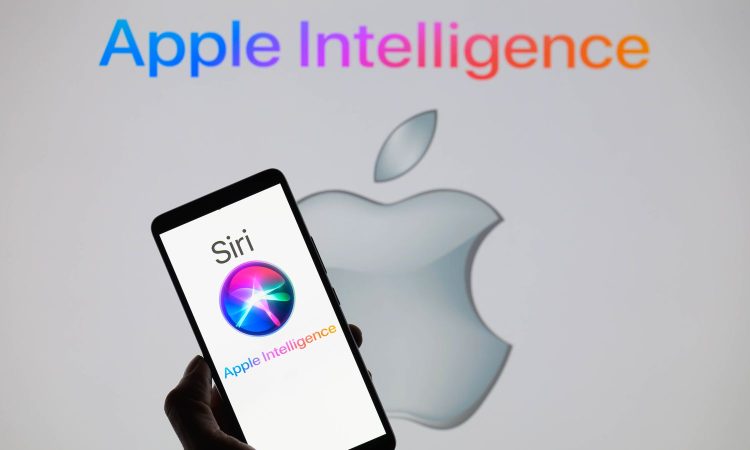
July 2025 — In what could be a game-changing development that reshapes the smartphone AI landscape, Apple is said to be considering integrating OpenAI’s leading AI technology more closely into Siri, its long-established virtual assistant.
The news, although not officially confirmed by either company, has sent ripples through the tech industry and raises the possibility of a new era in how Apple devices understand the people who use them.
A Long Time Coming
Siri was introduced in 2011 with the iPhone 4S as a quirky, futuristic way to interact with a device. A user could say something like:
- “Remind me to call mom when I get home,” or
- “Send a message to Jenny that says I’m running 15 minutes late.”
And Siri would follow through.
At the time, it was ground-breaking. But over the years, Siri’s development has leveled off. Rivals — including Amazon’s Alexa and Google Assistant — have advanced rapidly, offering faster, smarter, and more context-aware artificial intelligence.
Apple’s focus on privacy has been a double-edged sword — a safeguard for users, but also a restriction on the amount of data Siri could use to improve. Meanwhile, the rise of large language models (LLMs), powered by companies like OpenAI, has dramatically improved AI’s ability to understand, react to, and even anticipate human wants and needs.
The OpenAI Advantage
Copies of OpenAI’s GPT models, such as the recent GPT-4.5 and the rumored GPT-5, have been at the forefront of the generative AI space — powering smart chatbots, coding tools, and creative applications.
Unlike rule-based systems, these models can:
- Consider complex language,
- Interpret intent, and
- Respond in conversational, human-like ways.
Building this level of intelligence into Siri would be a game-changer.
Rather than spouting one-dimensional responses or misinterpreting context, a Siri powered by OpenAI could conceivably:
- Engage in nuanced, multi-turn conversations,
- Help with tasks, and
- Assist proactively — perhaps even exceeding the current state-of-the-art in AI.
Imagine not just saying, “Set a meeting,” but instead:
“Find a time next week when I’m free and John and Priya are both available, schedule a Zoom call with them, and generate a summary of our last meeting.”
With GPT-like capabilities, Siri could do all that with almost no follow-up questions.
Behind the Scenes: What’s Driving the Speculation?
The speculation is based on a discreet series of hints:
- At Apple’s WWDC 2025, the company revealed new Siri capabilities, describing it as a “smarter, more useful assistant experience” launching later this year.
- While OpenAI wasn’t mentioned by name, industry analysts and onlookers noted striking similarities between Siri’s new functionality and GPT-powered interactions.
Additionally, Apple CEO Tim Cook has:
- Praised generative AI in interviews,
- Reiterated Apple’s dedication to responsible AI use, and
- Hinted that Apple is “not building everything alone.”
This willingness to collaborate — rare for Apple — adds weight to the rumor.
Further, renowned analysts like Mark Gurman and Ming-Chi Kuo report that Apple has signed licensing deals with third-party AI firms including OpenAI and Anthropic to test both on-device and cloud-based AI services.
A Strategic Alliance?
If Apple is indeed turning to OpenAI, the decision would be both circumspect and strategic.
- Apple commands deep expertise in hardware and a thriving ecosystem.
- OpenAI, meanwhile, leads in LLMs and conversational AI.
This alliance could offer Apple a ready-made solution to bridge its current shortcomings in natural language understanding.
Importantly, the partnership could respect Apple’s strict privacy policies:
- Routine queries could be handled by on-device AI, and
- Complex requests could be routed (securely and anonymously) to OpenAI’s cloud.
In such a scenario, Apple gets the best of both worlds — OpenAI’s capabilities and user trust intact.
Implications for the Tech Industry
If this partnership materializes, it could trigger shockwaves throughout the tech world:
- It would redefine the bar for what a voice assistant can do.
- Google and Amazon would face increased competitive pressure in the space.
- Consumer interest in Siri — once considered outdated — could be reignited.
With an OpenAI-powered Siri, Apple could once again emerge as the leader in personal AI.
Developers and businesses also stand to benefit. Apple might:
- Introduce new APIs for this smarter Siri,
- Enable deep integrations with apps, services, and home automation, and
- Lay the foundation for a new generation of AI-infused apps across iPhone, iPad, and Mac.
Balancing Innovation with Ethics
With great power comes great responsibility.
Both Apple and OpenAI emphasize the importance of ethical AI use:
- Apple is known for protecting user privacy.
- OpenAI includes safeguards and moderation tools in its APIs.
If they join forces, it could lead to one of the most ethically guided AI rollouts in history:
- No personal data collected without explicit consent.
- AI hallucinations and misinformation would likely be rigorously filtered.
What’s Next?
The question everyone’s asking: When will we see it?
Rumors suggest:
- Apple may begin beta testing the upgraded Siri in iOS 19, and
- A full release is expected this fall, coinciding with the iPhone 17 launch.
Developers could gain early access for integration testing and feedback submission.
The voice assistant war is no longer a slow burn — it’s heating up fast. This time, the competition is about:
- Trust
- Real utility, and
- AI embedded seamlessly into daily life
Final Thoughts
For Apple, a closer relationship with OpenAI would be more than just a technical enhancement — it would be a declaration of intent to reclaim AI leadership.
This wouldn’t be accomplished through incremental upgrades, but through bold, strategic steps forward.
If executed properly, this could usher in a new era of personal AI — one where voice assistants are not just functional but truly intelligent companions living in our pockets.
Whether the partnership is already underway or still being finalized, one thing is clear:
Siri is on the brink of becoming much, much smarter.








