
Why Is an Amazon-Funded AI Movie Sci-Fi Orson Welles Fan Fiction?
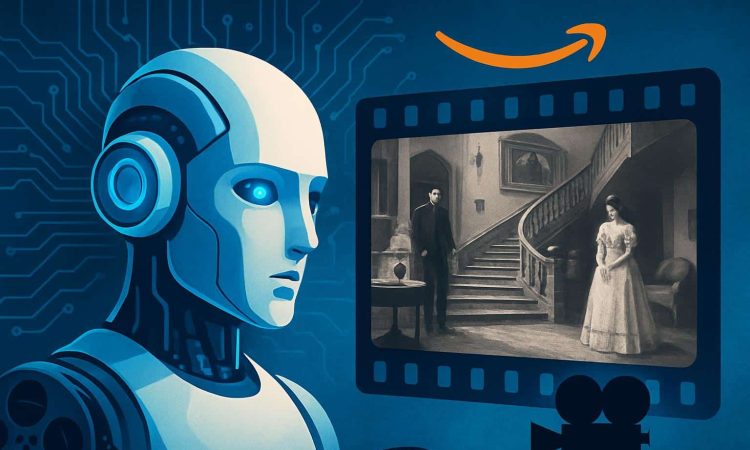
In what seems to be an intriguing, if slightly eyebrow-raising, effort, Showrunner, the AI-fueled platform funded by Amazon’s Alexa Fund, is turning its attention to a somewhat ambitious film project: reconstructing the lost 43 minutes from Orson Welles’ 1942 film The Magnificent Ambersons. This work, combining artificial intelligence and cinematic restoration, poses interesting challenges at the intersection of technology, creativity, and intellectual property.
The Legacy of The Magnificent Ambersons
- Orson Welles’ The Magnificent Ambersons is frequently placed on lists of the best films ever made.
- Upon release, the film was severely altered by RKO Pictures.
- Studio heads, dissatisfied with test screenings, cut over 40 minutes from the film and destroyed the negatives.
- This intervention truncated Welles’ vision, resulting in a version he largely disowned.
- Despite these obstacles, the film continues to fascinate audiences with its innovative narrative and stunning cinematography.
Showrunner’s Vision
- Startup Showrunner, specializing in AI, hopes to recreate the lost masterpiece using the latest technology.
- The restoration is led by filmmaker Brian Rose, who has been working on the project since 2019.
- Rose plans to employ a mix of AI-generated imagery and live-action sequences to:
- Recreate the original performances
- Replicate camera movements
- Follow Welles’ extensive notes and archival materials
- Purpose: The project is not for commercial use. Instead, it is a showcase of AI capabilities in storytelling and film preservation.
- Goal: According to CEO Edward Saatchi, the aim is to allow audiences to see the film as Welles originally imagined, decades after speculation about a fully realized version began.
How Film Restoration Can Benefit From AI
- The application of AI in film restoration is a revolutionary approach.
- Showrunner uses an AI model called FILM-1, designed to produce long, complex narratives, enabling the reconstruction of lost scenes.
- The AI process involves:
- Analyzing existing footage, set photographs, and Welles’ notes
- Generating keyframes
- Incorporating AI output into live-action shots to create a cohesive storyline
Challenges:
- AI must respect Welles’ original vision and maintain the film’s aesthetic integrity.
- Using AI to recreate performances raises questions about authenticity and the integrity of the restored work.
Ethical and Legal Considerations
- The restoration has sparked controversy in the film community.
- Concerns:
- Welles’ estate and family have not authorized the project
- Estate representatives have called it a “publicity stunt on the backs of Welles’ creative vision”
- Risk of the restoration being a “purely mechanical exercise”, lacking Welles’ inventive genius
- Intellectual property rights:
- The project does not hold the rights to the film, which belong to Warner Bros. Discovery
- This prevents commercial distribution
- The restored material will likely be used for demos in academic or exhibition contexts, emphasizing its role as a technological experiment
The Storytelling Future of AI
- Showrunner’s project highlights the changing dynamics in storytelling due to AI.
- CEO envisions a future where users can engage with and reinterpret content, similar to fan fiction.
- This aligns with the democratization of content creation, allowing people to reimagine and reinterpret narratives.
Considerations:
- Raises questions about authorship and the nature of creative ownership
- Impacts the preservation and remembrance of original works
- AI integration in creativity forces a redefinition of what it means to be an author or artist
Conclusion
Showrunner’s effort to resurrect The Magnificent Ambersons is more than a technical experiment; it is a meditation on the relationship between technology, art, and legacy.
- The project showcases the potential of AI in film restoration
- It also emphasizes the importance of ethical and legal considerations
- As opera and AI increasingly become interwoven, initiatives like this are likely to shape the future of storytelling and cultural preservation








