
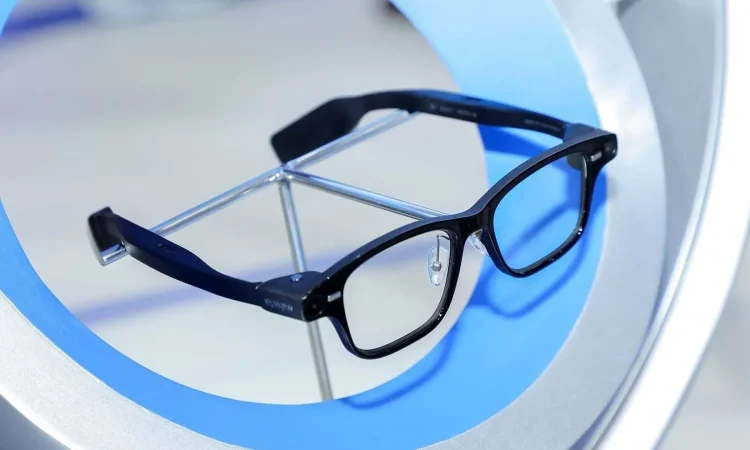
Alibaba has officially stepped into the wearable technology market with its Quark AI glasses, launching first in China. This move signals the company’s ambitions to go beyond e-commerce and cloud services and expand into consumer hardware. The Quark glasses mark Alibaba’s first major venture into AI-powered wearable devices, putting it in direct competition with established global players in the smart glasses industry.
Priced at 1,899 yuan (around $268), the glasses run on Alibaba’s proprietary Qwen AI system. They integrate seamlessly with Alibaba’s ecosystem, including payment services, shopping platforms, and other everyday apps. By packing AI features into a stylish and lightweight frame, Alibaba aims to make these glasses practical for daily life rather than a niche tech gadget.
Design and Features
The Quark AI glasses are designed to look like regular eyewear, featuring a sleek black frame and slim arms for comfort. They are less bulky than traditional AR or VR headsets, making them ideal for everyday use.
Key features include:
- Real-time language translation for seamless communication across languages.
- On-the-go price recognition and shopping assistance, ideal for retail environments.
- Integration with Alibaba’s payment and e-commerce platforms for smooth, hands-free transactions.
- Hands-free calling, music playback, and navigation support.
- AI-powered productivity tools, acting as a “life assistant” for managing daily tasks.
Technically, the glasses use a dual-processor architecture, separating AI tasks from regular computing. This ensures smooth performance, prevents overheating, and reduces battery drain, making high-tech features comfortably wearable.
Strategic Timing and Motivation
Alibaba’s move into wearable AI is significant because the company has historically focused on e-commerce, cloud computing, and financial services. Entering hardware allows Alibaba to:
- Diversify its business portfolio.
- Deepen user engagement through its ecosystem.
- Position the glasses as a potential “next-generation traffic gateway” for daily interactions.
The timing is strategic. 2025 has seen rapid growth in the wearable tech sector, with many companies launching AI-powered smart glasses. By introducing Quark now, Alibaba aims to establish a foothold before competitors dominate the market.
Competitive Landscape
The Quark glasses enter a highly competitive global market:
- Internationally: Meta, Apple, and Samsung have strong AR and wearable portfolios.
- Domestically: Xiaomi and Baidu are pushing their own AI smart glasses.
Alibaba’s main advantage is its ecosystem integration. Combining AI functionality with its vast e-commerce, payment, and content platforms offers a more seamless experience than hardware-only competitors. This could help Quark gain traction, particularly among users already embedded in Alibaba’s ecosystem.
Challenges and Opportunities
While the launch is exciting, several challenges remain:
- User adoption depends on comfort, battery life, performance, and perceived usefulness.
- Global expansion requires regulatory, logistical, and localization planning.
- Privacy and data security are crucial; users must trust their data is handled securely.
On the other hand, the opportunities are huge. If successful, AI glasses could redefine daily technology use, making hands-free communication, shopping, navigation, and productivity a reality.
Looking Ahead
The next few months will be pivotal for Quark:
- Adoption rates and user feedback will determine early success.
- Competitor responses from companies like Meta, Apple, Xiaomi, and Baidu will shape the market.
- Alibaba must leverage its existing user base to drive wearable adoption through integrated services.
If Quark succeeds, it could pave the way for a broader adoption of AI wearables, inspiring innovative devices that combine style, utility, and intelligence. Otherwise, it may remain a niche product, highlighting the challenges of convincing consumers to adopt new computing forms.
Conclusion
Alibaba’s Quark AI glasses are a bold leap into wearable technology. With AI capabilities, practical design, and deep ecosystem integration, Alibaba aims to redefine everyday computing. Whether Quark becomes a game-changer or a niche device will depend on consumer adoption, competition, and the company’s execution strategy.
One thing is certain: Alibaba has officially entered the global race for wearable technology, exploring a new frontier in AI and consumer electronics with a device worn directly on the face. The race to define the next-generation computing platform has begun, and Alibaba is betting on smart glasses.








