
In AI-Simulated Fed Meeting, Each Board Member Was a Version of David M. Solomon
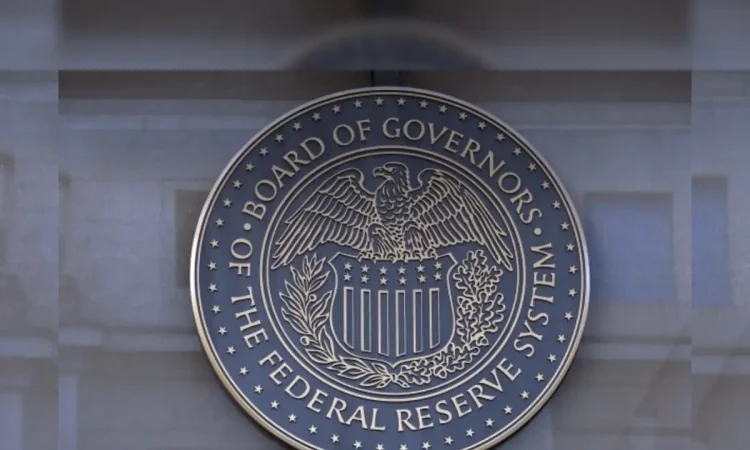
This fascinating study by researchers at George Washington University is the first to open a window on the machinations within a central bank using AI, albeit in an artificially simulated setting. By simulating a recent FOMC meeting, the investigation found how outside political pressure could drive a wedge between members of a board that is supposed to operate free from external influence.
The Simulation: AI as Reflection of Policy Deliberation
Model of the FOMC
The researchers – economists Sophia Kazinnik and Tara Sinclair – developed AI agents who imitated real members of the FOMC. These agents were trained using:
- Historical voting behavior
- Public speeches
- Biographies
- Policy tendencies of real-life policymakers
Using a combination of machine learning and generative AI methods, the agents analyzed real-time economic data, financial news, and potential political pressures to simulate the dynamic environment that board members face during meetings.
Simulation Design
- The simulation mirrored a recent July FOMC meeting.
- Each AI agent was programmed to set interest rates and issue policy recommendations based on both economic measures and the social and political environment surrounding the Fed.
- Researchers then introduced scenarios of political pressure, such as:
- Public disapproval from elected officials
- Hypothetical challenges to leadership succession
- The responses of the board were observed and analyzed.
Results: Board Options Change Under Political Pressure
- Normal behavior: AI agents agreed on policy decisions most of the time, similar to the collegial nature of the actual FOMC.
- Under political pressure:
- Factions formed quickly
- Previously aligned agents diverged in policy recommendations
- Polarization increased significantly
Key Insight: Even an institution as organized as the Federal Reserve can be subtly influenced from the outside. While some insulation exists, credible threats or sustained scrutiny can shape deliberation. In the simulation:
- Some agents prioritized reputational and political considerations over purely economic issues
- This behavior mirrors occasional departures from rational policy observed in real FOMC meetings
Conclusion: This observation challenges the idea that central banks are entirely insulated from political forces. Even independent systems are susceptible to subtle external influence, potentially affecting interest rate policies and broader monetary strategies.
Implications for Central Bank Independence
Central bank independence is a critical feature of sound monetary policy. It allows policymakers to:
- Focus on long-term economic goals
- Stabilize inflation and employment
- Avoid short-term political pressures
AI simulation findings:
- External pressures, real or perceived, can cause even well-trained decision-makers to exhibit bias or fragmentation
- Policymakers are not political automatons; they respond to risk aversion, strategic considerations, and political significance
Policy Implications:
- The Federal Reserve and other central banks must safeguard independence
- Transparency is essential in an era of heightened political attention
The Role of AI in Central Banks
- AI is not currently used to make monetary policy decisions directly
- Instead, it serves as a research and decision-support tool, helping to:
- Analyze economic data
- Predict trends
- Explore complex variable relationships
Applications include:
- Forecasting inflation
- Understanding financial market reactions
- Evaluating policy change effects
Significance of the Study:
- Demonstrates that AI can mimic human decision-making under stress
- Offers a new perspective on board behavior during crises
Considerations:
- AI simulations provide insights without the risks of real-world monetary interventions
- Ethical and governance frameworks are crucial for:
- Transparency
- Accountability
- Data integrity
Governance and Ethical Considerations
The increasing use of AI in central banking raises questions about:
- Governance
- Ethics
- Oversight
Guidelines for Responsible Use:
- AI should support, not replace, decision-making
- Maintain data quality, interpretability, and fairness
- Be aware that AI can replicate human vulnerabilities, including political sensitivity
Key Challenge:
- Leverage AI’s analytical power while maintaining the integrity and autonomy of central banking institutions
Policy and Practice Relevance
Implications Beyond Academia:
- Simulating political pressures provides insights for:
- Institutional redesign
- Improved communication strategies
- Enhanced transparency protocols
Potential Uses of AI:
- Stress-test institutions
- Identify decision-making vulnerabilities
- Improve frameworks for maintaining consensus under pressure
Key Insight:
- If AI agents modeled on human behavior show polarization under stress, it is likely humans may also be susceptible in similar real-world scenarios
Conclusion
The AI-simulated FOMC meeting illustrates the delicate balance between institutional insulation and responsiveness to political environments. Even the most insulated organizations can become biased under pressure.
Implications:
- AI provides powerful insights into patterns and vulnerabilities
- Human judgment, ethics, and governance remain central to the credibility and effectiveness of central banks
- Policymakers must protect independence while harnessing technology to improve understanding, foresight, and resilience
In essence, the study serves as both a cautionary tale and a guidepost: central banks must safeguard independence while using technology to strengthen policymaking and institutional resilience.








