
United Nations Research Institute Reveals AI Refugee Avatar to Spotlight Global Displacement Crisis
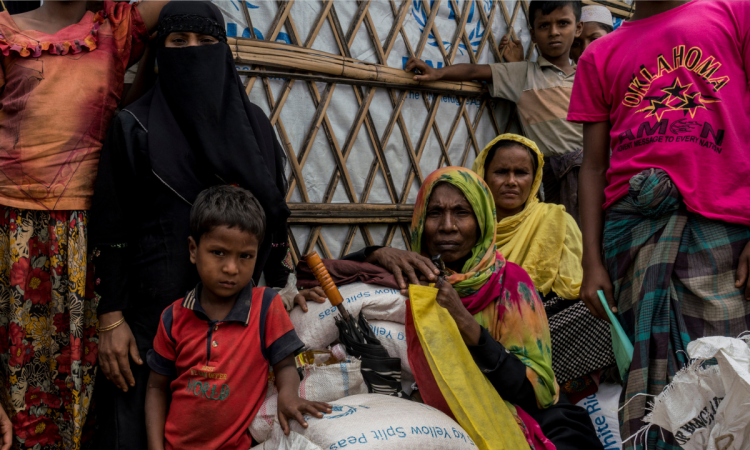
Objectives
In a pioneering effort to catalyze public attention to the international refugee crisis, the United Nations research institute introduces the AI refugee avatar—a virtual identity that tells the stories of the millions of real refugees whose lives poverty and persecution have turned upside down.
It’s a daring step forward in redefining advocacy tools for a more humane future, employing artificial intelligence not just to automate and streamline advocacy, but to tell stories and summon empathy.
About the Project
The AI organization’s project, created by UNIDIR (United Nations Institute for Disarmament Research), uses advanced AI to produce a digital refugee representative that:
- Combines tens of thousands of real testimonies and statistics
- Maintains verified privacy compliance
- Utilizes images and datasets
- Represents the lifecycle journey of a forced emergency refugee
The prototype seems real—voiced by a lifelike individual and equipped with emotional responses, making her indistinguishable from a real human. However, Maya is not based on a specific person. She is an aggregated voice, crafted from millions of refugee narratives around the globe.
A Fresh Face of Global Displacement
The AI refugee avatar, named “Maya,” was unveiled at a high-level UN forum on migration and displacement.
Key Features:
- Designed for digital engagement with audiences: governments, educators, NGOs, and the public
- Uses video storytelling, voice narratives, and interactive Q&A sessions
- Recounts stories of war, separation, and the struggle for dignity and safety
According to the UNHCR, over 120 million people are currently forcibly displaced due to conflict, persecution, natural disasters, and climate change. Yet, statistics often fail to reveal the emotional and human depth behind these numbers. Maya bridges this gap.
The Technology Behind Maya
Maya’s development took over a year, bringing together:
- AI researchers
- Linguists
- Humanitarian experts
- Psychologists
Technologies used:
- Natural Language Processing (NLP)
- Deep learning models
- Advanced facial animation
Contextual Adaptation:
- Uses simplified language and a hopeful tone for school children
- Adds data-informed context during forums with policymakers
- Discusses logistical challenges in conversations with aid workers
The AI draws on:
- Anonymized refugee interviews (with consent)
- UN field reports
- Academic research
- First-hand accounts spanning 20 years
“That way I know not only that the technical information is correct, but that it has an emotional truth.”
Ethics and Consent in the Offing
Creating a digital being to represent real-life human suffering naturally raises ethical concerns, especially as AI becomes more involved in sensitive humanitarian issues.
The UNIDIR team ensured:
- Transparency and ethical oversight
- Full consent from refugee contributors
- Maya never portrays an identifiable individual
- Collaborated with refugee advocacy groups to amplify, not exploit, refugee voices
Dr. Helen Awad, Lead Researcher at UNIDIR’s Digital Peace Lab, stated:
“Our objective was not to replace real refugee voices but to amplify them. Maya is there to ensure the world hears what is so often ignored or forgotten. She’s a new bridge between data and empathy.”
Educational and Policy Applications
Educational Use:
- Rolled out in schools across Europe, North America, and Africa
- Helps children learn about empathy, migration, and human rights
- Students can:
- Ask questions
- Hear stories
- Participate in teacher-guided discussions
In a Berlin classroom, a teacher shared:
“Our students stopped looking at refugees just from the point of view of news stories and started asking, ‘How can we help?’”
Policy Use:
- Maya will be featured at international summits
- Simulates refugee experiences for:
- Urban planning
- Migration policy discussions
- Disaster preparedness training
Limitations and Future Prospects
Despite its innovation, Maya has inherent limitations:
- Cannot fully capture the complex trauma and resilience of each refugee
- Should not replace real human interaction, but complement humanitarian work
Still, the initiative is trailblazing in its use of AI for:
- Storytelling
- Advocacy
- Digital diplomacy
Future Expansion Plans:
- Develop more avatars to represent:
- Children
- Elderly
- Climate-induced refugees
This would allow for diverse storytelling, focusing on specific humanitarian challenges.
A Step Toward Empathy-Driven Solutions
The launch of Maya comes at a time when the world is facing record levels of forced migration. From internal conflicts and economic collapse to rising seas and natural disasters, the causes of displacement are growing more complex.
In such times, empathy and connection are as crucial as logistics and funding.
With Maya, the United Nations signals a shift toward empathy-driven solutions—where technology is not just efficient, but also conscientious.
As Maya evolves:
- Policymakers may rethink borders
- Students may grow into advocates
- And the world may begin to see refugees not as burdens, but as fellow human beings—
with stories worth listening to and lives worth protecting








