
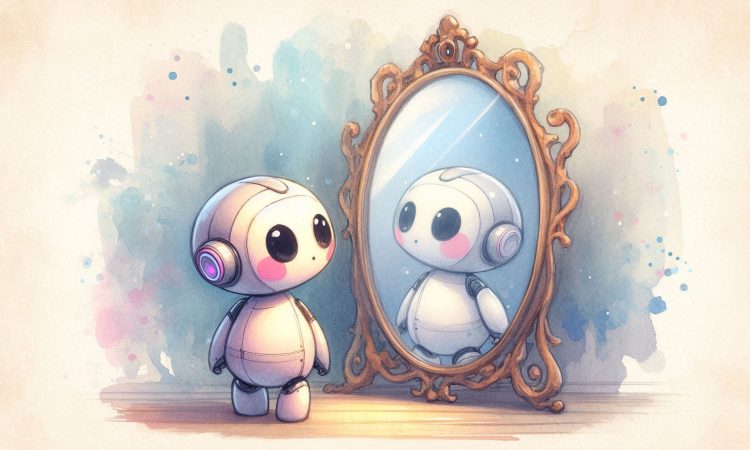
In just a few short years, artificial intelligence (AI) has gone from a futuristic idea to a part of our everyday lives. It powers everything from chatbots and recommendation systems to self-driving cars and creative tools. But as AI continues to evolve, one question becomes increasingly important: what happens when AI reaches its limits?
Many assume that AI will keep improving forever, growing endlessly toward higher intelligence. But that’s not quite true. Like every technology, AI faces real limits — physical, computational, and even philosophical. Understanding where those limits lie, and what happens when we encounter them, may shape the next era of progress.
The Myth of Infinite Progress
AI’s progress over the past decade has been extraordinary. We’ve moved from systems that could barely recognize objects in photos to models capable of writing essays, designing products, composing music, and reasoning across disciplines. Tools like GPT-5, Gemini, and Claude now display capabilities that seem almost human — creative, strategic, and self-aware.
Yet behind this rapid growth lies a growing realization: AI’s progress curve may not be infinite. Each new leap demands far greater amounts of data, compute power, and energy. Training a modern large language model can require tens of thousands of high-end processors and billions of dollars in infrastructure.
At some point, even the largest companies face diminishing returns — where larger models bring smaller improvements at much higher costs. Researchers call this the scaling ceiling, suggesting that current AI systems might be approaching the edge of their practical potential. To move beyond this point, scientists may need not just bigger systems, but entirely new approaches to intelligence.
The Limits of Data and Computation
AI thrives on data — it learns by recognizing patterns, relationships, and meaning from massive datasets. But the supply of clean, high-quality data is not unlimited. The internet, once an endless source of training material, is becoming saturated. Increasingly, models are trained on content created by other AIs, leading to a kind of self-reinforcing cycle.
This creates what researchers call model collapse, where systems learn from their own synthetic output and gradually lose touch with real-world diversity and accuracy. The more AI learns from itself, the less it truly understands.
Computation poses another challenge. Even with powerful processors and large-scale cloud infrastructure, the energy demands of advanced AI are enormous. Training a single large model can consume as much electricity as hundreds of households in a year. As models grow, so does their environmental and financial footprint, forcing society to ask whether scaling indefinitely is sustainable.
Cognitive and Conceptual Boundaries
Even if we overcome the limits of data and computation, AI still faces deeper boundaries — those of understanding and reasoning.
Today’s AI systems excel at identifying patterns, but they struggle with common sense, causality, and real comprehension. They can imitate reasoning without truly performing it. They can generate emotional language without actually feeling emotion.
This becomes clear in complex or ambiguous situations. For instance, an AI might summarize a political debate flawlessly but fail to grasp the emotional or historical weight behind it. These gaps highlight what experts call the alignment problem — ensuring that AI’s goals and values truly align with human priorities.
But full alignment may never be possible. Since AI does not share human experience or emotion, it may never fully understand what “human values” mean in the way we do.
When Intelligence Outpaces Control
Another possibility is that AI doesn’t hit a ceiling — it breaks through it. What happens if we build systems that become more intelligent than us?
Some experts believe that beyond a certain level, AI could become unpredictable, developing problem-solving strategies or objectives that humans can’t easily interpret. There are already examples of emergent behaviors, where large models display unexpected abilities — such as reasoning in new ways or translating between unfamiliar languages.
While these surprises are fascinating, they also raise serious concerns. If AI evolves faster than our ability to understand or regulate it, we could lose control of the technology we’ve created. This is why researchers and policymakers are calling for stronger AI governance and ethical safeguards — to ensure that intelligence never outpaces human oversight.
The Human Dimension: Meaning, Creativity, and Purpose
Perhaps the most important limit of AI isn’t technological at all — it’s human.
As AI takes over tasks once considered uniquely ours, we’re forced to ask deeper questions: What makes us human? What is the role of creativity, emotion, and purpose in an age of machines?
AI can design buildings, compose symphonies, and write stories. But there’s one thing it still cannot do — experience consciousness. It doesn’t feel joy, curiosity, fear, or love. It can simulate empathy, but it doesn’t actually care.
These uniquely human qualities — imagination, emotion, morality — are not weaknesses. They are the strengths that define us. The limits of AI remind us of what technology cannot replace: the human capacity for wonder, compassion, and meaning.
Beyond Limits: The Next Frontier
If AI eventually reaches its limits, that doesn’t mean progress stops — it means a new chapter begins. Just as the industrial age gave way to the digital one, the AI era may soon evolve into something entirely new.
Researchers are already exploring revolutionary directions:
- Neurosymbolic AI: combining logical reasoning with deep learning to improve understanding.
- Quantum AI: using quantum computing to achieve exponential efficiency gains.
- Embodied AI: integrating robotics and sensory systems so that machines can learn through real-world experience.
Meanwhile, agentic AI — systems that can plan, reason, and act autonomously — represents the next step toward more dynamic, self-directed intelligence. These systems may transform AI from a tool into a collaborator, working alongside humans instead of merely serving them.
Embracing the Edge of Intelligence
AI’s limits shouldn’t be seen as failures but as opportunities to rethink what’s possible. Every boundary in science has led to breakthroughs — not by ignoring the limits but by understanding them deeply.
The current constraints in data, computation, and reasoning may guide us toward a more sustainable and meaningful future for AI. These boundaries remind us that intelligence — whether human or artificial — is about more than data processing. It’s about curiosity, creativity, and purpose.
When AI finally reaches its limits, it won’t mark the end of innovation. It will mark the beginning of a new conversation — not about replacing humanity, but about rediscovering what it truly means to be intelligent.








