
In today’s fast-paced global economy, supply chains are the backbone of commerce, connecting manufacturers, distributors, retailers, and consumers across continents. Yet, modern supply chains are incredibly complex, facing challenges like fluctuating demand, geopolitical uncertainties, and logistical hurdles. Artificial Intelligence (AI) is stepping in to transform these processes, offering efficiency, resilience, and deeper insights. Its influence on global supply chains is reshaping how goods are produced, transported, and delivered worldwide.
AI: The Brain Behind Smarter Supply Chains
At its heart, AI is a system of algorithms and machine learning models designed to mimic human decision-making, detect patterns, and adapt to changing conditions.
In supply chains, this means:
- Smarter forecasting: Predicting demand with remarkable accuracy to avoid overproduction or stock shortages.
- Real-time monitoring: Tracking inventory, shipments, and operations instantly.
- Dynamic optimization: Continuously improving routes, processes, and resource allocation.
AI can analyze historical sales data, seasonal trends, social media signals, and even weather patterns to forecast product demand. This predictive insight enables businesses to make smarter, data-driven decisions that cut costs and improve service levels.
Automation and Operational Efficiency
AI is transforming the way warehouses and fulfillment centers operate:
- Robotic assistance: Autonomous robots handle repetitive tasks such as sorting, packaging, and moving goods.
- Warehouse optimization: AI organizes storage layouts to speed up order fulfillment.
- IoT integration: Connected sensors track inventory, equipment performance, and shipment conditions in real time.
These advancements reduce human error, boost productivity, and make operations faster and more reliable.
Enhancing Visibility and Transparency
Tracking goods across borders and multiple intermediaries has always been a challenge. AI changes that by offering end-to-end visibility:
- Processing data from GPS trackers, sensors, and RFID tags to monitor shipments.
- Reducing losses, delays, and disruptions.
- Providing customers with accurate delivery times and monitoring perishable goods.
This transparency not only improves efficiency but also meets the growing demand from consumers and regulators for accountable, reliable supply chains.
Risk Management and Predictive Analytics
Global supply chains face a range of risks, including natural disasters, political instability, cyberattacks, and sudden demand spikes. AI helps companies:
- Predict disruptions: Identify potential bottlenecks before they occur.
- Optimize routing: Preemptively adjust shipping paths to avoid delays.
- Build resilience: Adapt supply chains to unforeseen events and safeguard profits.
By continuously analyzing internal and external data, AI enables more agile and secure supply chains.
Sustainability and Environmental Impact
Sustainability is a growing concern, and AI is helping supply chains reduce their environmental footprint:
- Efficient logistics: Optimize shipping routes and truck loads to minimize fuel use.
- Energy-conscious production: Schedule operations to align with renewable energy availability.
- Responsible sourcing: Identify environmentally-friendly suppliers.
These practices not only meet regulatory requirements but also satisfy consumers who value eco-conscious companies.
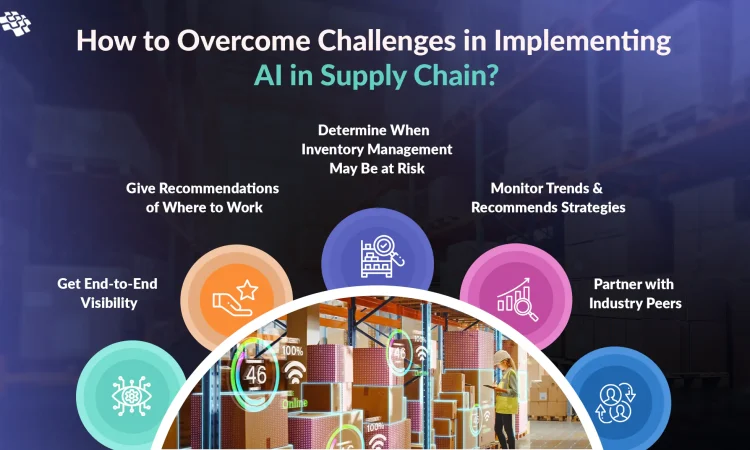
Challenges in AI Adoption
Despite its benefits, AI integration comes with hurdles:
- Data quality issues: AI needs accurate, real-time data to work effectively.
- Legacy systems: Fragmented processes and outdated infrastructure can slow adoption.
- Investment and talent: Skilled AI engineers, data scientists, and supply chain specialists are essential.
- Change management: Employees need training to work alongside AI, and processes may require redesign.
Overcoming these challenges is critical to unlocking AI’s full potential in supply chain management.
Human-AI Collaboration
AI is not here to replace humans—it’s here to augment human decision-making.
- Routine tasks are automated, freeing employees to focus on strategic decisions.
- AI provides predictive insights, while humans interpret them, negotiate with suppliers, and make ethical or context-sensitive choices.
- This collaboration creates agile, informed, and capable supply chain teams.
The Future of AI in Supply Chains
AI’s role is set to grow even further:
- Emerging tech: Generative AI, autonomous vehicles, and advanced robotics will improve efficiency.
- Global trade optimization: AI can anticipate geopolitical shifts and optimize sourcing strategies.
- Hyper-personalization: Production, logistics, and delivery tailored to individual customer needs in real time.
The supply chains of tomorrow will be faster, smarter, and more responsive than ever before.
Conclusion
AI has moved beyond being a futuristic concept; it is actively reshaping global supply chains. From predictive analytics and automation to transparency and sustainability, AI equips companies to navigate complex challenges with precision and agility. While adoption hurdles exist, the benefits—cost reduction, efficiency, resilience, and adaptability—are significant.
In a world where speed, accuracy, and flexibility define success, AI is the ultimate enabler of smarter, more responsive supply chains. Companies that embrace AI today will set the standard for efficiency, transparency, and innovation tomorrow.








