
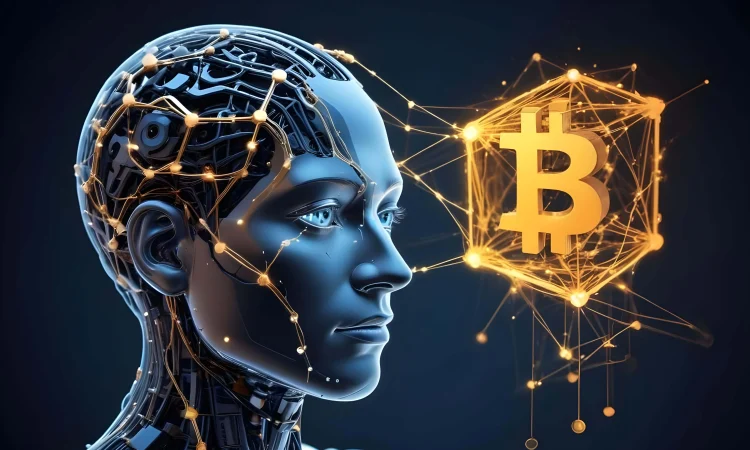
In the dynamic world of new technologies, two names have continued to make headline news besides boardroom conversation—Artificial Intelligence (AI) and Blockchain. In separate ways, both have upended industries, overhauled the way data is processed and trust is established.
Now, however, a mighty convergence is underway: The AI Blockchain. This new-ish hybrid has technologists and corporate leaders asking: What is it, really, and why should we care?
Understanding the Core Technologies
Before we get into what the AI blockchain is, let’s take a look at the technologies that make it up.
Artificial Intelligence (AI)
AI refers to the design of systems that can accomplish tasks that require human intelligence. These tasks involve:
- Problem-solving
- Pattern recognition
- Learning
- Decision-making
- Natural language understanding
AI is rapidly remaking sectors—from self-driving cars to medical diagnosis to the creation of generative content.
Blockchain
Blockchain is a largely decentralized form of distributed ledger technology (DLT) designed to allow:
- Secure
- Transparent
- Tamper-proof transactions
The technology was first used to underpin cryptocurrencies like Bitcoin, but is now widely applied in:
- Supply chains
- Finance
- Digital identity verification
It operates using consensus algorithms and cryptographic proof, ensuring the soundness of records without the need for a central authority.
Summary: If AI provides intelligence and adaptability, blockchain offers trust, transparency, and security. Collectively, these technologies have the potential to transform how systems communicate and evolve.
Defining the AI Blockchain
The concept of the “AI blockchain” involves the marriage of AI techniques with distributed ledger systems in order to develop intelligent, foolproof systems.
Unlike simply embedding a traditional AI algorithm into a smart contract or adding blockchain to an AI app, this is a game-theoretical synergy model. Each technology fills the other’s gaps, complementing rather than overlapping.
Forms of Convergence
- Blockchain-Powered AI
Leveraging AI to optimize blockchain performance by:- Accelerating consensus algorithms
- Detecting anomalies in smart contracts
- Predicting network congestion
- Blockchain-Empowered AI
Using blockchain to make AI systems:- Transparent
- Auditable
- Reliable
- AI-Blockchain Integrations
Building decentralized applications (dApps) where AI is integrated into smart contracts to enable:- Self-executing logic
- Autonomous decision-making
Why Merge AI and Blockchain?
The coordination between AI and blockchain arises from the limitations each technology faces when used alone:
1. AI’s Black Box Problem
AI models—especially deep learning systems—often operate as opaque “black boxes,” making it hard to trace how decisions are made.
- This lack of transparency is a critical issue in sectors like healthcare, finance, and law enforcement.
- Blockchain can record the entire AI decision-making process, enabling audits and verifiable outputs.
2. Blockchain’s Scalability and Efficiency Concerns
Public blockchains can be:
- Slow
- Energy-intensive
AI contributes by:
- Predicting bottlenecks
- Optimizing resource distribution
- Enhancing consensus mechanisms
3. Data Integrity and Trust
AI depends on large volumes of data to function effectively. Blockchain ensures that data is:
- Real
- Unedited
- Untampered
Result: Eliminates risks of data poisoning and manipulation.
4. Decentralized Intelligence
When AI is integrated with blockchain, it can enable:
- Distributed intelligence, where multiple AI agents collaborate and learn without a central authority.
Real-World Use Cases for the AI Blockchain
Several industries are already experimenting with AI-blockchain integration with impressive results:
1. Healthcare
- AI analyzes patient data to anticipate diseases or recommend treatments.
- Blockchain ensures strong data privacy and integrity.
- Example: Patient records are stored securely on-chain, while anonymized data is used by AI to detect treatment patterns or outbreaks.
2. Finance
- Robo-advisors powered by AI offer investment advice.
- Each action is recorded on blockchain for improved compliance and easy auditing.
- Smart contracts can automate trades based on AI predictions.
3. Supply Chain Management
- AI forecasts demand, prevents fraud, and optimizes logistics.
- Blockchain provides a transparent, immutable ledger visible to all stakeholders.
- Result: Enhanced visibility and trust.
4. Autonomous Systems
- AI-powered drones, vehicles, and robots use blockchain to verify commands and log decisions.
- This enables post-incident reviews and secure automation.
5. Content Moderation & Fake News Detection
- AI analyzes media content to identify misinformation.
- Blockchain guarantees the traceability and authenticity of the information, ensuring digital accountability.
Challenges and Limitations
Despite its promise, the AI blockchain faces several obstacles:
1. Computational Demand
- Both AI and blockchain are resource-intensive.
- Running complex AI models on-chain is currently impractical.
- Solutions: Layer-2 protocols and off-chain computation.
2. Data Privacy vs. Transparency
- Blockchain’s transparency conflicts with the privacy needs of AI data processing.
- Solutions such as zero-knowledge proofs and federated learning are being developed but remain immature.
3. Standardization and Interoperability
- There’s no global standard for integrating AI and blockchain.
- Different frameworks and platforms hinder seamless compatibility.
4. Regulatory and Ethical Concerns
- Combining the regulatory complexities of AI (e.g., bias, discrimination) and blockchain (e.g., compliance, identity) creates new ethical dilemmas, especially regarding responsibility for autonomous decisions.
The Road Ahead
Though still in its infancy, the AI blockchain is laying the foundation for a future of intelligent, decentralized systems.
Notable Projects
- Ocean Protocol: Building decentralized data marketplaces
- SingularityNET: Offering AI-as-a-service on blockchain platforms
Governments and enterprises are watching closely. From smart cities to decentralized trading, AI blockchains may soon offer solutions to pressing issues around data governance, digital ethics, and cybersecurity.
Final Thoughts
So, what exactly is the AI blockchain?
It’s not a fad or just another tech buzzword. It’s the fusion of intelligence with trust—the entanglement of power with transparency. By combining:
- The predictive power of AI
- With the decentralization and immutability of blockchain
…it invites us into a new paradigm for interaction, trade, and growth in the digital world.
As research, regulation, and infrastructure evolve, the AI blockchain is poised to become the backbone of a fair, intelligent, and secure digital society.








