
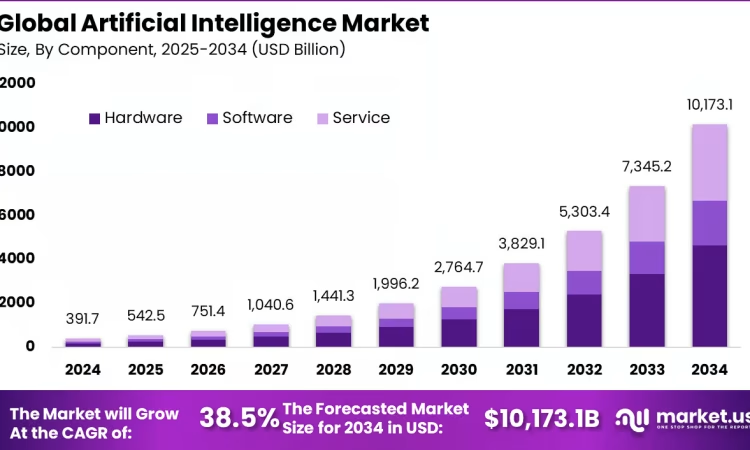
In today’s fast-changing digital world, artificial intelligence (AI) has emerged as the powerhouse driving innovation, efficiency, and transformation across nearly every industry. From healthcare and finance to education, manufacturing, and entertainment, AI is reshaping how the world operates, communicates, and creates value.
What was once seen as futuristic technology has now become an everyday reality—fueling smarter decisions, improving lives, and unlocking new economic opportunities. Let’s take a look at how AI is evolving across key global industries and what these trends mean for our collective future.
1. AI in Healthcare: Precision, Prediction, and Personalization
Healthcare is undergoing one of the most dramatic transformations thanks to AI. Around the world, hospitals and researchers are using intelligent systems to diagnose diseases, predict health risks, and personalize treatments like never before.
- Early Diagnosis: AI models can detect conditions such as cancer, diabetes, and heart disease earlier and more accurately than traditional methods.
- Predictive Analytics: By analyzing data from health records and wearable devices, AI helps predict illnesses before symptoms even appear—shifting care from reactive to preventive.
- Drug Discovery: Machine learning accelerates drug development by analyzing molecules and predicting how new compounds interact with the human body.
- Personalized Medicine: AI tailors treatment plans based on genetic data, leading to better outcomes and fewer side effects.
This combination of precision, speed, and personalization is revolutionizing global healthcare systems.
2. AI in Finance: Smarter Decisions, Stronger Security
In the financial world, AI has become essential for automation, analytics, and fraud prevention.
- Customer Service: AI-powered chatbots and assistants now provide instant, round-the-clock support and personalized financial advice.
- Market Insights: Algorithms analyze vast amounts of data to detect trends, assess risks, and make real-time trading decisions.
- Fraud Detection: AI systems continuously monitor transactions, identifying suspicious activity faster and more accurately than humans ever could.
Financial institutions worldwide rely on AI to boost efficiency, enhance security, and deliver better customer experiences.
3. AI in Education: Personalized Learning and Accessibility
AI is transforming how people learn by making education more personalized, accessible, and inclusive.
- Customized Learning: Adaptive learning platforms adjust lessons to fit each student’s pace and learning style.
- Accessibility Tools: Voice recognition and translation technologies empower students with disabilities or language barriers to participate more fully.
- Administrative Support: AI automates grading, scheduling, and administrative tasks, freeing teachers to focus on students.
- Bridging Gaps: In developing regions, AI-powered online education platforms are helping millions gain access to quality learning materials.
The result is a more connected and equitable global learning environment.
4. AI in Manufacturing: The Rise of Smart Factories
Manufacturing has entered the era of “Industry 4.0,” where smart factories powered by AI and automation are redefining production.
- Predictive Maintenance: AI predicts when machines will fail, reducing downtime and maintenance costs.
- Quality Control: Computer vision detects defects with pinpoint accuracy, ensuring consistent product quality.
- Collaborative Robotics: Intelligent robots (“cobots”) work safely alongside humans, performing repetitive or hazardous tasks.
- Supply Chain Optimization: AI improves logistics, inventory management, and demand forecasting.
This shift toward automation not only boosts productivity but also promotes sustainability by minimizing waste and maximizing resource efficiency.
5. AI in Retail: The Era of Hyper-Personalization
Retailers are using AI to create personalized and seamless shopping experiences that engage customers like never before.
- Product Recommendations: AI analyzes browsing and purchase history to suggest items tailored to each customer.
- Smart Assistants: Virtual shopping bots help users find products, answer questions, and guide them through checkout.
- Dynamic Pricing: AI adjusts prices based on real-time demand and inventory levels.
- Sustainable Practices: Retailers use AI to forecast demand and reduce overproduction, supporting eco-friendly shopping trends.
From online stores to physical outlets, AI is redefining how consumers shop and how businesses operate.
6. AI in Entertainment and Media: Creativity Meets Computation
The entertainment and media industries are blending human creativity with machine intelligence to produce richer, more engaging experiences.
- Personalized Content: Streaming services use AI to curate recommendations for movies, shows, and music.
- Creative Collaboration: Filmmakers and musicians are using AI for scriptwriting, editing, and even generating original music.
- Content Moderation: AI monitors online content to ensure safety and community compliance.
- Audience Insights: Data analytics help media companies predict viewer interests and design more compelling content.
This balance between artistry and analytics is creating a more dynamic and personalized entertainment landscape.
7. Global AI Governance and Ethical Trends
As AI continues to shape industries worldwide, ethical and regulatory frameworks are becoming increasingly vital.
Governments and organizations are working to ensure AI development remains transparent, fair, and socially responsible. Key trends include:
- Human-Centered AI: Designing technology that benefits people first.
- Data Ethics: Ensuring algorithms are unbiased and privacy-conscious.
- AI Education: Expanding literacy programs so more people understand and adapt to AI’s growing presence.
These global initiatives aim to build trust and ensure the responsible growth of intelligent technologies.
Conclusion: A Shared Future Driven by Intelligence
Artificial intelligence isn’t just a technological trend—it’s a global movement transforming every aspect of modern life. Whether improving healthcare, streamlining finance, personalizing education, or reimagining creativity, AI is pushing humanity toward a smarter, more connected future.
The challenge now lies in adopting AI responsibly—balancing innovation with ethics, and technology with humanity. The industries that embrace this balance today will lead the world into tomorrow’s era of intelligent progress.








