
UK Data Centre Spend Set to Hit £10 Billion as Digital Demand Explodes
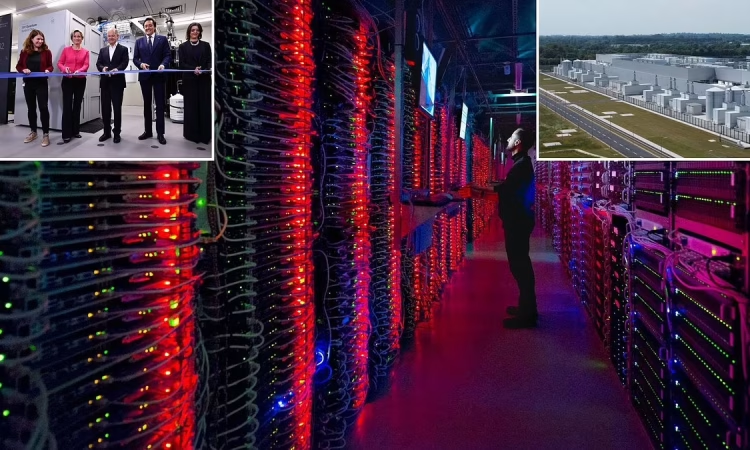
By [Author Name], Technology Correspondent
A Nation Powering the Digital Age
The UK’s data centre industry is on the brink of a massive transformation, with annual spending expected to reach £10 billion as demand for digital infrastructure skyrockets.
This surge is being driven by rapid advances in artificial intelligence (AI), cloud computing, and the growing digital needs of government, finance, and enterprise sectors. Together, these forces are positioning Britain as a global leader in the next generation of data technology.
A Digital Infrastructure Boom
Industry analysts predict that total yearly spending on data centres—including construction, maintenance, energy, and network services—will climb sharply over the next few years.
The driving force? An unprecedented rise in data creation and storage, fuelled by AI model training, streaming services, e-commerce, and hybrid working.
Spending could reach £10 billion a year by 2027, up from about £7 billion in 2024. That puts the UK among Europe’s top data infrastructure investors, second only to Germany.
“Data is now the backbone of the modern economy,” said a senior executive at a London-based cloud firm. “Every sector wants faster, greener, and more secure data processing—and the UK is stepping up to deliver.”
London Still Leads, but the Regions Are Catching Up
London remains the beating heart of the UK’s data centre scene. The so-called “London Data Centre Triangle”—spanning Slough, Docklands, and Hayes—hosts some of Europe’s largest facilities. Global heavyweights like Amazon Web Services (AWS), Microsoft, Google Cloud, and Meta are expanding here to serve both domestic and European clients.
But growth isn’t just confined to the capital. Regional cities such as Manchester, Birmingham, and Leeds are attracting developers looking for lower costs and less grid strain.
Scotland is emerging as another hot spot, thanks to its cooler climate and abundant renewable energy, which help operators cut carbon emissions.
At the same time, smaller “edge data centres”—located closer to end users—are gaining traction. They enable faster data processing for technologies like 5G, autonomous vehicles, and IoT devices, which rely on real-time communication.
AI and Cloud Expansion Driving the Surge
The biggest growth engine by far is artificial intelligence. Training massive AI models and running machine learning systems requires enormous computing power and storage. As AI adoption accelerates across industries, so does the need for advanced, high-performance data centres.
Cloud computing is another major driver. The pandemic-era shift to digital work has become permanent, pushing more businesses to store data in the cloud. Major providers are expanding UK operations to meet rising demand while maintaining strict standards for security and uptime.
Industry figures show that UK cloud service use has grown by over 30% since 2022, with many firms now adopting multi-cloud strategies to balance cost and performance.
Sustainability at the Heart of Investment
The boom brings major environmental challenges. Data centres consume vast amounts of power for servers and cooling, making sustainability a top concern for operators and regulators alike.
To address this, many new facilities are being built with renewable energy integration, liquid cooling, and heat recovery systems to recycle waste heat. Several major players have pledged to reach net-zero emissions by 2030, aligning with national climate targets.
“Green data centres are no longer optional—they’re essential,” said a spokesperson for the Department for Science, Innovation and Technology. “Our goal is to ensure the sector grows responsibly, balancing innovation with sustainability.”
Challenges: Power, Planning, and Policy
Despite strong momentum, the road to £10 billion a year isn’t without roadblocks.
The UK faces challenges around energy supply, planning approvals, and land availability. In high-demand regions like West London, power grid constraints have already delayed major projects.
Competition for suitable land is intensifying, especially near cities with strong fibre and transport links. Policymakers must now juggle digital infrastructure needs with housing and industrial development priorities.
Industry experts warn that unresolved bottlenecks could push investors toward other European hubs like Ireland or the Netherlands, where permitting is often faster and power access more predictable.
Economic and Strategic Significance
Even with these challenges, the data centre sector remains a pillar of the UK’s digital economy. It supports tens of thousands of skilled jobs in fields ranging from construction and engineering to cybersecurity and data management.
The ripple effects are enormous. According to TechUK, every £1 invested in data centre infrastructure generates up to £12 in wider economic value through innovation and productivity gains.
“Data sovereignty is as vital as energy independence,” said a policy analyst from a leading think tank. “In today’s world, controlling your data infrastructure is a matter of national security and resilience.”
The Road Ahead
Looking forward, the focus will be on scalability, resilience, and collaboration. Future data centres must handle exponential data growth while staying secure against cyber threats and extreme weather.
Private investment will remain key, but public-sector cooperation will grow—particularly in energy infrastructure and streamlined planning processes. Regional data centre expansion will also help spread growth beyond London.
As the UK steps into this data-driven future, the £10 billion milestone represents more than just investment. It signals Britain’s determination to remain a digital powerhouse, driving the technologies that will define the next generation.
“We’re witnessing a new kind of industrial revolution,” one industry observer noted. “This one isn’t built on steel and coal—it’s powered by data and clean energy. The nations that invest wisely today will shape tomorrow’s digital world.”








