
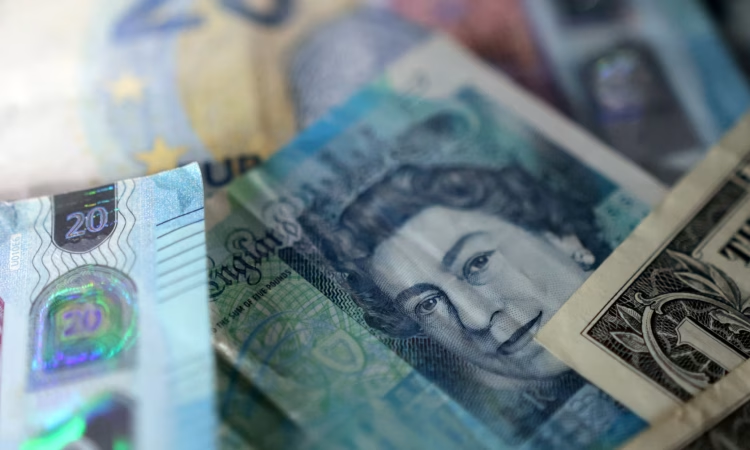
The rise of artificial intelligence (AI) is no longer just a story about technology—it’s reshaping the global financial landscape, especially in Europe. Recent investments and innovations in AI are creating ripple effects that reach far beyond tech hubs, now influencing currency markets. Interestingly, Britain’s pound and Sweden’s krona are emerging as notable beneficiaries of this AI surge, reflecting growing investor confidence in countries embracing cutting-edge technology.
AI Investment Sparks Economic Optimism
Over the past few years, the United Kingdom and Sweden have become attractive destinations for AI research and development. In 2024, private investment in AI projects in both countries reached record levels, positioning them among the top recipients in Europe. This influx of capital has fueled tech startups and had a measurable impact on currency values.
- Sweden benefits from robust infrastructure, reliable energy, and a highly skilled workforce. Multinational tech firms are establishing data centers, AI labs, and innovation hubs across the country.
- The United Kingdom has leveraged strong academic institutions and a supportive regulatory environment to attract strategic partnerships with global tech leaders, boosting AI-driven growth.
This surge in investment has created a climate of optimism. Investors increasingly view the pound and krona as currencies with potential for appreciation due to their countries’ leading roles in AI innovation.
How AI Impacts Currency Markets
Traditionally, currency values are influenced by macroeconomic factors such as interest rates, trade balances, and inflation. However, technological advancements and investment flows now play a growing role, particularly in smaller or mid-sized economies like Sweden.
When companies expand AI operations, demand rises for local currency to cover wages, services, and infrastructure—pushing currency values higher.
- The Swedish krona has remained resilient even as the US dollar weakens.
- The British pound has gradually strengthened despite ongoing fiscal challenges.
Analysts suggest that part of this trend is due to the perception that AI investments will drive future productivity and economic growth.
Sweden’s Krona: A Strong Performer
The Swedish krona has stood out as one of Europe’s strongest currencies this year. Its appreciation against the US dollar and other major currencies is largely attributed to Sweden’s strategic focus on AI.
- Sweden attracts global tech companies thanks to energy-efficient infrastructure and political stability.
- These companies are creating jobs and investing in advanced AI research, enhancing Sweden’s competitiveness.
- The country emphasizes collaboration between academia, government, and industry, creating a stable innovation ecosystem.
This strategic approach strengthens investor confidence, further boosting the krona’s value in global markets.
Britain’s Pound Gains Momentum
The British pound has also benefited from the AI boom, though in a different context. While the UK faces economic challenges like public debt and regional disparities, AI investments provide a bright spot for sterling.
- British universities and research institutions are producing top AI talent, fueling startups and attracting multinational companies.
- Government initiatives to fund AI research and streamline regulations encourage further investment.
- Investors view the UK’s AI sector as a catalyst for productivity across finance, healthcare, and manufacturing.
This optimism contributes to the pound’s gradual strengthening, showing how technology-driven growth can offset broader economic uncertainties.
Long-Term Implications
The AI investment surge extends beyond short-term currency movements, with far-reaching economic implications:
- Higher productivity and more efficient services.
- Creation of high-value jobs in AI-related sectors.
- Sustained competitive advantage in the global economy for early AI adopters.
For Sweden and the UK, today’s AI investments may translate into long-term economic benefits. Investors are factoring this potential into financial decisions, explaining the unusual resilience of their currencies.
However, technological advancement alone is not enough. Both countries need to continue addressing workforce readiness, regulatory adaptation, and international trade relations to fully capitalize on the AI boom.
Global Context
The influence of AI on currency markets is part of a wider trend. Countries successfully integrating AI into their economies are likely to see similar currency gains and investor confidence. Conversely, nations slower to adopt AI may risk stagnating growth and reduced competitiveness.
Sweden and the UK serve as clear examples of how technology investment can transcend industry boundaries and affect macroeconomic indicators like currency valuations. This trend highlights how innovation creates ripple effects that extend far beyond the tech sector.
Conclusion
The AI boom is not just a technological revolution—it is reshaping financial markets. Britain’s pound and Sweden’s krona clearly demonstrate how investor confidence in a country’s technological potential can lead to tangible currency appreciation.
As both nations continue to attract substantial AI investment, the long-term outlook for their economies and currencies looks promising. This phenomenon underscores a new dimension of economic strategy, where innovation and currency performance are increasingly intertwined. In a rapidly evolving global market, harnessing AI effectively could determine which countries emerge as economic leaders in the coming years.








