
This Startup Wants to Put Its Brain-Computer Interface in the Apple Vision Pro
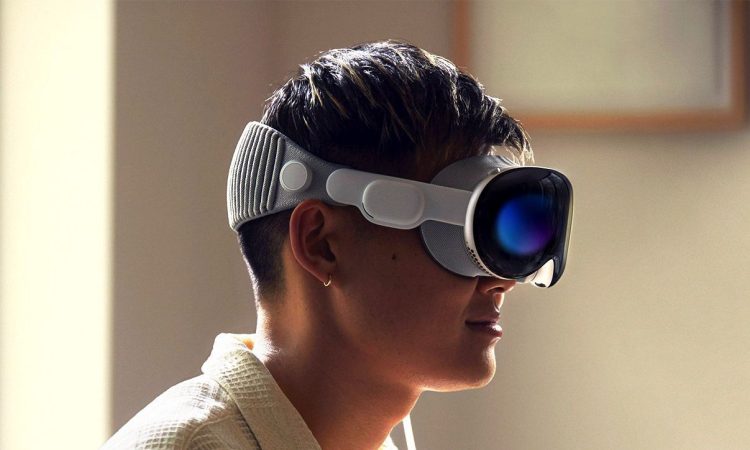
California-based startup Cognixion is taking a bold step by exploring how its brain-computer interface (BCI) can work with Apple’s new Vision Pro headset. The company has announced a clinical trial to help paralyzed patients with speech disorders communicate, without requiring invasive brain implants. If successful, this could be a game-changer in assistive technology, giving people with severe physical limitations a chance to regain one of the most essential human connections: speech.
A New Frontier in Brain-Computer Interfaces
Brain-computer interfaces have fascinated scientists for decades. Traditionally, BCIs decode neural signals to control computers, robotic limbs, and other devices. However, most BCIs require invasive surgery, placing electrodes directly into the brain. While effective in some cases, these procedures carry risks such as infection, rejection, or long-term damage, limiting their accessibility.
Cognixion takes a non-invasive approach. Their system uses EEG sensors integrated into wearable devices to read neural signals. By eliminating the need for brain surgery, the company aims to make BCIs safer, more practical, and easier to use daily. Pairing this technology with Apple’s Vision Pro could amplify its benefits, combining neural decoding with a consumer-grade mixed reality headset that’s becoming more widely available.
How It Works
Cognixion’s system detects subtle neural patterns linked to a user’s intended speech. Here’s how it functions:
- The Vision Pro headset tracks eye movements, head position, and other physiological signals.
- These inputs are combined with EEG neural readings.
- Software predicts intended words or phrases and translates them into real-time synthesized speech.
This is particularly powerful for patients who cannot produce spoken words due to conditions like ALS, cerebral palsy, or brainstem stroke. For these individuals, even basic communication can be challenging. Cognixion’s technology offers a chance to restore autonomy and dignity, enabling interactions with family, caregivers, and the wider world.
The Clinical Trial
Cognixion has launched a clinical trial to test its system in real-world conditions. The study will involve individuals with severe speech impairments and evaluate:
- The accuracy of the BCI in decoding intended speech.
- The usability of Vision Pro as a wearable communication device.
- Adaptability to different levels of neurological impairment.
- The system’s ability to handle complex, conversational speech.
“We’re excited to take this technology from the lab to the real world,” said Cognixion’s CEO.
“Our goal is to empower people who have been silenced by neurological conditions, giving them a tool to express themselves naturally and efficiently without invasive procedures.”
The trial’s results could influence future BCI designs and provide critical data for regulatory approval.
Why Apple Vision Pro?
Cognixion chose the Vision Pro headset for several reasons:
- High-resolution displays and advanced tracking make real-time BCI applications possible.
- Mixed reality features create an immersive, intuitive communication experience.
- Apple’s strong focus on accessibility aligns with Cognixion’s mission.
Apple has long implemented features such as VoiceOver, Switch Control, and Live Captions, making its devices more accessible. By integrating with Vision Pro, Cognixion hopes to reach a broader audience while leveraging Apple’s hardware and inclusive design philosophy.
Implications for Assistive Technology
If successful, Cognixion’s non-invasive BCI could transform assistive technology:
- Enable people with disabilities to communicate, work, learn, and socialize more effectively.
- Reduce dependence on full-time caregivers.
- Improve mental health and inclusion in professional and social contexts.
- Inspire other tech companies to develop BCI applications, accelerating innovation in the field.
Challenges Ahead
Despite its potential, Cognixion faces challenges:
- Technical hurdles: EEG signal noise, variability between users, and rapid speech decoding are difficult to perfect.
- Consumer adoption: Vision Pro is relatively expensive, which may limit widespread use.
- Regulatory approval: BCIs impacting medical outcomes must comply with agencies like the FDA, and clinical trial data will be crucial.
Ensuring the system is comfortable, reliable, and easy to use will be critical for success.
A Vision for Human Connection
Cognixion’s initiative is more than a technological breakthrough—it’s about restoring communication. For those who cannot speak, being able to express thoughts, emotions, and ideas is essential to identity, relationships, and independence.
By merging non-invasive BCIs with Apple’s Vision Pro, Cognixion is pushing the limits of assistive technology. If the clinical trial succeeds, millions of people with speech impairments could experience a new level of independence and connection.
As the trial progresses, the world will watch closely. A reliable, consumer-ready BCI could redefine human-computer interaction and accessibility, reminding us that technology’s most powerful purpose is to empower, connect, and give voice to those who need it most.








