
Can AI See Hedgehogs from Space? Cambridge Researchers Employ Bramble Mapping as a Proxy
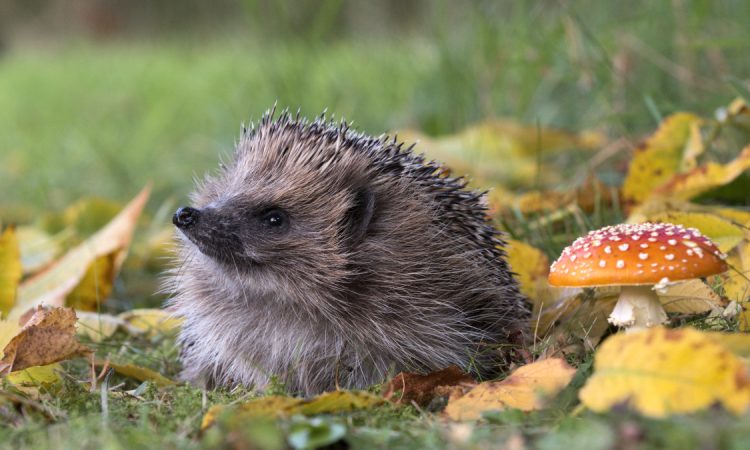
Hedgehogs are popular small, spiny mammals with a nighttime disposition. However, despite their fame, monitoring their populations across habitats remains a major obstacle for conservationists. Such elusive creatures are found lurking under hedges, brambles, and in the undergrowth, making proper observation and recording time-consuming.
Now, a team of researchers at Cambridge University is exploring an ingenious method: mapping hedgehog habitats indirectly through artificial intelligence (AI) and satellite imagery.
Hedgehogs from Space? Not Quite
The idea of spotting a hedgehog from space sounds absurd. Most hedgehogs are too small for even the most high-powered satellite photos—the average adult is roughly the size of a football.
The researchers themselves admit that they are not scanning the skies for hedgehogs. Instead, they use an elegant proxy: brambles.
Why Brambles Matter
Hedgehogs are fond of bramble bushes (also called blackberry bushes). Brambles provide:
- Protective, hidden spaces
- Access to insects and other invertebrates that hedgehogs feed on
By mapping bramble distribution, scientists can identify patches of suitable habitat likely to support hedgehog populations without spotting the animals directly.
AI and Satellite Mapping
The Cambridge team combined ecology, remote sensing, and AI to teach machine learning algorithms to identify bramble patches using high-resolution satellite data.
- The AI is trained on thousands of labeled images, indicating where brambles are present.
- Over time, it learns to distinguish bramble foliage from grasslands, trees, and other vegetation types based on spectral signatures.
“It’s a big leap for habitat mapping,” says Dr. Emily Carter, a lead researcher.
“Hedgehog surveys traditionally involve volunteers heading out at night with torches or tracking plates, which is slow and geographically limited. AI satellite mapping can cover thousands of square kilometers in a fraction of the time.”
Combining Data for Better Insights
Once bramble-rich areas are identified, conservationists can cross-reference AI data with:
- Hedgehog sightings
- Camera trap data
- Citizen science records
Outcome: A more comprehensive understanding of hedgehog distribution and habitat suitability. Early testing shows a strong correlation between bramble density and hedgehog activity, validating the proxy approach.
Broader Benefits
This method also benefits other wildlife, including:
- Small mammals
- Birds
- Insects
Mapping bramble and other shrubs can:
- Reveal broader biodiversity patterns
- Enable targeted conservation efforts
- Reduce environmental impact by minimizing disturbance during fieldwork
Challenges and Limitations
Despite its promise, the approach faces several challenges:
- Habitat suitability
- Not all bramble patches are appropriate for hedgehogs.
- Some may be in areas with high human disturbance or predation risk.
- AI model generalization
- Models trained on contemporary data may struggle in different climates, soil types, or land-use practices.
- Cambridge combines satellite mapping with on-the-ground surveys to validate predictions.
- Satellite resolution limitations
- Dense tree canopies or urban structures can obscure bramble patches.
- The team is exploring multispectral and hyperspectral imaging to detect subtle differences in plant health and structure.
Implications for Conservation and Urban Planning
Hedgehogs in the UK and Europe are declining due to:
- Habitat loss
- Road casualties
- Agricultural practices
Using bramble hotspot maps, policymakers can:
- Prioritize land for protection
- Ensure hedgerow management is wildlife-friendly
- Make urban areas more hedgehog-friendly
Community Involvement
Citizen science plays a critical role:
- Volunteers record hedgehog sightings or monitor garden habitats
- Provides ground truth for AI models
- Enhances public interest in wildlife conservation
AI in Ecological Research
The project raises questions about AI’s role in ecology:
- Traditional conservation relies on human observation and expertise
- AI can detect patterns beyond the naked eye quickly and consistently
- Some ecologists warn against over-reliance, emphasizing complementary synergy
Dr. Carter:
“AI gives a bird’s-eye view, but fieldwork and local knowledge remain essential. Together, they provide a fuller understanding of the natural world.”
Future Directions
The Cambridge team plans to expand beyond brambles to other plant proxies:
- Nettles for butterflies
- Hollow trees for bats
Potential applications include:
- Monitoring biodiversity across landscapes
- Supporting restoration projects
- Informing land-use planning
The Big Picture
While spotting hedgehogs from space remains a playful exaggeration, the real achievement lies in innovation and collaboration. By leveraging AI, satellite imagery, and ecological expertise, scientists are discovering new ways to protect animal populations.
“To find the smallest creatures, we sometimes need to think big—really big, like from space.”
In a world where species are disappearing at unprecedented rates, such creative approaches offer hope. While hedgehogs may not appear in satellite images anytime soon, technology is already helping safeguard their habitats.








