
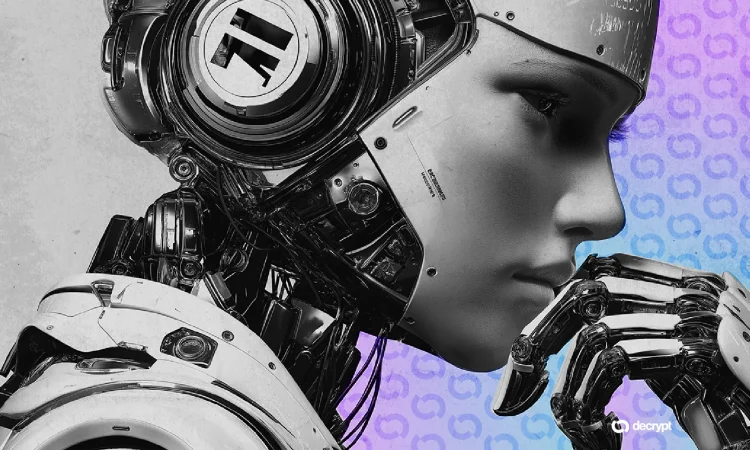
The A.I. industry, dominated by software and virtual assistants like the Amazon Echo, is now pushing into robotics. Roughly humanoid-shaped robots—machines meant to look roughly like us, move roughly like us, and behave just enough not like us that it feels creepily close—are becoming a central focus. Developers of AI are now creating realistic androids, bringing AI from the virtual world into the physical realm.
On this week’s episode of Uncanny Valley, we explore why the world of AI is embracing humanoids and what it could mean for the rest of us.
From Screens to Reality
For years, AI was largely confined to screens. Chatbots such as Siri, Alexa, and ChatGPT captured our imagination with their conversational skills—helping us order groceries, answer questions, or draft essays.
“How much they can feel like, not just helpful services but, well, assistants!” Pleasance wrote.
Yet, as remarkable as these entities are, they are abstract—living in phones, computers, and smart speakers with no tangible presence. Humanoid robots change that, translating AI into the three-dimensional world where humans live, work, and play.
Why the Shift to Humanoids?
Several factors are driving this change:
- Commercialization: Humanoids are the next frontier for tech companies.
- Physical Capabilities: Unlike chatbots, humanoids can:
- Retrieve objects
- Maneuver through challenging terrain
- Mimic social interactions
- Application Potential: These capabilities enable use in healthcare, hospitality, elder care, customer service, and entertainment.
Leading Companies and Their Approaches
Several firms are investing heavily in humanoid robotics:
- Tesla: Optimus is designed to perform monotonous manual labor, addressing labor shortages in factories.
- Boston Dynamics: Atlas is known for agility, parkour, and complex movements—showcasing a significant leap in AI animatronics.
- Engineered Arts: Specializes in social robots capable of realistic conversation and public interaction.
Beyond Function: Human Connection
Humanoid robots tap into humans’ natural tendency to anthropomorphize objects—assigning human traits to non-human entities. When a robot looks, moves, and speaks like a person, we instinctively treat it as a social actor.
Implications include:
- Healthcare: Providing companionship for isolated elderly patients, reducing loneliness and depression.
- Education: Acting as tutors or facilitators, engaging children in ways digital AI cannot.
Ethical, Social, and Psychological Considerations
The proliferation of humanoid robots raises several questions:
- Labor Impact: If robots perform human jobs, what will people do?
- Inequality: Will humanoids exacerbate or alleviate disparities?
- Psychology: Interacting with human-like machines may reshape empathy, trust, and friendship.
The Uncanny Valley
The concept of the “uncanny valley” is critical. Coined by Masahiro Mori in the 1970s, it describes the discomfort people feel when robots are almost—but not quite—human.
- Minor imperfections in facial signals, movements, or voice intonation can evoke unease.
- Advances in machine learning, neural networks, facial recognition, and motor control help humanoids move naturally, emote convincingly, and pick up on human cues.
Social Impacts and Future Integration
Some futurists envision humanoids as part of daily life—from home assistants to coworkers. Yet early deployment may provoke backlash.
- Example scenarios: Hospitals, schools, and shopping centers.
- Public reaction: Acceptance as helpful companions or rejection as intrusive presences?
Humanoids as Research Tools
Another driver is AI research itself. Physical robots allow scientists to:
- Test perception, motor control, and human interaction in real-world scenarios.
- Study human cognition and behavior through robotic observation.
Humanoids function as living laboratories, bridging the gap between abstract algorithms and the complexities of reality.
Investment and Global Trends
Funding for humanoid projects is strong:
- Venture capital, corporate investment, and government funding are flowing in.
- Countries like the US, South Korea, and Japan are incentivizing research due to aging populations and high demand for service robots.
- Tech giants in China and Europe explore applications in logistics, customer service, and entertainment.
Takeaway: Humanoids are not just lab experiments—they are commercially and socially relevant.
Challenges Ahead
Despite progress, significant obstacles remain:
- Battery life and mobility in uncontrolled environments
- Safety concerns
- High costs: Hundreds of thousands of dollars for high-end models
- Ethical concerns: Preventing bias, protecting privacy, and avoiding misuse
These issues must be addressed by developers, policymakers, and society.
What It Means for Us
In the short term, humanoids may remain confined to niche spaces: hospitals, research labs, or select businesses.
But the trajectory is clear:
- Production costs are dropping
- AI is becoming more sophisticated
- Public familiarity is increasing
Humanoids are poised to reshape boundaries between humans and machines.
The New AI Story
Humanoid robots represent a new chapter in AI:
- Chatbots taught us to talk with AI
- Humanoids teach us to live alongside AI
Consequences touch:
- Labor markets
- Social norms
- Ethics
- Emotional experiences
Moving Forward
Currently, humanoids are learning to walk, talk, and interact awkwardly. Each gesture and expression brings them closer to becoming familiar companions in the physical world.
The question is not whether they will arrive, but how society will adapt.
One certainty: the era of purely digital AI is being replaced by a material, embodied future.
Move aside, chatbots—humanoids are here.








