
This Robot Can Master Humanlike Movements With a Single Algorithm
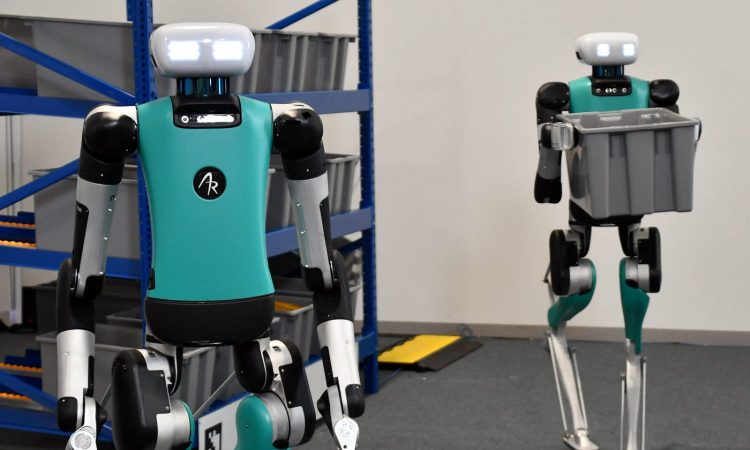
The robotics company known for a robot that runs, jumps, and even does a backflip on command has finally developed a creation that defies its capabilities. Its human-like robot, Atlas, can now tackle both walking and handling objects with just one artificial intelligence. This breakthrough is a major step in the development of general-purpose robot algorithms—systems that could someday enable robots to perform household tasks or have meaningful conversations with people without needing to be specifically programmed for each task.
Breaking Down the Achievement
In robotics, one major problem is the requirement to maintain several models and algorithms for multiple skills.
- A decade ago, a robot might have required:
- One set of algorithms for its legs
- Another for its arms
- Still another for its decision-making
This fragmentation makes robots less versatile and more difficult to scale to real-world problems.
Boston Dynamics’ new innovation is a step toward changing that. By allowing Atlas to use the same model for a wide range of skills—walking, reaching, leaning, and stretching—the company is taking a significant step toward building machines that learn and move the way we do. Instead of every behavior being implemented as an independent function, Atlas now uses a brain-inspired system to guide all motions.
Why a Unified Model Matters
The concept of one AI model capable of managing several motor skills is revolutionary because it mirrors human behavior.
- Humans don’t use one part of the brain exclusively for walking and another for reaching.
- Instead, our brains orchestrate movements through overlapping neural pathways, flexible enough to handle many different tasks.
If robots achieve this level of generalization, the consequences could be transformative:
- Walking into a crowded room
- Opening doors
- Picking up dropped items — all without reprogramming
Such versatility could make robots invaluable in homes, factories, hospitals, and disaster-response situations.
Atlas and the Next Step in Humanoid Robotics
Atlas has long been Boston Dynamics’s showcase for the latest in humanoid robotics.
- Viral videos of the robot doing backflips, parkour, and dance routines have fascinated millions online.
- While impressive, those stunts relied on meticulously designed control systems for each movement.
This latest milestone is different—it signifies autonomy and flexibility.
- A single AI model supports adaptive behavior
- Reduces reliance on preprogrammed, choreographed motions
Boston Dynamics has said this is a step toward developing robots capable of learning and adapting in real time. Instead of being choreographed like dancers, robots such as Atlas could one day be trained like natural fighters—handling unpredictable environments the way humans do.
The Role of AI in Robotics
This leap forward is powered by cutting-edge machine learning.
- Today’s AI models analyze vast amounts of movement data
- They distill patterns that work well across many contexts
For Atlas, this means:
- Learning to balance and move its body while walking
- Controlling arms and hands to grasp—all within the same system
A single model not only adds intelligence but also improves efficiency:
- Simplifies design and training
- Makes it easier to expand robot capabilities
- Accelerates the timeline for robots that work well in everyday settings
The Bigger Picture: General-Purpose Robots
The holy grail of robotics has always been the general-purpose machine—robots that:
❌ Aren’t confined to narrow, repetitive tasks
✅ Can adapt to the full variety of human challenges
This requires breakthroughs in both hardware and software:
- Hardware: Atlas’s mobile humanoid body, dynamic balance, precision movements, and strength
- Software: A single AI model enabling adaptability and intelligence
Together, these advances suggest that the gap between human flexibility and robotic stiffness is beginning to close.
Real-World Applications
While Atlas remains a research platform, its technology could revolutionize industries:
- Manufacturing: Robots could adapt to new assembly lines without reprogramming
- Healthcare: Assist patients by fetching supplies or providing physical support
- Disaster Response: Enter hazardous zones, navigate rubble, and help survivors
Challenges still remain: robustness, safety, and cost must be addressed before large-scale deployment. But Boston Dynamics’ achievement demonstrates that the conceptual barrier—needing multiple models for multiple skills—may no longer hold.
The Humanlike Element
Atlas continues to capture public imagination because of its increasingly humanlike behavior.
- Watching Atlas dance, leap, and transition between walking and handling objects is both thrilling and uncanny.
- This resemblance is not just aesthetic—it reflects the practical benefits of making robots move like humans.
Key advantage: Humanoid robots can navigate human-designed environments—stairs, door handles, tools—without requiring special infrastructure.
Ethical and Social Considerations
With progress comes debate:
- Will robots complement or replace human workers?
- How do we ensure safety and accountability if robots make autonomous decisions?
Boston Dynamics has stressed that its robots are designed for practical and beneficial purposes, not for warfare or dystopian scenarios. Still, as capabilities grow, society must grapple with the ethics and implications of humanoid robotics.
Looking Ahead
Boston Dynamics’ success with Atlas is a significant step toward robots that are not just performers, but participants in human environments.
- A single AI model handling multiple tasks may sound technical, but it’s foundational for the next generation of machines.
- Robots that learn, adapt, and integrate into daily life are closer than ever.
While widespread use in homes or industries may still be years away, the road forward is now visible. Once known as a robot that dances, Atlas has become a symbol of the future: robots that move in humanlike harmony, powered by unified intelligence rather than fragmented algorithms.
In summary: Boston Dynamics has proved that the dream of general-purpose robots is no longer fantasy—it’s a work in progress, and one giant step closer to reality.








