
Taco Bell Rethinks Whether AI Can Solve Its Drive-Through Problem
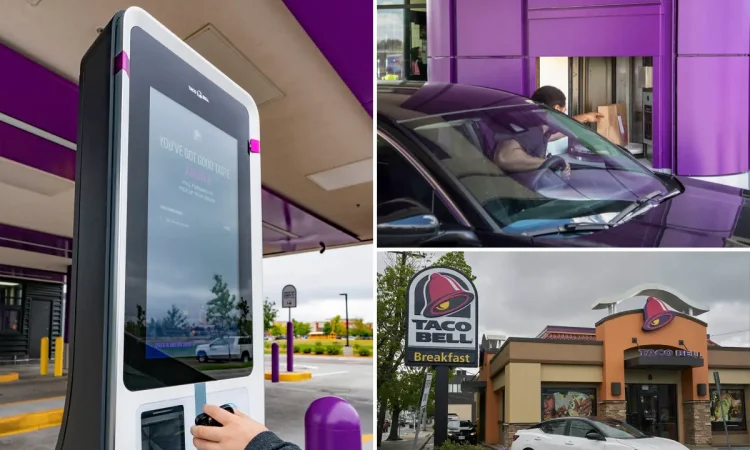
Fast-food chains have been testing out artificial intelligence for years as they look to turn one of their biggest consumer touch points — the drive-through — into a restaurant on autopilot. Taco Bell, among the most visible fast-food chains, has led the pack. But the business is now second-guessing the role of AI in its drive-through operations — and in doing so, raising critical questions about the future of automation for fast-food companies.
AI on the Drive-Through Promises
It is easy to believe in the promise of AI-savvy drive-through systems. By using voice recognition software and machine learning models, companies like Taco Bell have hoped to:
- Speed the process of taking orders
- Shorten wait times
- Ease staffing shortages
With a shortage of service workers throughout the economy and rising wage costs, automation seemed to make a natural solution.
AI-powered order-taking systems were intended to:
- Make service faster
- Reduce the likelihood of human error
- Upsell customers on add-ons or special menu items
The idea was for AI to be not only the heir apparent for rote human tasks but also to deliver a smoother, more consistent customer experience.
In theory, customers could drive up to a speaker, talk to an AI voice assistant, receive their food in a matter of minutes, and experience fewer errors. It was a future of efficiency, scalability, and cutting-edge innovation.
Reality Check: The Limits of AI
But the truth has turned out to be more complex. Taco Bell, like many of its fast-food brethren, has found that AI in the drive-through works but can’t always keep pace with the variability of human communication.
Challenges include:
- Accents, background noise, slang, and regional menu customizations that confuse AI systems.
- Customized orders (e.g., “extra cheese but no beans”) that frequently lead to mistakes.
- Peak-hour slowdowns, where human intervention is still required, canceling out efficiency gains.
Guests who anticipated a faster experience often ended up waiting longer, which detracts from satisfaction scores and loyalty.
Moreover, humor, sarcasm, or casual small talk — common at drive-throughs — is frequently lost on AI systems. Human workers can interpret tone and context instantly, while AI struggles in gray areas. For a fast-food industry that thrives on speed and precision, these faults are difficult to ignore.
The Human Element Still Matters
Another reason Taco Bell is hesitant to do away with humans is the value of human touch in customer service. For many diners, ordering food is more than a process of optimization; it’s an act of connection.
- Drive-through workers make personalized suggestions.
- They adapt easily to unusual requests in ways AI cannot.
- That human gesture can make a routine transaction pleasant and foster brand loyalty.
Companies are waking up to the fact that AI can help, but it cannot wholly take over the flexibility and empathy of humans. Taco Bell’s second thoughts are part of a broader industry shift: while automation is important, it tends to work best when it aids rather than replaces humans.
The Cost-Benefit Dilemma
There’s also the issue of cost. Deploying AI systems across hundreds or thousands of restaurants isn’t cheap.
Expenses include:
- Software licensing costs
- Hardware deployment
- Ongoing system maintenance and support
- Software updates
If the tech isn’t performing consistently, the return on investment gets murky. Instead of saving money, companies risk spending more on:
- Training
- Software patches
- Customer recovery efforts
For Taco Bell, the math suggests that human staffers — flawed though they may be — remain the more reliable option for now.
Industry-Wide Trends
Taco Bell is not alone in this reappraisal. Other large fast-food players, including McDonald’s and Wendy’s, have also been testing out AI at the drive-through, with mixed results.
- Some pilot programs have been successful.
- Others have led to customer pushback due to inaccurate orders or awkward interactions.
This industrywide experimentation reflects a larger challenge in the service economy: balancing technological innovation with customer satisfaction.
What’s Next: AI as Colleague, Not Viceroy
Even after setbacks, Taco Bell is unlikely to give up on AI entirely. Instead, the company seems to be moving toward a hybrid model, where AI supplements human employees rather than replacing them.
Examples include:
- AI handling routine tasks like confirming menu items, processing payments, or upselling.
- Human workers stepping in for complex or personalized orders.
This hybrid model could deliver the best of both worlds — efficiency from automation combined with the adaptability of human workers.
AI may also prove valuable in back-of-house operations, such as:
- Supply chain management
- Inventory forecasting
- Kitchen workflow optimization
Because these areas are less subject to customer quirks, they may yield more consistent value.
Consumer Perception Matters
Taco Bell’s rethinking also underscores the importance of public perception.
- Many consumers are excited about technology, but quick to criticize if it makes their experience worse.
- A drive-through plagued by mixed-up orders or robotic exchanges can quickly hurt a brand.
- Fast-food customers want speed, value, and convenience — nothing less.
If AI creates barriers instead of removing them, the brand risks losing its core appeal. Taco Bell’s caution shows a focus on customer satisfaction over flashy tech experiments.
In Short: AI Reckoning for Fast Food
Taco Bell’s on-again, off-again flirtation with AI in the drive-through underscores a larger truth about technology in consumer-facing businesses: it must deliver real benefits now, not just in some imagined future.
- AI could revolutionize fast food — but it isn’t a one-size-fits-all solution yet.
- The lesson is not that AI has failed, but that it is still evolving.
- Success requires integration with human expertise, thoughtful execution, and customer focus.
In the years ahead, AI may indeed become a seamless part of drive-through operations. But for now, Taco Bell’s cautious move is a reminder that sometimes — even in an automated age — the human voice at the speaker box is still the most reliable way to get your order right.








