
I Saw the Future of A.I. on Netflix. It Cuts Through the Hype and Finds a Use Case
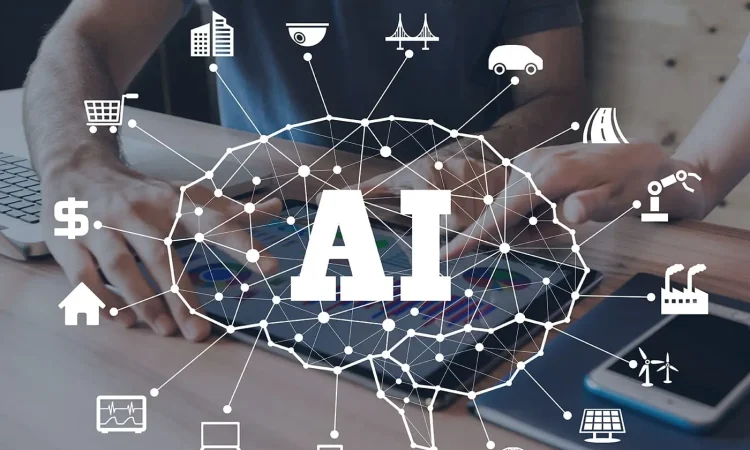
In today’s world, where it seems everyone is obsessed with futuristic sci-fi and dystopian stories about the dangers of artificial intelligence, this is a bold and refreshing move by Netflix. Instead of AI being portrayed as some inevitable, existential threat to humanity — replaced by a sentient deity who makes our decisions and takes our jobs — a new wave of programming from the streaming giant is seeking to change the conversation.
It doesn’t discuss AI as some vague, far-off future, but as tangible, evolving tools with real human-centered use cases.
From Sensationalism to Substance
In mainstream media, AI has long been depicted as either:
- A magical genie
- A fearsome monster
- A problem solver that works instantly
- An existential threat
Netflix’s changing narrative obliterates that binary tale. Instead, it dives into the practical implications, ethical dilemmas, and emotional effects of machines learning to think with — not instead of — us.
Examples from the Series:
- A community clinic in India uses machine learning to predict disease outbreaks by analyzing sanitation data and local climate patterns.
- A team of scientists is training AI to detect early indicators of Alzheimer’s years before symptoms appear, using subtle changes in speech and facial microexpressions.
This is not about flashy graphics or futuristic cities. It’s about how AI is becoming a quiet colleague, helping humans do more, not less.
AI as a Collaborative Force
Perhaps the most powerful message in these Netflix shows is that AI functions best as a partner to humans, not a replacement.
In Education:
- Adaptive learning algorithms help teachers understand the unique needs of each student.
- The AI doesn’t teach—it analyzes patterns a teacher might miss in a class of thirty kids.
In Creativity:
- Artists, musicians, and writers are not being replaced.
- Instead, they use AI as a digital co-pilot to explore new forms of self-expression.
The future these series paint isn’t lacking in human touch — AI enhances it.
Netflix’s embrace of this nuanced perspective shifts away from Silicon Valley bravado and doomsday narratives, offering a view of AI that feels timely, responsible, and hopeful.
Facing the Ethics Head-On
What makes Netflix’s vision stand out is that it doesn’t dodge the hard questions.
AI is not shown as inherently good or bad. Instead, the documentaries examine its power and the consequences of misuse.
Key Ethical Stories:
- A former data scientist explains how biased training data leads to AI systems that perpetuate social inequalities, such as facial recognition tools with lower accuracy for people of color.
- A predictive policing algorithm misidentifies a teenager, with devastating results.
- A nonprofit organization develops open-source, bias-resilient AI models to challenge systemic injustice.
This isn’t fearmongering — it’s responsible storytelling and a call for transparency and inclusiveness in AI development.
A Global Perspective
Netflix’s AI programming doesn’t limit itself to Western narratives. Its global production reach brings AI’s real-world impact into sharper focus.
Examples of Global Use Cases:
- Farmers in Africa use AI to analyze soil and boost crop yields.
- Ocean conservationists in Australia deploy AI-powered drones to monitor coral reefs.
These stories emphasize that AI is not just confined to labs or corporate boardrooms — it’s becoming a global tool for solving real problems in real time.
A Look Beyond the Algorithm
Another strength of Netflix’s portrayal is its focus on the people behind the technology:
Engineers, ethicists, educators, and artists.
By highlighting their hopes, concerns, and creativity, the platform humanizes a subject too often reduced to cold logic and code.
Emotional Touchpoints:
- A teacher’s guarded optimism when discussing AI and dyslexic students.
- A doctor’s urgency as she explains how AI helps detect cancer in rural areas.
These aren’t stories of machines replacing humans. They are stories of humans guiding machines to serve our needs.
What the Future Could Really Look Like
So, what does the future of AI look like?
If Netflix has its say, it’s:
- Mindful
- Deliberate
- Human-led
Netflix’s approach to AI makes it clear that the technology itself isn’t the story — the people using it are.
By focusing on real use cases and authentic voices, Netflix encourages us to envision a future where AI is not a superhuman force looming over us — but a superpower that lifts us up.
Perhaps that’s the most radical message of all:
AI won’t change everything overnight, but we have the power to decide how it changes us.
Final Thoughts
While governments regulate, tech giants innovate, and debates rage on, Netflix has quietly crafted something more meaningful than hype — perspective.
In a digital world saturated with clickbait and controversy, Netflix offers rare, thoughtful portrayals of artificial intelligence.
Watching these shows, I didn’t feel awe or fear.
I felt something more enduring: clarity.
This is what the future might look like if we stop asking what AI can do — and start asking what it should do.
It’s not science fiction. It’s already happening.
And thanks to Netflix, more of us are finally getting the chance to truly see it.








