
AI May Soon Listen to Dogs and Cats: A Step Toward Communication Across Species
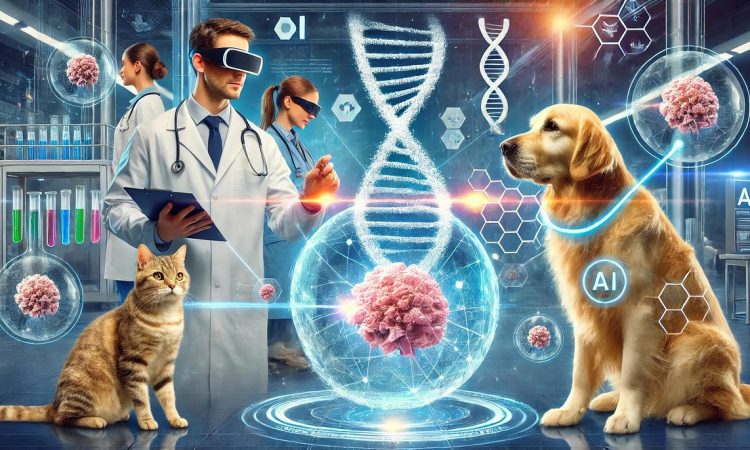
In what could soon be considered one of the most revolutionary advances in artificial intelligence and animal science, researchers are inching closer to proving that it’s possible for AI to soon “speak” the languages of dogs and cats.
It might sound like something out of a sci-fi flick or a Pixar film, but thanks to the intersection of machine learning, acoustic analysis, and behavioral science, the dream of talking to our pets isn’t as far-fetched as we once thought.
Imagine asking your dog what it would like for dinner, or having your cat tell you when it’s feeling uncomfortable, bored, or happy. That’s the future scientists see as AI systems become more adept at analyzing animal vocalizations, facial expressions, and body movements.
The Science of the Bark and Meow
Animals communicate in rich, expressive ways—but what if we could actually understand them?
- Dogs use a combination of vocalizations, posture, and eye contact to communicate with both humans and other animals.
- Cats rarely meow to each other but use vocal pitch, purring style, and ear positioning to signal their moods and needs—usually directed at humans.
Until recently, deciphering these complex signals was nearly impossible. Now, the power of AI is enabling researchers to recognize subtle patterns in animal sounds and behaviors once undetectable to the human ear.
Machine learning algorithms, trained on thousands of audio and video samples, can now:
- Cluster similar sounds and movements
- Associate them with specific emotional states or intentions (e.g., hunger, arousal, aggression, affection)
Who’s Leading the Charge?
Several pioneering research groups and tech organizations are pushing this frontier:
- Earth Species Project: A nonprofit using AI to decode non-human communication—not just for pets but for whales, birds, and primates.
- University of Washington & MIT: Researchers here are training neural networks with hours of animal sound data, validated by human-labeled context.
One ambitious initiative is the Pet Translator, an AI-based program designed to assign meaning to various barks and meows based on:
- Tone
- Context
- Human response
Meanwhile in Sweden, the MeowTalk app allows cat owners to record their cat’s meow and receive a real-time translation. While still limited, it’s a significant early step toward AI systems capable of understanding individual animal dialects.
Why This Matters
Understanding animal communication is more than a novelty—it could transform:
1. Pet Care and Veterinary Science
- Spotting early signs of illness through subtle vocal cues
- Quicker diagnoses and more effective treatments
2. Human–Animal Relationships
- Reducing miscommunications and behavior issues
- Improving the training and rehoming process for rescued animals
3. Animal Welfare
- Ensuring animals’ needs are better understood and met
- Enhancing emotional and mental well-being of pets
Ethical and Technical Challenges
Despite the excitement, several challenges remain:
1. Individual Variations
- Unlike human language, animal signals are not standardized.
- A bark signifying joy in one dog might mean stress in another.
2. Emotional vs. Linguistic Communication
- Animals don’t form sentences or share abstract ideas.
- Their communication is largely situational and emotion-driven.
This raises questions:
- How accurate can any AI translation truly be?
- Could we misinterpret animal sounds by projecting human emotions onto them?
3. Ethical Considerations
- Is animal communication merely data to be harvested?
- Could constant monitoring violate an animal’s autonomy or well-being?
- Will this technology shift the responsibilities of pet ownership?
Researchers emphasize the importance of ensuring AI models are not only precise but also respectful of animals’ unique identities and behaviors.
A Future Not Too Far Off
Experts believe that within 5 to 10 years, we may have access to fully functional pet communication tools. With enhanced sensors and more data, such tools could become as ubiquitous as leashes or pet collars.
Imagine This:
- You wake up and ask your smart home assistant, “How is Baxter?”
– It responds, “Baxter is happy and wants to play.” - You get a notification that your cat is expressing hunger at an unusual hour—perhaps an early sign of a health concern.
The potential stretches beyond pets:
As AI begins interpreting communication in whales, elephants, and other complex species, we may enter a new era of interspecies understanding, reshaping our empathy and redefining our role within the animal kingdom.
Final Thoughts
The idea of “speaking” dog or cat has long been a metaphor for how humans bond with animals. But new AI research is moving that metaphor closer to reality.
As AI learns to read animal expressions, body language, and vocal cues, the walls separating species may begin to crumble. Whether it’s for improving pet health or expanding our philosophical view of non-human life, the implications are vast.
For the first time in history, we may soon not just talk to our pets—
but truly listen.








