
This Quirky AI-Powered Camera Prints Poems, Not Photos: A New Lens on Creativity
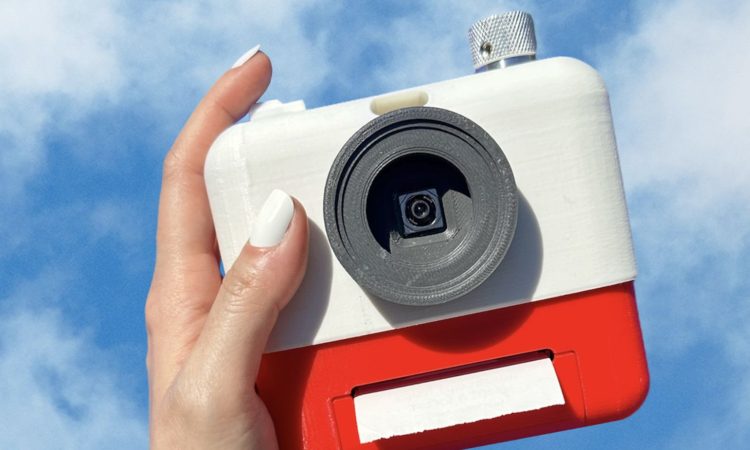
In the age of digital photography, where every second we spend taking endless photos and storing them forever in pixel form, a fascinating curiosity is turning heads — quite literally, prints into poetry. Introducing an AI camera that doesn’t just take pictures, but writes poetry too. This quirky gadget is rethinking what it means to “capture a moment,” marrying technology with the art of literature to produce something fundamentally human and delightfully unpredictable.
Nicknamed the “Poet Camera” by early adopters and fans, this device reimagines the essence of photography. Instead of rendering a scene in megapixels, it interprets it through artificial intelligence and prints it on thermal paper in the form of a short, typewritten poem. Each click yields not a photograph, but a unique verse — a poetic snapshot of the world, seen through algorithms trained to sense mood, weather, scenery, and emotion.
A Marriage of Tech and Poetry
At its heart, this camera contains an AI model trained on thousands of poems, written in a variety of traditions, forms, and styles — from Shakespearean sonnets to modern Instagram poetry.
When the shutter is released, the system gathers data from the camera’s sensors, including:
- Ambient light
- Temperature
- Geographic location
- Faint audio signals
This data is used by the AI to craft a personalized poem that encapsulates the feel of the moment.
This isn’t just word association run amok. The AI uses natural language processing and machine learning to generate verses that resonate emotionally, reflecting themes aligned with the environment.
For example:
- A walk in the woods might result in a haiku about rustling leaves and solitude.
- A rainy afternoon in the city could generate a moody free verse about puddles reflecting neon lights and fleeting thoughts.
The Visionaries Behind the Camera
The project was conceived by a team of artists and technologists working at the intersection of AI and human creativity. Initially a side experiment in an AI lab, the group sought to explore how machines could enhance rather than replace creative expression.
“We wanted to counter the narrative that AI should just do the same thing humans already do,” said Leila Morris, an AI researcher and poet.
“Rather than designing another image filter or photo enhancer, we wondered — What if a camera could feel? What if it spoke in verse rather than visuals?”
The result is a product with a minimalist silhouette, reminiscent of classic point-and-shoot cameras. Notably, it features:
- No screen
- No editing options
- No memory card
Just a viewfinder, a shutter button, and a small thermal printer that prints a fresh poem seconds after each shot.
Redefining What We Remember
In many ways, the Poet Camera is a quiet rebellion against the over-documentation of our lives. Smartphones and social media encourage us to capture countless images each day — most of which vanish into the cloud.
This camera, however, asks us to slow down and experience the world differently — not through filters or framing, but through language and abstraction.
Users often express surprise and joy at how eerily accurate and emotionally resonant the poems can be.
“It’s like getting a fortune cookie from the universe,” said artist Julian Navarro, who brought the camera on a hiking trip.
“It can be light, it can be deep — but it always leaves you thinking.”
The device has quickly found a home among:
- Poets
- Educators
- Therapists
Some schools use it for creative writing exercises. In therapy, counselors use the generated poems as conversation starters or journaling prompts.
Limitations Become Features
Of course, not every poem is a masterpiece — and that’s part of its charm.
Because the AI relies on machine-learned language models, its output can be:
- Clunky
- Oddly phrased
- Unexpectedly brilliant
These imperfections often result in moments of humor, insight, and sweet poignancy.
The developers intentionally kept the analog printer and screen-free design:
“We wanted this to feel unlike another app or smart device,” said co-creator Marco Lin.
“It’s not about perfection or instant sharing. It’s about a fleeting, personal moment — something you can hold in your hand, maybe tuck into a book.”
A Growing Cultural Phenomenon
Following its soft launch, the Poet Camera gained popularity in creative and tech communities alike. It has appeared in:
- Art installations
- Literature festivals
- Experimental photography exhibitions
Some users:
- Create scrapbooks of their printed poems
- Trade them with fellow users anonymously
- Use them as community art
This growing interest suggests a broader movement — a yearning for technology that complements, rather than overshadows, human emotion and imagination.
The Future of Poetic Tech
Inspired by the success of the Poet Camera, other developers are now exploring new applications of AI-powered poetic storytelling, including:
- Voice-activated poetic journals
- Wearables that generate verses based on your heart rate or walking pace
Yet, the creators are quick to emphasize:
“Poetry, to me, is one of the most human things,” said Morris.
“When an AI writes a poem, it isn’t pretending to be human. It’s giving us a mirror — a way the machine thinks the world might feel.”
Conclusion
The Poet Camera is more than just a quirky gadget. It’s a symbol of thoughtful innovation, a reminder that not everything needs to be framed in pixels or filtered through algorithms. Some moments can be felt, interpreted, and given back to us in the form of verse.
In doing so, it rekindles something often lost in our digital whirlwind — the art of seeing the world with imagination and emotion.
In this eccentric little device, technology and art aren’t in competition. They’re in collaboration. And from that collaboration emerges not just innovation — but inspiration.








