
Google AI’s Monster Tech Spend Explains Future of Artificial Intelligence
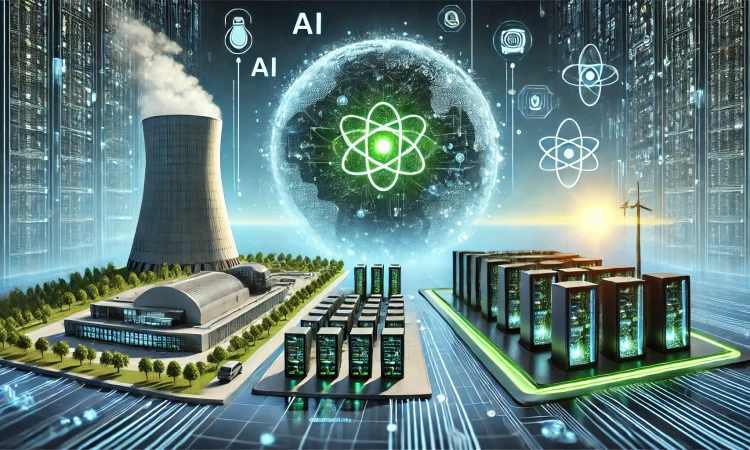
In the past few years, artificial intelligence (AI) has come into the forefront of modern technology, changing the way we see search engines and communicating devices. One of the key proponents of this transformation is Google, a company that has fully embraced AI and poured billions into it. A new, deep dive into the company’s financial strategy has found that where it’s investing big money on AI, it’s doing so mainly around just one critical area: technical infrastructure. From custom-designed chips to sprawling data centers, Google’s deep spending is meant to ensure that its AI systems can handle new challenges and still work as quickly and as reliably as ever.
The Unsexy Business of Maintaining What You’ve Built
With the hype around AI, should you be worried that many of the suppressed building blocks are in the hands of just a few companies? How to see the matter through a microscope and a telescope, at the same time.
For all its complexity, artificial intelligence depends on something surprisingly material: real estate. Unlike conventional software development, however, AI is much more computationally intensive, requiring:
- Huge amounts of processing power
- Incredibly large-scale storage
- High-speed networking
Even the most sophisticated algorithms can perform poorly—or not at all—without a robust technical base.
Acknowledging this, Google put the majority of its AI spend into maximizing its infrastructure stack, including:
- Data centres
- Sophisticated processors such as TPUs (Tensor Processing Units)
- High-throughput fibre optic networks
- Cooling technology to maintain optimal performance
The concept is simple in theory, grand in ambition: Establish the infrastructure to enable AI models to scale, adapt, and continually update in real time for billions of users worldwide.
Billions Invested: A Strategic Bet
In its latest earnings reports and executive commentary, Google’s money spent on infrastructure (referred to as CapEx) has grown much faster than ever before. The bulk of this growth is connected to the infrastructure required to sustain AI. For example:
- In the first six months of 2025, Google invested more than $20 billion in technical infrastructure
- This figure is nearly double its outlay during the same period a year earlier
“The vast majority of CapEx is going into servers and data centers,”
— Ruth Porat, President and Chief Investment Officer at Alphabet
These investments are a product of the increasing demand for AI-powered services, especially those running on Google’s Gemini platform, the company’s answer to OpenAI’s ChatGPT or Microsoft’s Copilot.
The Ascent of TPUs: Custom Chips for AI
A Google infrastructure investment principle is custom silicon. Unlike general-purpose CPUs and even GPUs, Google’s TPUs are custom-built for machine learning tasks. Key highlights:
- Introduced in 2016, TPUs have improved rapidly
- The latest versions can perform billions of calculations per second using only a fraction of the energy compared to traditional chips
Google has recently launched its sixth TPU generation, which the company claims offers:
- 4.7x better performance per watt compared to the previous generation
These chips are being deployed in the vast data centers that power services like:
- Google Search
- YouTube recommendations
- Real-time language translation in Google’s cloud computing business
Scaling Data Centers to Meet AI Demand
Many data centers aim to serve millions of users and enterprise compute clusters simultaneously.
In addition to custom chips, data centers remain central to Google’s AI strategy. But these aren’t just average server farms—they include:
- Specialized cooling systems
- AI-tuned hardware layouts
- Advanced power management systems
To keep up with its exploding global user base, Google is rapidly expanding its physical footprint. New AI-focused data centers are being built in:
- North America
- Europe
- Asia
These sites are selected based not just on proximity to users but for access to renewable energy—an increasingly important factor as AI becomes more power-hungry.
Why This Infrastructure Investment Matters
Google’s aggressive infrastructure building spree is about more than spending—it’s about securing a dominant position in AI.
“Google is building this moat of technology that nobody can get around,”
— Martin
Running large models like Gemini or Imagen at scale requires:
- Skill
- Data
- Infrastructure processes
Additionally, technical infrastructure enables:
- Faster model iteration
- Lower latency to users
- Greater reliability in deploying AI across products
These are crucial as AI integrates deeper into consumer tools like:
- Real-time transcription in Google Meet
- Smart Compose in Gmail
- Context-aware search enhancements
The Environmental Tradeoff
Infrastructure spending is essential for AI progress—but it comes at a significant environmental cost:
- AI models consume massive electricity
- Data centers generate large amounts of heat and carbon emissions
Google’s countermeasures include:
- Investing in carbon-neutral operations
- Using AI to reduce energy consumption across its buildings
- Implementing AI-controlled cooling systems
- Developing machine learning-based energy forecasting
As of 2025:
- Over 60% of Google’s data center energy comes from renewable sources
- Google aims to achieve 100% renewable usage by 2030
Industry-Wide Implications
How Google moves is likely to guide the rest of the tech industry. With businesses racing to embed AI into products, the demand for:
- Scalable
- Dependable
- Secure infrastructure
…is only growing.
Google’s massive spending is a strong signal that infrastructure is not just a support system—it’s a competitive edge.
While Microsoft, Amazon, and Meta are also increasing their investments in custom silicon and AI-ready data centers, Google’s vertically integrated model—from chip design to data center management—offers a rare strategic advantage.
Looking Ahead
AI is more than a buzzword for Google—it is the foundation of its future. Across search, ads, cloud computing, and productivity tools, Google has built AI into the core of its product vision.
At the heart of all these smart systems is a robust infrastructure backbone.
This ecosystem is only viable because Google is fundamentally a technology company—one that delivers reliable, scalable, and secure infrastructure upon which vast datasets can be processed and new innovations developed.
While the entry cost into this space is immense, the long-term rewards—both in innovation and market leadership—may be well worth the price.
In a planet increasingly run by intelligent systems, Google’s infrastructure-first strategy might be the greatest bet of all.








