
AI Is Sending People Old, Misogynistic Fortune‑Cookie Advice in New Languages and Cultures
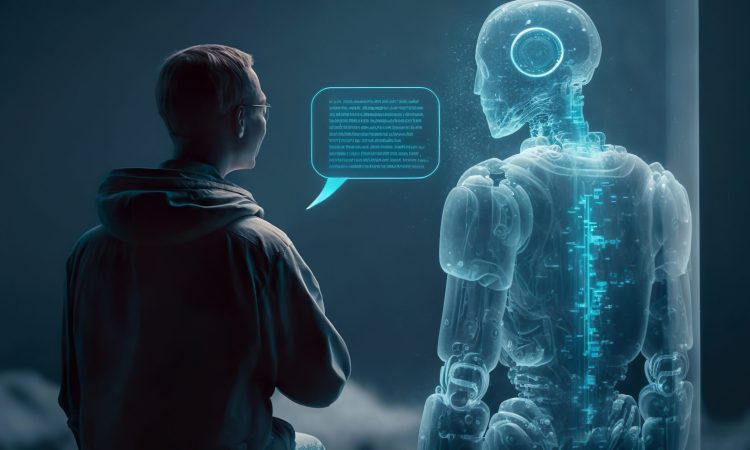
As artificial intelligence seeps into every nook and cranny of modern life, a crucial and lasting concern has begun to emerge: AI, like its human makers, is vulnerable to bias.
Now AI is being increasingly deployed to conduct the digital equivalent of document checks—looking for possible killers and crooks, reading personal essays, and scouring arrest records in search of menaces to society, including:
- foreign terrorists
- drug smugglers
- gang members
- immigrants
If such poorly biased software finds its way into the world in a big way, it could pose a serious threat. Its origins as a project to democratize knowledge and technology have, in some respects, enabled age‑old stereotypes to seep into communities that were previously insulated from such globalized digital narratives.
From English to Everywhere: The Crowdsourcing Problem of Learning Biased Data
Fundamental to the issue is the data used to teach these models. Most of it is sourced from the internet—news sites, blogs, social media, and forums—with English‑language content leading the pack. Many of those sources are loaded with cultural biases. When an AI model trained mainly on English‑language data is told to produce text in Hindi, Arabic, Swahili, or Filipino, it doesn’t simply translate the language; it perpetuates the underlying cultural prejudices.
For example, when scientists asked a multilingual AI model to translate descriptions of professions into various languages, it invariably linked men to professions such as “doctor” or “engineer” and women to “nurse” or “teacher,” even in countries where these gender roles are not as prominent. Even more disturbing have been cases in which racial and religious stereotypes were reinforced in non‑Western dialects. Muslims, for instance, were often associated with terms like “terrorist” or “extremist,” regardless of context.
Reinforcing Bias Through Translation
One of the primary conduits for stereotypes in AI is the ubiquitous machine‑translation system. These tools can inadvertently embed harmful connotations when translating gender‑neutral phrases into gendered languages. A frequently cited example:
- Turkish: “O bir doktor” → English: “He is a doctor.”
- Turkish: “O bir hemşire” → English: “She is a nurse.”
When this bias is repeated in dozens of languages, the harm is compounded. Native speakers might start to internalize these roles as norms if AI appears in learning materials, local news summaries, or automated customer‑service platforms. The subtle reinforcement of bias becomes particularly dangerous when delivered in a tone of apparent neutrality.
Cultural Erosion and Digital Colonialism
Some experts caution that this cycle of AI‑driven stereotyping contributes to digital colonialism. Just as colonial powers once imposed language, religion, and political systems on indigenous cultures, AI models trained on Western data are now imposing cultural norms and narratives on digital content worldwide. This can denude indigenous identity and drown out minority voices.
In African and Southeast Asian contexts where AI‑based education apps are being used, content increasingly promotes Western models of success, beauty, and morality. Local nuances are often undermined or distorted, potentially reshaping cultural self‑perception—especially among younger generations who consume most of their information through AI‑curated sources.
Challenge: Context and Scale of Representation
Encoding cultural context into AI systems is extraordinarily difficult. Developers strive to create balanced and representative models, yet there are countless ways to exist as a person. Every culture has its own values, taboos, and linguistic subtleties. Translating language is not just about words—the meaning, tone, and context require a depth of understanding that many AI models lack.
Minority languages and dialects are often overlooked in AI development. This absence of representation means the scant data points that do exist exert outsized influence, amplifying any embedded biases. In other instances, AI fabricates responses in rare languages, injecting English‑based assumptions rather than genuine cultural insights.
Calls to Action and AI for Everyone
The tech community is becoming more alert to this problem, and concrete steps are emerging. Bodies such as UNESCO and the Partnership on AI have called for:
- Greater transparency in training data
- Localized AI‑development efforts involving the communities served
Google, Microsoft, and OpenAI have launched initiatives focused on multilingual AI and culturally diverse datasets. Critics, however, argue these efforts are often reactive rather than proactive. They advocate a shift from global generalists to regional specialists—models that reflect and respect local cultures.
- Participatory AI design: Linguists, sociologists, and community members jointly shape AI behavior.
- Cultural fine‑tuning: Developers recalibrate responses for specific regions.
Both approaches present significant technical and ethical challenges but offer promising paths toward more inclusive AI.
Coming Up: Creating AI That Looks Beyond Ourselves
As AI becomes central to communication, education, healthcare, and governance, its cultural impact cannot be ignored. Left unchecked, these systems risk reinforcing the very inequalities they were designed to overcome. The next frontier in AI development is not just more power or efficiency—it’s greater humanity.
This requires diversity in:
- Data
- Development teams
- Design processes
- Guiding values
The goal is to create AI that not only speaks people’s languages but also understands their stories, histories, and aspirations.
The spread of AI should not mean the spread of bias. With conscious effort and inclusive innovation, technology can bridge cultures—not bulldoze them.








